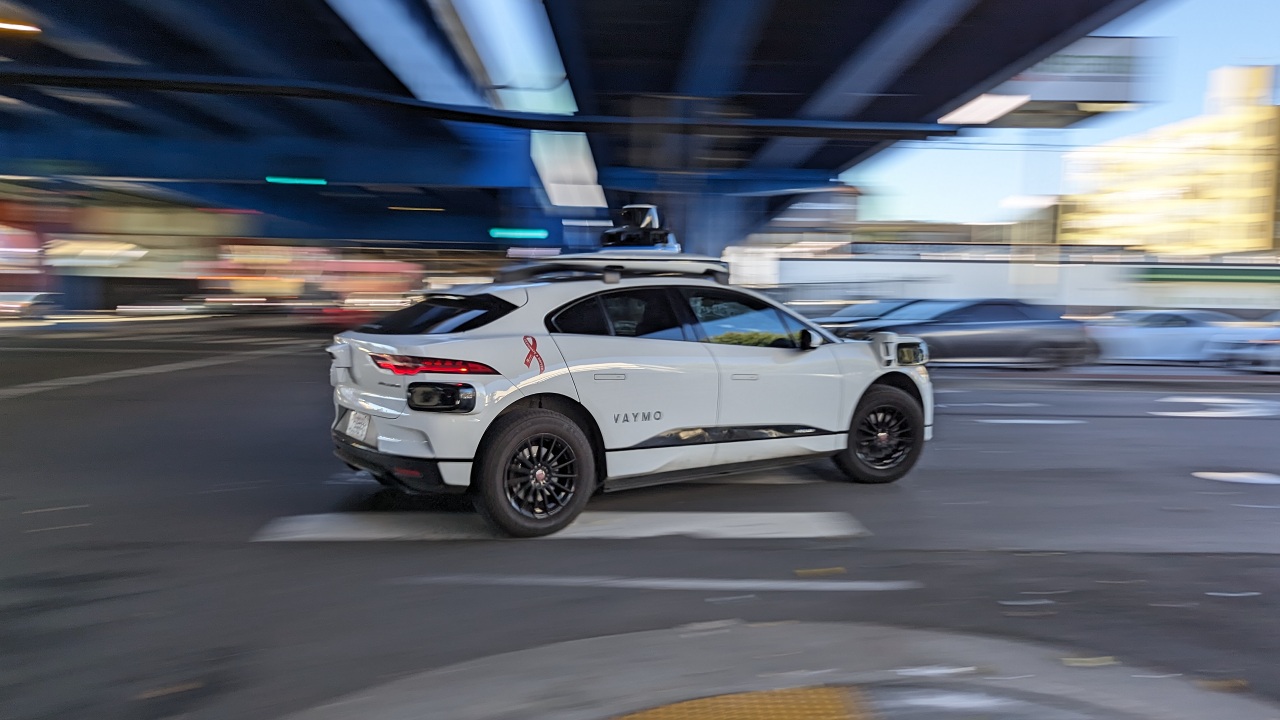
A child struck by a driverless taxi outside a California elementary school has become a defining image in the debate over autonomous vehicles. The Santa Monica school drop-off incident, in which a Waymo robotaxi hit a student who later was released with minor injuries, has intensified questions about whether self-driving systems are ready for the chaos of school zones. It has also forced regulators, parents, and the company itself to confront how much risk society is willing to accept in exchange for the promise of safer, more efficient roads.
The collision did not involve high speeds or catastrophic injuries, yet it landed at the intersection of two of the most sensitive issues in transportation: child safety and trust in automation. As federal investigators scrutinize Waymo’s operations and local officials weigh calls to suspend service, the episode is reshaping how communities think about sharing streets with vehicles that have no human behind the wheel.
The Santa Monica crash that changed the conversation
According to multiple accounts, a self-driving Waymo vehicle struck a child near an elementary school in Santa Monica during a morning drop-off period, a time when streets are crowded with cars, buses, and families on foot. The Waymo detected the child and braked, slowing itself to about 6 miles per hour before impact, and Responders from the fire department evaluated the student, who was released with minor injuries. Witnesses described the child emerging from behind a large SUV, a scenario that can challenge both human drivers and automated systems in tight, low-speed environments.
Waymo has emphasized that its autonomous system recognized the hazard and reduced speed before the collision, arguing that the software’s reaction limited the severity of the crash. In a public explanation of the incident, the company said its internal, peer-reviewed model suggests that a fully attentive human driver in the same situation would likely have hit the child at a higher speed, implying that the robotaxi’s performance compared favorably to human behavior. Critics, however, have seized on the fact that the vehicle still failed to avoid the child entirely, arguing that a system deployed on public streets, especially near schools, should be held to a higher standard than the average driver.
Federal scrutiny and a widening safety probe
The Santa Monica crash did not remain a local matter for long. The National Highway Traffic Safety Administration, often referred to as NHTSA, opened a formal investigation into Waymo after the robotaxi struck the child near the elementary school, treating the event as part of a broader review of the company’s automated driving system. Federal regulators are examining how the vehicle perceived the child, how quickly it responded, and whether the system’s behavior met existing safety expectations for advanced driver assistance and autonomous technology.
That inquiry comes on top of earlier federal attention to Waymo’s conduct around school transportation. The National Highway Traffic Safety Administration previously launched a separate probe into how Waymo vehicles handled “traffic safety laws related to school buses,” including whether they properly stopped when a bus was boarding or offboarding students. In response to that earlier scrutiny, Waymo recalled 3,067 autonomous taxis to update robotaxi software after school-bus violations were flagged by NHTSA, an unusually large corrective action for a company that has often framed its technology as inherently safer than human driving. The new investigation into the Santa Monica crash suggests regulators are now looking at school-related safety as a systemic issue rather than a series of isolated glitches.
Waymo’s defense: data, models, and a promise of lower harm
Waymo has responded to the Santa Monica incident with a mix of contrition and technical argument. Company representatives have stressed that the child’s injuries were minor and that the vehicle was traveling at under 6 miles per hour at the moment of impact, a speed they say reflects the system’s ability to detect and react to a sudden hazard. They have also highlighted that the Waymo autonomous system reduced impact speed in the Santa Monica crash involving the child, presenting this as evidence that the software meaningfully mitigated harm even when it could not fully prevent a collision.
Central to Waymo’s public case is its reliance on internal research that it describes as peer-reviewed, which compares the robotaxi’s performance to that of a hypothetical, fully attentive human driver. According to the company, that model indicates a human in the same circumstances would likely have struck the child at a higher speed, resulting in greater risk of serious injury. Waymo has framed this as proof that its technology already offers a safety benefit, even in difficult edge cases such as a child stepping out from behind a large SUV during school drop-off. Critics, including some local advocates and officials, counter that parents are not reassured by statistical arguments when a child has been hit, and they question whether company-run models, even if peer-reviewed, should be the primary yardstick for judging real-world safety in school zones.
School buses, recalls, and a pattern of school-zone concerns
The Santa Monica crash landed against a backdrop of earlier concerns about how Waymo vehicles behave around children and school infrastructure. Before the collision near the elementary campus, the National Highway Traffic Safety Administration had already opened an investigation into Waymo’s compliance with traffic safety laws related to school buses, focusing on whether its robotaxis properly stopped when buses were loading or unloading students. That probe identified school-bus safety failures that prompted Waymo to recall 3,067 autonomous taxis and update their software, a move that underscored how complex it is to encode nuanced, state-specific school-bus rules into a generalized driving algorithm.
These school-bus issues have fed a broader narrative that school zones are a particular stress test for autonomous vehicles. Unlike predictable highway driving, the areas around campuses involve children who may dart into the street, parents double-parked in drop-off lanes, and buses that operate under special legal protections. Reports that Waymo vehicles had difficulty consistently honoring those protections, combined with the Santa Monica crash, have led some critics to argue that the company expanded service into sensitive areas before its systems were fully validated for those conditions. For regulators, the pattern of school-related incidents raises the question of whether additional, school-specific performance standards are needed for any company operating driverless fleets.
Public trust, local politics, and what comes next for robotaxis
Beyond the technical details, the Santa Monica incident has become a flashpoint in the politics of autonomous vehicles. Local voices in Santa Monica and elsewhere have called for a suspension of Waymo’s operations on city streets, at least near schools, until the federal investigation is complete and additional safeguards are in place. Some parents and community leaders argue that children should not be used as test cases for emerging technology, particularly when the benefits of robotaxis, such as reduced congestion or lower crash rates over time, feel abstract compared with the visceral image of a child being struck outside an elementary school.
Waymo, for its part, has signaled that it is cooperating with safety regulators and reviewing its own procedures around schools, while continuing to assert that its vehicles overall reduce crash risk compared with human drivers. The company’s future in cities like Santa Monica may hinge on whether it can translate that claim into visible, verifiable changes, such as more conservative behavior in school zones, clearer geofencing around campuses during peak hours, or transparent reporting on school-related incidents. For regulators, the case is likely to influence how they balance innovation with precaution, and whether they impose new conditions on autonomous operations near children, school buses, and other vulnerable road users. Whatever the outcome of the current probes, the school drop-off collision has ensured that the safety of robotaxis around students will remain at the center of the autonomous driving debate.
More from Fast Lane Only