A Florida driver who says he was arrested over a standard rental-car plate frame is now at the center of a federal lawsuit that could reshape how the state polices its license tags. The case challenges a statute that turns even minor obscuring of a plate into a crime, arguing that vague wording has turned routine traffic stops into potential trips to jail.
The dispute reaches beyond a single traffic stop, raising broader questions about how far Florida can go in criminalizing cosmetic accessories and how much discretion officers have when the law itself is hard to parse.
Rental-car arrest becomes test case
The lawsuit traces back to a South Florida man, identified in coverage as Dawson, who was pulled over while driving a rental car in Davie. The car carried a typical dealer-style frame that partially covered the bottom of the plate, including part of the state name, a configuration familiar to anyone who has rented a vehicle at a major airport.
Dawson and his attorneys say officers treated that frame as a criminal violation of Florida’s tag law and took him to jail over what he describes as half a letter being obscured. He later recounted how the incident left him humiliated and anxious about future encounters with police, as reported in coverage by NBC.
In the aftermath of Dawson’s arrest, Davie Police issued an apology and acknowledged that the wording of the updated statute had been confusing for officers in the field. In a statement, the department said, “At the initial release of this updated law, the wording was vague,” and conceded that the law had been open to misinterpretation.
How Florida’s plate-frame law works
The statute at issue is Florida Statute 320.061, which makes it a crime to alter a license plate or obscure any part of its identifying information. The law covers anything that makes a tag “hard to read,” including frames that block numbers, letters, the state name, or registration stickers, according to the text posted on the state’s own statutes site.
Violations are not treated as minor equipment issues. Driving with an obscured plate can be charged as a criminal offense that carries up to 60 days in jail and a 500 dollar fine, a penalty that surprised many drivers who thought of plate frames as harmless decoration.
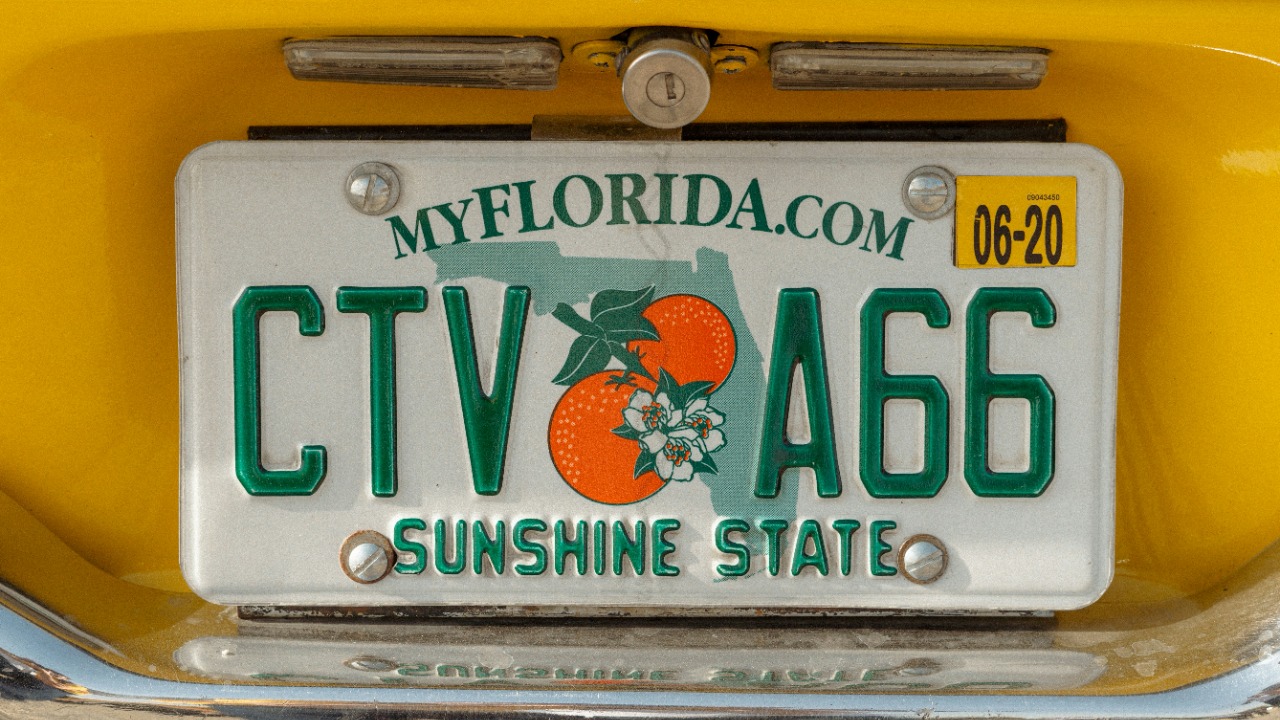
In the early months after the law was updated, some law-enforcement agencies interpreted it broadly, with officers ticketing drivers whose frames covered even the small “Sunshine State” slogan or part of the orange graphic. That aggressive reading helped fuel confusion and sparked a wave of questions from drivers who suddenly worried that a dealership’s promotional frame could put them in handcuffs.
Ticket Toro steps in
Into that confusion stepped Ticket Toro, a company that helps motorists fight traffic citations. Earlier this month, Ticket Toro filed a federal complaint in the U.S. District Court for the Southern District of Florida, targeting the plate-frame statute as unconstitutionally vague and ripe for abuse.
The company’s filing argues that the law fails to clearly define what counts as “obscuring” or making a tag “hard to read,” leaving drivers guessing and giving officers too much room to decide who gets stopped. In the complaint, Ticket Toro warns that the statute invites “inconsistent enforcement across the state” and can turn ordinary motorists into criminal suspects over minor cosmetic details, as described in one report.
The company also highlights Dawson’s case as an example of how a simple accessory can escalate into a full arrest. Ticket Toro says police later admitted the law was “vague and open to misinterpretation,” and it points to that admission as evidence that the statute cannot be fairly enforced.
From tickets to jail time
For many drivers, the first sign of trouble has been a ticket rather than an arrest. Some Florida motorists have reported being cited for frames that cover only the bottom edge of the plate, including parts of the word “Florida” or the decorative orange, even when the numbers and registration sticker remained fully visible.
Legal analysts have noted that a statute with criminal penalties should give clear notice of what conduct is forbidden. Ticket Toro’s lawsuit leans on that principle, arguing that a driver who buys a car with a dealer-installed frame, or rents a vehicle with a branded border, should not need a lawyer to figure out whether the accessory might be treated as a crime.
Coverage of the case has emphasized that the law can affect anyone who uses a plate frame, from college alumni showing school pride to parents with “honor student” borders. One detailed account on Ticket Toro’s challenge notes that a thin metal strip around the plate has become a potential “ticket to jail” in Florida, particularly when officers apply the broadest reading of the statute.
Police clarification after backlash
Public backlash after Dawson’s arrest pushed agencies to clarify how they would enforce the law. Davie Police, in their apology, stressed that officers are now being trained to focus on whether the plate’s primary information can be read, rather than on minor decorative elements.
Regional coverage of the law has echoed that message. One local explainer quoted an officer saying, “As long as officers can read your numbers and this registration sticker, you can have a frame. If it is partially covering the name of the state, that is fine,” as long as the main identifying details remain visible, according to guidance shared in a television segment.
Another breakdown of the rules stated that “License Plate Frames Are Allowed” and that drivers can safely use a frame if it does not obscure the plate number or sticker, while coverage on a newsletter site emphasized that nonessential design elements are less of a concern.
In a separate explainer, authorities summarized the practical takeaway: keep the numbers, letters, and registration decal fully visible and avoid tinted covers or bulky frames that might make the tag difficult to read from a distance, as laid out in Palm Beach County.
What the lawsuit seeks
Ticket Toro’s federal complaint asks the court to declare Florida Statute 320.061 unconstitutional and to block its enforcement statewide. The company also seeks to have past citations and arrests tied to plate frames reviewed and, where appropriate, expunged so that drivers like Dawson are not left with criminal records over cosmetic accessories.
In its public-facing materials, Ticket Toro frames the lawsuit as a fight for “everyday drivers” who may not realize that a frame from a dealership or a sports team could expose them to criminal liability. The company’s own case summary describes the statute as a trap for the unwary and encourages motorists to challenge tickets rather than simply paying them.
Another overview of the legal challenge notes that the complaint was filed along with a motion in Miami seeking an injunction, and that Ticket Toro is positioning the case as a statewide class-style effort to rein in what it sees as overreach, as described in a national report.
Drivers caught in the middle
For now, Florida drivers are left balancing a written law that still treats obscured plates as a crime against evolving guidance from police suggesting a more forgiving approach. That gap between statute and street-level enforcement is exactly what Ticket Toro wants a federal judge to close.
Legal experts say the case will test how courts handle traffic laws that rely on subjective terms like “hard to read.” If the lawsuit succeeds, Florida may be forced to rewrite its plate statute with more precise language or downgrade plate-frame violations to noncriminal infractions.
Until then, motorists are likely to keep seeing stories like Dawson’s, where a simple frame on a rental car becomes the starting point for a high-stakes legal fight. Coverage from outlets including Sophie Pendrill and automotive-focused reporters such as Justin Hughes has already turned the once-ignored accessory into a flashpoint over civil liberties on Florida roads.
More from Fast Lane Only