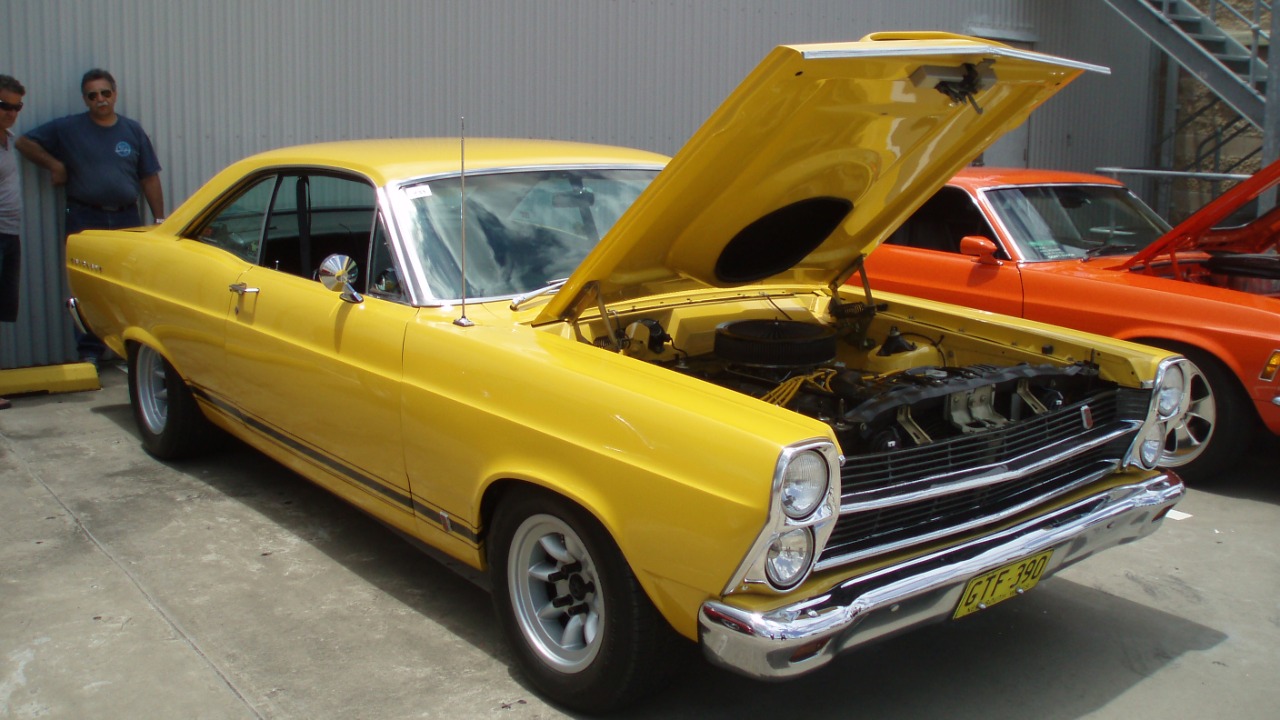
It was supposed to be a simple, old-car kind of day. Drop off the 1966 Fairlane, have the shop give it a once-over, pick it up later with a smoother idle and maybe a slightly lighter wallet. Instead, the phone rang with the kind of pause on the other end that makes your stomach tighten before you even hear the words.
The call wasn’t panicked, exactly, but it wasn’t casual either. The technician sounded careful, like someone who’d rather be handing over good news. “So… we found something,” they said, and suddenly a basic tune-up turned into a story that’s now bouncing around the local car community.
A routine appointment for a not-so-routine car
The Fairlane in question isn’t a trailer queen. It’s the kind of classic that still gets driven, still gathers little chips and tiny scratches that prove it’s living a normal life. The owner brought it in because it had started running a little rough, with a mild stumble on acceleration that didn’t feel right.
Nothing about the request was unusual: check the ignition, look at timing, make sure the carburetor is behaving, and inspect plugs and wires. Older engines can be dramatic, sure, but they usually announce their problems in familiar ways. The expectation was a standard list: replace a few wear items, make an adjustment, and call it a day.
The phone call that changed the tone
Later that afternoon, the shop called with an update that didn’t match the usual “it’ll be ready by five.” The technician explained that while they were going through the basics, they noticed something that didn’t add up—something that suggested the Fairlane’s problem wasn’t just age and normal wear.
According to the shop, the engine wasn’t responding the way it should when they checked timing and idle mixture. That by itself can mean a lot of things, from vacuum leaks to tired ignition parts. But then they started seeing signs that pointed to damage that couldn’t be tuned away.
What they found under the hood
The shop told the owner they’d performed a compression test, a quick way to see how well each cylinder is sealing. On older V8s, you expect some variation, but you don’t expect a couple of cylinders to fall off a cliff. That’s what happened here: a few readings were low enough to suggest the engine wasn’t just out of adjustment—it was struggling mechanically.
Next came a leak-down test, which helps narrow down where compression is going. Air can slip past valves, piston rings, or even a head gasket. The result, the technician said, sounded like air was escaping in a way that hinted at valve trouble—possibly a burnt valve or damage in the valvetrain.
And then the visual clues started stacking up. The plugs didn’t all look the same, and one or two had evidence of running hotter than they should. The shop also noticed faint metallic debris where it didn’t belong, the kind of “glitter” that makes mechanics go quiet for a second.
Why a tune-up can uncover bigger problems
People like to joke that a mechanic can “find” issues the moment a car hits the lift, but this is a real phenomenon—just not in the conspiratorial way. A tune-up involves baseline checks, and baseline checks expose inconsistencies. When an engine isn’t healthy, you can adjust around it only for so long before the numbers tell the truth.
With a classic like a ’66 Fairlane, there’s also the “history factor.” Parts could be original, replaced decades ago, or swapped during some long-ago repair with paperwork nobody kept. A car can run fine for years with a small issue slowly getting worse, until one day it crosses the line from “quirk” to “problem.”
The shop’s careful wording—and what it implied
The call reportedly included a phrase no one wants to hear: “We don’t want to keep running it.” That doesn’t automatically mean catastrophe, but it does mean the shop saw enough risk to stop before they made anything worse. In classic-car terms, that’s the difference between an inconvenient repair and an expensive lesson.
The technician didn’t diagnose the entire problem over the phone. Instead, they suggested the next steps: pulling a valve cover for inspection, possibly removing the intake, and determining whether the issue was isolated to the top end or if the bottom end was involved too. Translation: they needed to look deeper before guessing, and that’s usually a good sign.
The options on the table
By the time the owner got to the shop, it was no longer a “replace plugs and set timing” conversation. It was a fork-in-the-road moment: do a targeted repair and hope the rest is solid, or plan for a larger refresh that makes the engine reliable for the long haul. Neither choice is fun, but both can be sensible depending on budget and goals.
If it’s a valve issue, the fix might be limited to head work—new valves, guides, seals, and a proper machine shop job. If the tests suggest wear in the rings or damage in the cylinder walls, it can quickly turn into a rebuild conversation. The shop emphasized they’d rather confirm than speculate, which is mechanic-speak for “we’ve seen this go sideways.”
Classic-car reality: the surprise isn’t always bad news
Here’s the twist that made the story less gloomy: the Fairlane’s issues might’ve been quietly building for a while, and catching them now could prevent a much worse failure later. A burnt valve can turn into a dropped valve, and a small metal issue can become a “why is there a window in my engine block” issue. Classic-car owners laugh about that kind of thing because if you don’t laugh, you’ll cry.
There’s also something oddly comforting about a clear, test-backed explanation. A vague “it runs weird” is stressful because you don’t know what you’re dealing with. A compression chart and a leak-down result, on the other hand, are blunt in a way that helps you make decisions.
What other Fairlane owners are saying
Word traveled quickly, as it does in any tight car community. Some folks pointed out that older engines can mask valve problems until a tune-up improves spark enough to reveal the underlying mechanical weakness. Others noted that ethanol-blended fuel, heat, and long periods of sitting can all contribute to issues that don’t show up until the car is driven regularly again.
A few people offered the usual friendly advice: check for vacuum leaks, verify the distributor advance is working, and make sure the carb isn’t running lean. But most agreed with the shop’s approach—test first, then decide. The crowd’s unofficial motto seemed to be: “Don’t throw parts at it, throw data at it.”
What happens next
As of the latest update, the owner is weighing inspection and repair options with the shop, starting with opening up the top end to confirm what the tests suggested. The goal isn’t just to get the Fairlane running again—it’s to get it running with confidence, the kind you need if you plan to actually drive a classic instead of just polishing it.
The whole thing is a reminder that “routine” is a flexible word when you’re talking about a nearly 60-year-old car. Sometimes a tune-up is a tune-up. And sometimes it’s the moment a beloved old Ford politely clears its throat and says, “Hey… we should talk.”
More from Fast Lane Only