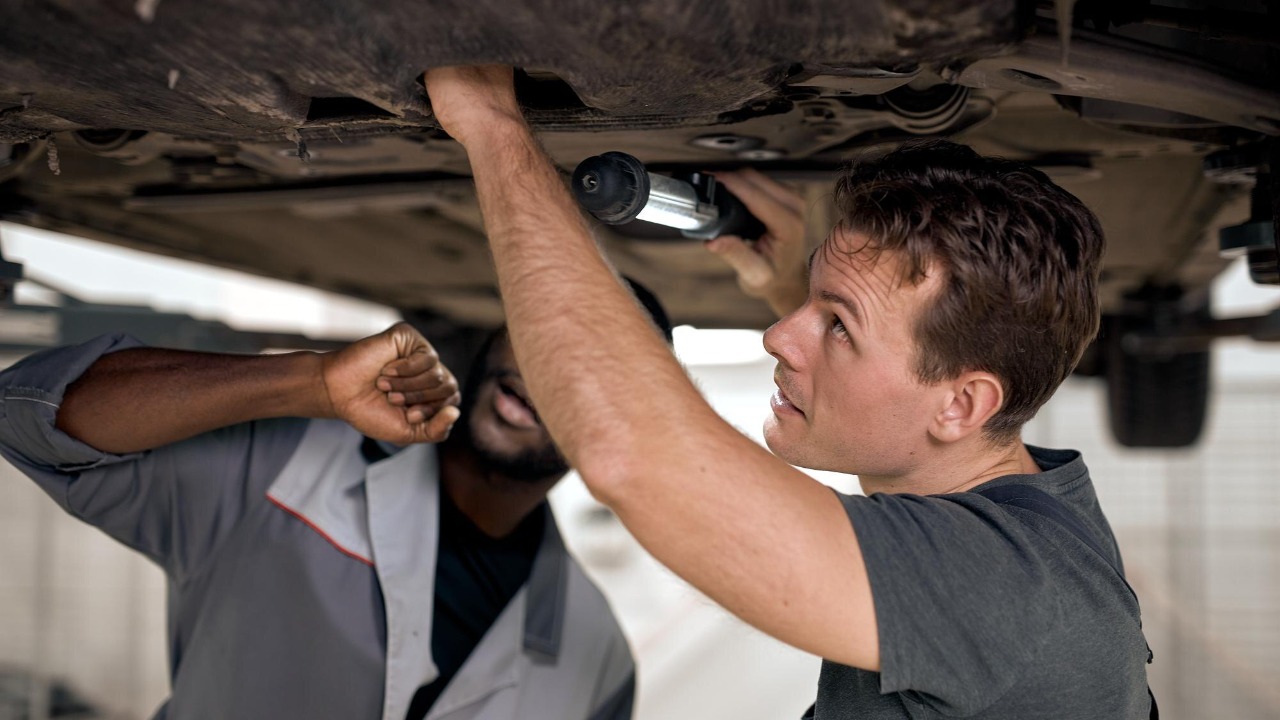
It started like a routine visit: a customer rolled into a local shop with a vague complaint about the steering feeling “off.” Nothing dramatic, no warning lights, no roadside breakdown story. Just that uneasy, hard-to-describe sensation you get when the wheel doesn’t quite feel connected to the road the way it should.
Then the technician put the vehicle on the lift, grabbed the front end, and found something that turns a normal day into an all-hands moment: steering linkage with noticeable looseness. When the technician asked the simple question—who worked on it last—nobody answered. Not because they didn’t hear, but because the room suddenly got very interested in the floor.
What the mechanic found, in plain English
“Steering linkage” sounds like one part, but it’s really the collection of components that connect your steering wheel to the front wheels. Depending on the vehicle, that can include tie rods (inner and outer), a center link or drag link, a pitman arm, an idler arm, and the related mounting hardware. These are the parts that physically push and pull the wheels left and right when you turn.
In this case, the looseness wasn’t a subtle “maybe” either. The technician reportedly saw movement where there shouldn’t be any—play that can translate to wandering on the highway, delayed response when turning, uneven tire wear, and in the worst cases, loss of steering control. Loose steering components aren’t like a squeaky belt; they’re a safety issue first and a drivability annoyance second.
The question that made the room go quiet
Shops ask “who worked on it last?” for a few reasons, and not all of them are accusatory. It helps confirm what parts were recently touched, whether anything was replaced, and what kind of hardware or torque specs should be expected. Sometimes a quick answer saves everyone time because it narrows the inspection to a specific area.
But silence after that question has its own meaning. It usually suggests a mix of uncertainty and discomfort: maybe the vehicle was worked on by a friend, a side job, a quick-lube place, a driveway repair, or even the owner. And when steering parts are involved, people tend to realize—right in that moment—that guessing, rushing, or skipping a final check can have real consequences.
How loose steering linkage happens (even with good intentions)
The internet loves a villain, but most loose linkage stories don’t start with sabotage. They start with ordinary work: replacing tie rods, doing an alignment, changing a control arm, swapping a steering rack, or repairing suspension components. Any job that requires separating and reattaching steering parts introduces the chance for something to be left under-torqued or not secured exactly right.
Common culprits include missing or incorrectly installed cotter pins, reused locking nuts that should’ve been replaced, or hardware that wasn’t tightened to spec. Sometimes the nut is tight but the tapered stud isn’t seated properly, so it loosens after a few drives. Other times it’s as simple as “it felt tight enough” instead of “it was tightened with a torque wrench and checked again under load.”
Why this matters more than most “loose part” problems
Steering components don’t get much grace from physics. If a ball joint or tie rod end separates, the wheel can change direction without asking you first. That’s not a “pull over when convenient” kind of failure; it can become an immediate loss-of-control situation, especially at speed or during a turn.
Even when it doesn’t fail completely, looseness can cause a chain reaction. Tires scrub and wear faster, alignment drifts, and other parts take extra stress. Drivers often compensate without realizing it, constantly correcting the wheel, which can hide the severity until it gets worse.
The signs drivers often notice (and the ones they ignore)
Most people don’t say, “My inner tie rod is failing.” They say the steering feels vague, the car wanders, or the wheel has a little “dead spot” in the center. Some mention clunking over bumps, a knocking sound when turning at low speeds, or the vehicle pulling despite a recent alignment.
And then there are the subtle clues: the steering wheel not returning smoothly to center, uneven tire wear on the inside edges, or a vibration that comes and goes. Plenty of drivers chalk these up to “old tires” or “rough roads.” Sometimes that’s true, but when steering is involved, it’s worth getting it checked rather than playing detective on the highway.
What a responsible shop typically does next
When a technician finds loose steering linkage, the next steps are usually methodical. They’ll verify exactly which joint or fastener is loose, inspect related components for wear, and check whether the parts installed are correct for the vehicle. If something was recently replaced, they may look for signs of improper installation, mismatched hardware, or damage from forcing parts together.
After repairs, a good shop will recheck torque, confirm cotter pins or locking mechanisms are in place, and perform a road test. Alignments often follow, because steering and suspension work can shift toe and steering wheel center. The goal isn’t just “tighten it and send it,” but making sure it won’t come back loose after a week of potholes and parking-lot turns.
That awkward silence: what it says about car care in real life
The silence after “who worked on it last?” is almost relatable. People get car repairs wherever they can—where it’s affordable, where it’s fast, or where someone they trust can squeeze them in. And sometimes the person who did the work genuinely tried to help, but didn’t have the right tools, specs, or time to double-check everything.
There’s also a social angle: nobody wants to throw a friend under the bus, and nobody wants to admit they did it themselves if the outcome looks risky. The truth is, accountability matters most when it leads to better habits. Steering parts don’t care about pride, and they definitely don’t care about awkward conversations.
What drivers can do to avoid ending up in the same situation
If steering work gets done—any steering work—ask for specifics. What parts were replaced, what hardware was reused, and was everything torqued to factory spec? It’s not being difficult; it’s being informed, and a competent shop won’t be offended by the question.
Also, pay attention to how the vehicle feels right after repairs. If the steering feels different in a bad way, if there’s clunking, or if the wheel doesn’t track straight, go back immediately. And if you’re buying a used vehicle, a pre-purchase inspection that includes a proper front-end check is one of the cheapest ways to avoid expensive surprises.
A small moment that could’ve been a big problem
In the end, the most striking part of the story isn’t the loose linkage itself. It’s how quickly an everyday concern—“something feels off”—could’ve turned into a dangerous situation if it had gone unchecked. The vehicle made it to the shop in time, and that’s the kind of luck nobody should rely on.
That silence in the bay wasn’t just awkward. It was a reminder that the most important work on a car is the work you can’t afford to “mostly” finish—especially when it’s the stuff that keeps the wheels pointed where you want them to go.
More from Fast Lane Only
- Unboxing the WWII Jeep in a Crate
- 15 rare Chevys collectors are quietly buying
- 10 underrated V8s still worth hunting down
- Police notice this before you even roll window down
*Research for this article included AI assistance, with all final content reviewed by human editors.