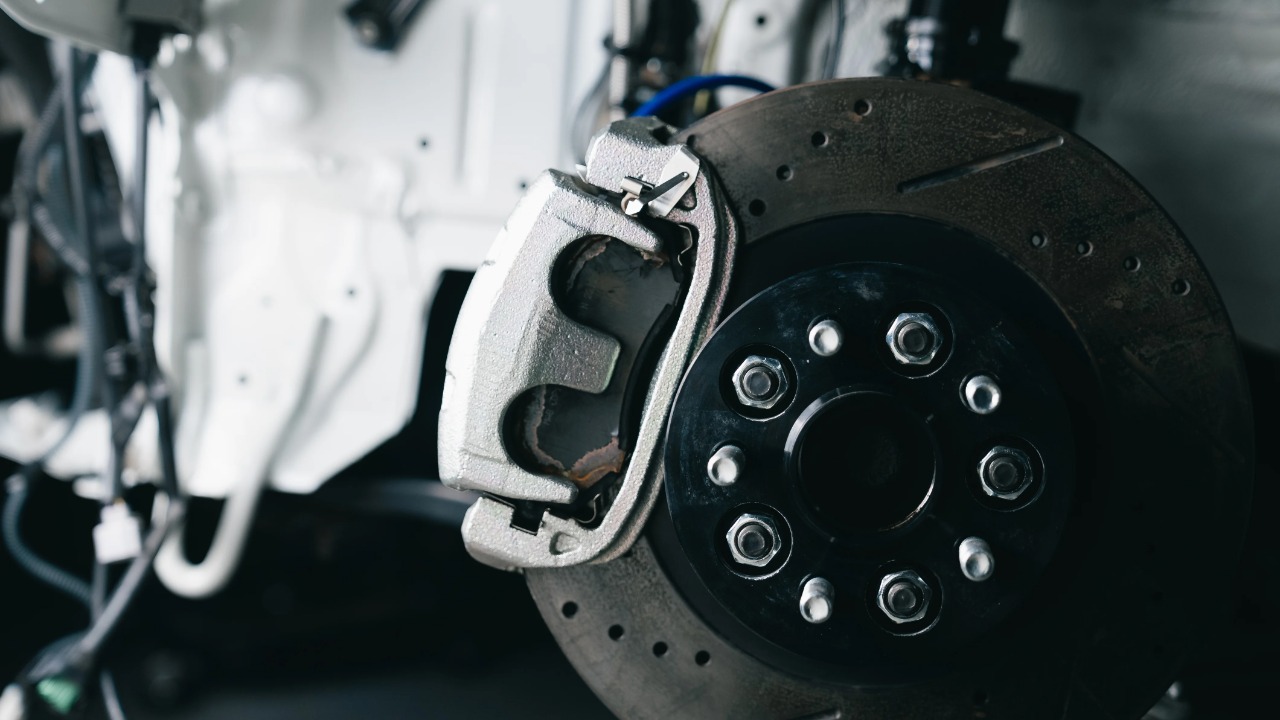
It started like one of those routine shop visits where you’re hoping for a quick bill and a clean exit. The customer came in for a brake check after noticing a faint scraping sound, the kind you can talk yourself into ignoring until it gets louder. The mechanic took a quick look, said the brake pads were “like new,” and sent them on their way.
About two miles later, the front end of the car made a noise that didn’t sound like “like new” anything. The steering felt strange, the car pulled hard, and then came the kind of metallic clatter that makes your stomach drop. When the customer got safely to the shoulder and looked underneath, the brake caliper had come loose and was hanging where it absolutely shouldn’t be.
What happened on the road
According to the customer’s account, the drive home felt normal for a couple of minutes. Then there was a sharp thud, followed by a grinding sound that ramped up fast. Braking made the whole front corner shudder, and the car started tugging to one side like it had a mind of its own.
They didn’t push it. They eased off the road, parked, and called for a tow rather than trying to limp home. It’s the kind of decision that’s easy to second-guess in the moment but tends to look very smart once you see a brake part dangling near a spinning wheel.
The part that actually failed (and why it matters)
Brake pads are just one piece of the system, and they’re not even the part that holds everything together. The caliper is the component that squeezes the pads against the rotor to slow the car down. It’s mounted to a bracket or knuckle with bolts that need to be present, properly torqued, and secured the right way for the design.
If those bolts back out, snap, or were never tightened correctly, the caliper can shift or detach. Best-case scenario, you get scary noises and reduced braking. Worst-case scenario, the caliper can jam against the wheel or suspension and cause a sudden loss of control.
In this case, the pads may genuinely have had plenty of material left. That’s the frustrating twist: “pads are like new” can be true while the overall brake assembly is still unsafe. It’s a bit like saying your shoes are new while your shoelaces are untied on an icy staircase.
How does a caliper fall off after a shop visit?
There are a few ways this can happen, and none of them are the kind you want to discover at 40 miles per hour. The simplest explanation is human error: a bolt wasn’t tightened, or it was cross-threaded and felt snug until it wasn’t. Sometimes a tech gets interrupted, sometimes steps get rushed, and sometimes a “quick check” turns into a half-finished job.
There are also mechanical possibilities. If the vehicle had previous work done and the threads in the mounting points were already damaged, bolts might not hold torque correctly. Or the wrong hardware could’ve been installed earlier, the sort of mismatch that looks fine in the bay and fails under vibration and heat cycles on the road.
Then there’s the uncomfortable middle ground: the shop only checked pad thickness and didn’t inspect the caliper mounting at all. A brake inspection isn’t supposed to be just a quick peek at the pads. It should include looking for loose hardware, uneven wear, leaking fluid, seized slide pins, and anything that suggests the system isn’t structurally sound.
What a proper brake inspection usually includes
When a shop says they “checked the brakes,” most people hear, “You’re safe.” But the phrase can mean wildly different things depending on the shop’s process, time, and honesty. At minimum, a solid inspection goes beyond pad thickness and checks the condition of the rotors, caliper hardware, and brake lines.
A careful tech will look for missing or shiny hardware, torn boots, and slide pins that don’t move freely. They’ll also check for uneven pad wear, which can hint at a sticking caliper or seized pins. And if anything looks off, they’ll recommend pulling the wheel for a closer look instead of making a confident-sounding promise from a glance.
What the customer did next
After the tow, the car was inspected again and the damage was more than cosmetic. A loose caliper can chew into a wheel, damage the brake hose, and scar the rotor in seconds. Even if the vehicle stops, it can leave you with a repair bill that’s way bigger than a simple pad replacement.
The customer contacted the original shop, explained what happened, and provided photos from the roadside and the tow drop-off. That documentation matters, especially when the failure occurs almost immediately after a visit. Shops can be cooperative, defensive, or somewhere in between, but clear records keep the conversation grounded in facts.
Red flags to watch for after any brake work
Most brake jobs go fine, and plenty of mechanics take real pride in getting it right. Still, it’s worth knowing what “something’s wrong” feels like when you first drive away. If you hear clunking, grinding, or a new rhythmic scraping, treat it as a stop-and-check situation, not a “maybe it’ll go away” situation.
Other warning signs include a steering pull that wasn’t there before, a spongy pedal, a pedal that suddenly feels much lower, or a burning smell from one wheel. If any of that shows up, don’t test your luck in traffic. Pull over somewhere safe, and call for help if you’re not sure you can get home without making it worse.
How to protect yourself without becoming a car expert
You shouldn’t have to memorize torque specs to get safe brakes. But you can ask a couple of simple questions that encourage thorough work. When a shop says your brakes are fine, ask what they checked: pads only, or pads and hardware, rotors, and caliper operation too.
It also helps to ask for photos or measurements, especially if you’re being told everything’s “like new.” Many shops already take pictures for their inspection reports, and a good one won’t mind sharing. If a shop gets annoyed at basic transparency, that’s useful information all by itself.
Finally, trust your senses. If the car sounded wrong before and still sounds wrong after, it’s okay to get a second opinion. Brake systems are one of those areas where “probably fine” isn’t a satisfying answer.
The bigger takeaway
The strange thing about this kind of story is how ordinary it starts. A quick visit, a reassuring phrase, a short drive home. And then suddenly you’re learning what a caliper is in the least fun way possible.
If there’s a silver lining, it’s that the failure happened close to the shop and the customer reacted calmly. No one wants to be the person on the shoulder staring at a wheel well in disbelief, but it’s a reminder that brakes aren’t just about pad thickness. They’re about the whole assembly staying exactly where it belongs, every time you hit the pedal.
More from Fast Lane Only
- Unboxing the WWII Jeep in a Crate
- 15 rare Chevys collectors are quietly buying
- 10 underrated V8s still worth hunting down
- Police notice this before you even roll window down
*Research for this article included AI assistance, with all final content reviewed by human editors.