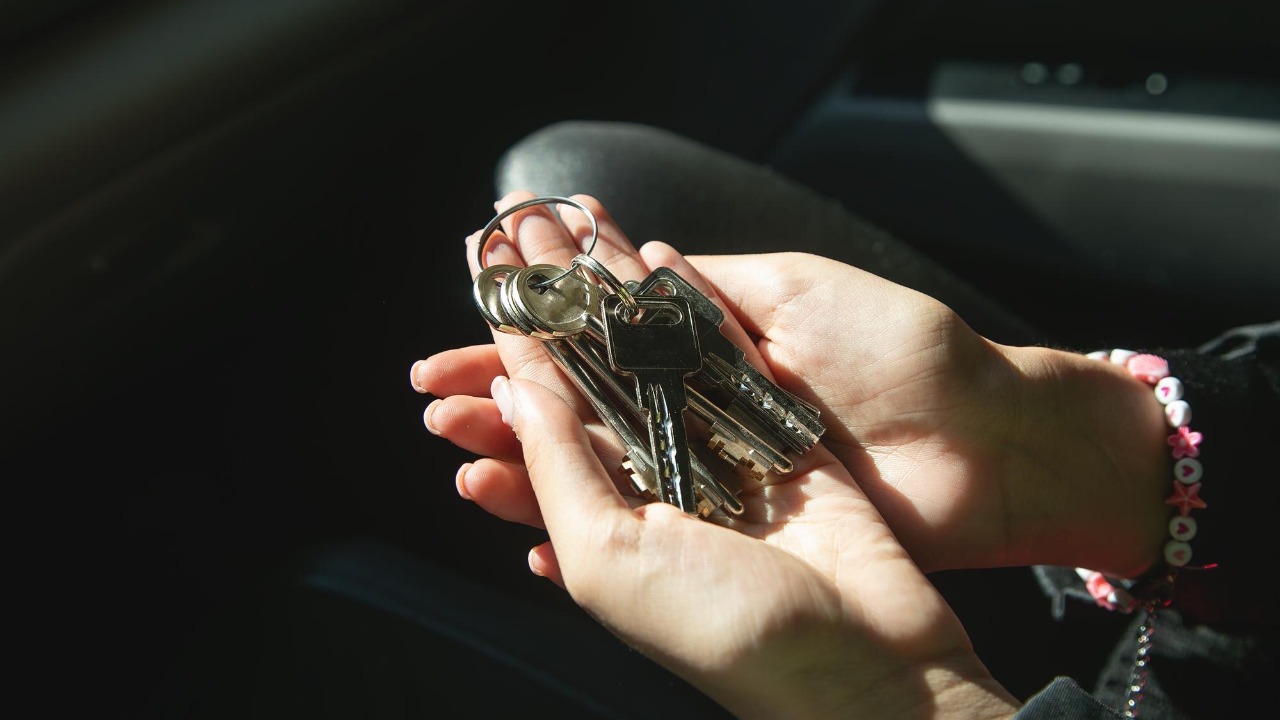
It started the way a lot of modern mysteries do: with a normal errand and a slightly odd discovery. While grabbing something from her husband’s truck, she noticed a second set of keys tucked in a spot that didn’t look accidental. Not on the key ring by the door, not in the usual console clutter—hidden.
At first, she told herself it was probably nothing. People misplace keys, stash spares, forget they did it, then act like it’s always been there. Still, the secrecy of the hiding place made her pause, the way your stomach does when your brain hasn’t caught up yet.
A spare key is normal—until it feels like it isn’t
Most couples have some version of “the spare”: a key in a junk drawer, a valet key in a wallet, an emergency set buried in a flowerpot that everyone forgets about until they really need it. A hidden set inside a vehicle can even be practical—especially if someone’s worried about locking themselves out. But this didn’t feel like practical; it felt like deliberate.
She described it later as the difference between “I put this somewhere safe” and “I put this somewhere you wouldn’t look.” That’s a subtle distinction, but it’s also the kind people recognize instantly when they’re the one holding the keys. Curiosity quickly turned into that uneasy question: what exactly do these go to?
Then came the mileage log that didn’t match her reality
The second find was the one that made her stop doing mental gymnastics. In the truck, she came across a mileage log—neat, dated, and oddly specific—tracking trips she didn’t recognize. It wasn’t the standard “oil change at 72,000 miles” note or a dealership receipt. It looked more like a deliberate record of where the truck had been and when.
What made it stranger wasn’t just the numbers. It was the tone of it—consistent entries, careful handwriting, the sort of thing someone keeps when they expect to explain it later. And she couldn’t remember him mentioning any reason to document mileage that closely.
The internet did what it always does: speculate, then compare notes
Once the story made its way into conversation online, it triggered a familiar wave of reactions. Some people went straight to the dramatic possibilities—secret relationships, a second family, a private life hidden behind “I’m working late.” Others offered calmer theories: a side gig, a work requirement, or even preparation for selling the truck.
The comments weren’t just gossip; they were a catalog of how many everyday situations can look suspicious when you’re missing context. Plenty of folks admitted they keep logs for expense reimbursement, insurance disputes, or business write-offs. But even the most level-headed responses circled back to the same point: if it’s innocent, why hide it?
What a mileage log can mean (and why it’s not automatically bad)
Mileage logs are common in a few situations, and not all of them are sketchy. People who get reimbursed for travel often have to document dates, starting and ending mileage, and destinations. If he drives for work sometimes—or is trying to—he might be building proof for an employer or accountant.
There’s also the side-hustle angle. Delivery apps, contract work, helping someone with errands for pay—those can all motivate a private record, especially if he’s thinking about taxes. Not everyone shares those details right away, sometimes out of embarrassment, sometimes because they want to “make it real” before talking about it.
And yes, there are also less wholesome reasons people track mileage. If someone’s trying to keep their story straight, a log can become a script. That’s the part that makes this kind of find feel heavy: it can fit both an ordinary explanation and a troubling one.
The second set of keys raises different questions
Keys are a clue that tends to branch into multiple paths. A spare key to the same truck is one thing, especially if it’s for emergencies. But a second set can also mean access to something else—another vehicle, a storage unit, a workplace lock, or a small padlock tucked somewhere that doesn’t make it into daily conversation.
Some people pointed out that “truck keys” can include fobs and specialty keys that look alike. A set could belong to a friend or relative, or be an old set he forgot to return. Still, the hiding spot matters; people don’t usually conceal someone else’s keys in their own vehicle unless there’s a reason they don’t want questions.
The emotional whiplash: feeling nosy and worried at the same time
What resonated with a lot of readers wasn’t the logistics—it was the feeling. She didn’t go looking for betrayal; she went looking for something mundane, then got handed a puzzle. Suddenly she was stuck in that awkward space where investigating feels invasive, but ignoring it feels foolish.
It’s a specific kind of stress, because the evidence isn’t a smoking gun. It’s a handful of “why would that be there?” moments that add up. And once your brain starts tallying those moments, it’s hard to unsee them.
What people suggested: start with facts, not accusations
Among the more helpful responses was a simple approach: figure out what the keys actually open. That can be as basic as checking whether they match the truck, or noticing any brand markings that hint at a storage lock or a different vehicle. The point isn’t to play detective for sport; it’s to replace spiraling with information.
For the log, several people recommended comparing a few entries to known days—work shifts, family events, bank charges for gas, or messages about being stuck in traffic. Not to “catch” him, but to see whether the record overlaps with plausible routines. A log that tracks business routes will often line up with receipts and patterns; a log that’s fiction tends to get fuzzy around details.
The conversation that matters most is the one at home
Eventually, the story lands where stories like this always land: at a kitchen counter, in a living room, in the quiet moment after the kids are asleep—wherever real conversations happen. People encouraged her to ask about it plainly, without theatrics, and to watch whether the explanation comes easily. Someone with a normal reason usually doesn’t need a long monologue; they just tell you.
At the same time, readers pointed out that tone matters. Going in with “Explain this right now” can turn even an innocent situation defensive. A calmer opener—more “I found this and I’m confused” than “I found this and you’re guilty”—can keep the conversation honest instead of performative.
Why this story hit a nerve
It’s not just about keys or mileage. It’s about the tiny signals that make people question what they thought they knew. Most relationships aren’t undone by one dramatic revelation; they’re rattled by small inconsistencies that stack up until you can’t ignore them.
And maybe that’s why so many people couldn’t stop reading. Everyone knows the feeling of finding something slightly off and wondering whether it’s nothing, or the beginning of everything changing. The tricky part is that the same evidence can point to an innocent surprise—or a secret that’s been carefully measured, one mile at a time.
More from Fast Lane Only
- Unboxing the WWII Jeep in a Crate
- 15 rare Chevys collectors are quietly buying
- 10 underrated V8s still worth hunting down
- Police notice this before you even roll window down
*Research for this article included AI assistance, with all final content reviewed by human editors.