The timing belt is one of those components most drivers never think about—until the engine suddenly stops running. Mechanics say that neglecting it remains one of the fastest ways to destroy an otherwise dependable engine, especially in modern interference designs where a single failure can cascade into catastrophic internal damage.
What happened
In many older and modern engines, the timing belt is responsible for synchronizing the crankshaft and camshaft so that valves and pistons move in perfect coordination. In vehicles like the Honda Civic, Toyota Camry, and older performance-focused platforms such as the Mitsubishi Lancer Evolution, the timing belt plays a critical role in maintaining precise valve timing under all operating conditions.
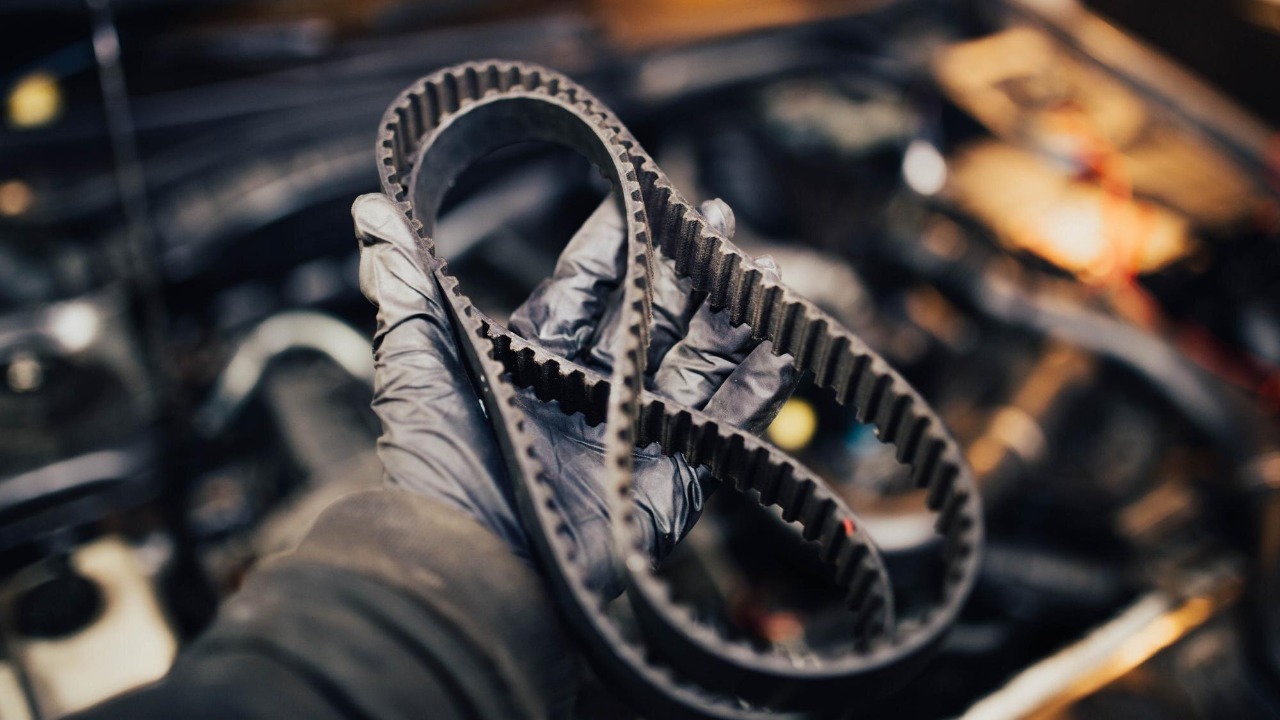
Unlike timing chains, which are designed to last the life of the engine in many cases, timing belts are wear items made from reinforced rubber compounds. Over time, heat cycles, oil contamination, and simple age cause the material to crack, stretch, or weaken internally—even if the belt still looks fine from the outside.
Mechanics say this is where the danger begins. Many drivers assume that if an engine is running normally, the timing belt is still healthy. In reality, failure often occurs without warning. A belt can snap instantly, slip a few teeth, or lose tension, all of which disrupt engine timing in milliseconds.
In interference engines, which are common in modern vehicles, this failure has immediate consequences. Pistons and valves occupy the same physical space at different times. When timing is lost, they collide. The result is typically bent valves, damaged pistons, and in severe cases, cracked cylinder heads or destroyed engines.
Technicians frequently report cases where otherwise well-maintained engines fail simply because a timing belt service interval was ignored. In many situations, the rest of the engine—oil system, cooling system, and internals—may be in excellent condition, making the failure feel especially frustrating and avoidable.
Why it matters
The reason mechanics emphasize timing belt maintenance so strongly is because it is one of the few service items that directly prevents total engine failure rather than just gradual wear.
Modern engines are engineered with tighter tolerances and higher compression ratios, which improves efficiency and performance but reduces forgiveness when mechanical synchronization is lost. Even a brief timing deviation can be enough to cause internal contact between moving components.
Another issue is that timing belt degradation is not always visible. Unlike brake pads or tires, there is no easy visual indicator of remaining life. A belt can look intact while internal fibers are weakening. This is why manufacturers specify strict mileage and time-based replacement intervals.
Age is just as important as mileage. Vehicles that are rarely driven—such as a Toyota Corolla stored in a garage—can still suffer timing belt failure simply due to rubber aging. Heat cycles, humidity, and oil exposure gradually reduce elasticity and strength over years, even without high mileage.
Mechanics also point out that timing belt systems often include additional components such as tensioners, idler pulleys, and water pumps. When a belt service is performed correctly, these parts are usually replaced together. Ignoring the full system can lead to premature failure even if the belt itself is new.
In performance or turbocharged engines, the stakes are even higher. High RPM operation increases stress on the timing system, and any weakness in the belt or tensioner can be exposed quickly under load. This is why enthusiasts running older turbo platforms are often advised to shorten replacement intervals compared to factory recommendations.
What to watch next
Technicians recommend treating timing belt replacement as preventive maintenance, not reactive repair. Most manufacturers specify replacement intervals between 60,000 and 100,000 miles, or a set number of years, whichever comes first. Ignoring the time factor is one of the most common mistakes owners make.
Early warning signs are subtle but worth attention. Cold start noises, slight misfires, or irregular engine timing behavior can sometimes indicate a worn tensioner or belt slip. However, many failures occur without any warning symptoms at all, which is why relying on symptoms alone is risky.
During inspection, mechanics look for cracks along the belt’s surface, glazing, fraying edges, or oil contamination near the timing cover. Oil leaks from cam or crank seals can significantly shorten belt life by degrading the rubber material.
Proper service also matters. Incorrect installation tension, reused tensioners, or skipping water pump replacement can all lead to premature failure even if the belt itself is new. This is why experienced technicians often treat timing belt jobs as complete system overhauls rather than single-part replacements.
Looking forward, many newer engines are moving toward timing chain systems or extended-life belts designed to reduce maintenance frequency. However, belts are still widely used due to their quiet operation and cost efficiency. That means timing belt neglect will remain a major reliability issue for years to come.
The takeaway from mechanics is consistent and direct: timing belts do not fail like typical wear items—they fail like critical system components. And when they do, they often take the entire engine with them. For many otherwise reliable vehicles, one missed service interval is all it takes to turn dependable transportation into a major engine rebuild.
More from Fast Lane Only