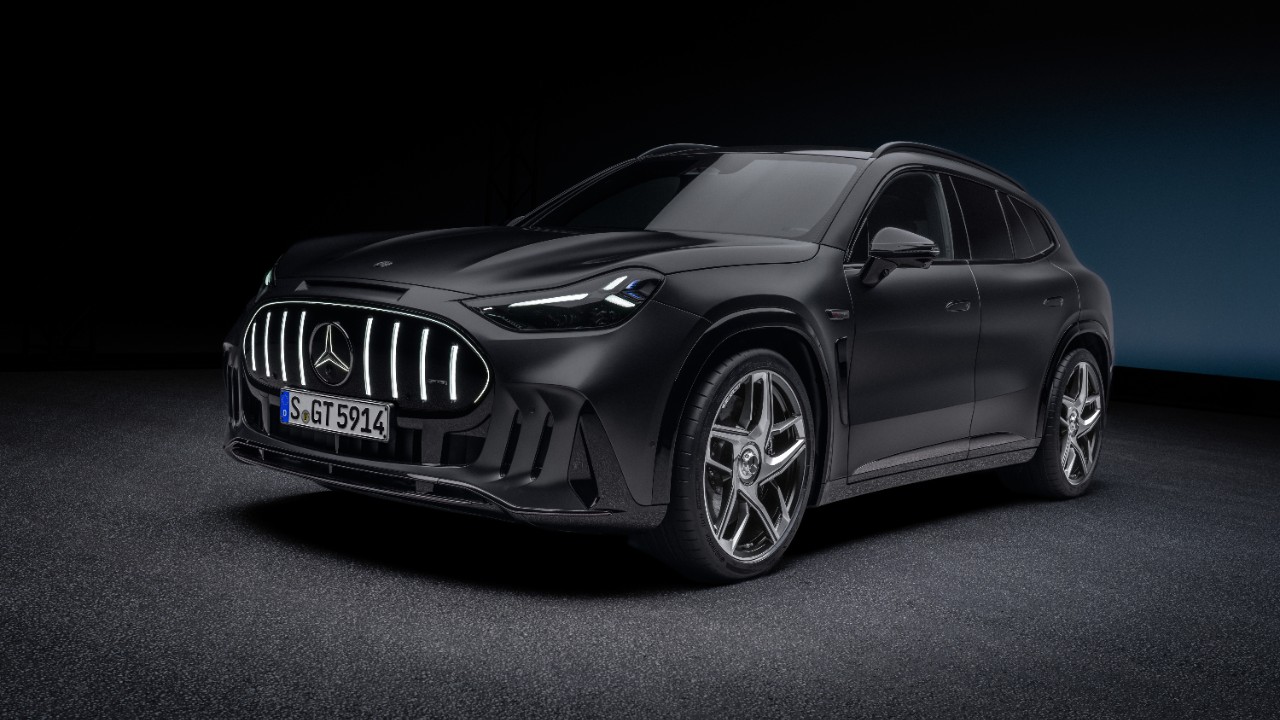
Mercedes-AMG has revealed the 2028 Mercedes-AMG GT SUV, and the company calls it the first full-size SUV developed entirely in-house by its performance brand. The top GT 63 version makes 1,153 horsepower at peak from three electric motors. In addition, Mercedes says its battery can take up to 710 kilowatts at a DC fast charger.
The world premiere took place on October 17 at the Mercedes-Benz Museum in Stuttgart. It was part of The 140 Festival, which marked 140 years since Carl Benz filed his patent for the first automobile. Mercedes says around 15,000 guests came to the festival.
Before the numbers, one caution. Every performance and charging figure below comes from Mercedes, which labels its acceleration times as estimates and its charging data as preliminary. Also, Mercedes has not announced a U.S. price.
What the Mercedes-AMG GT SUV is
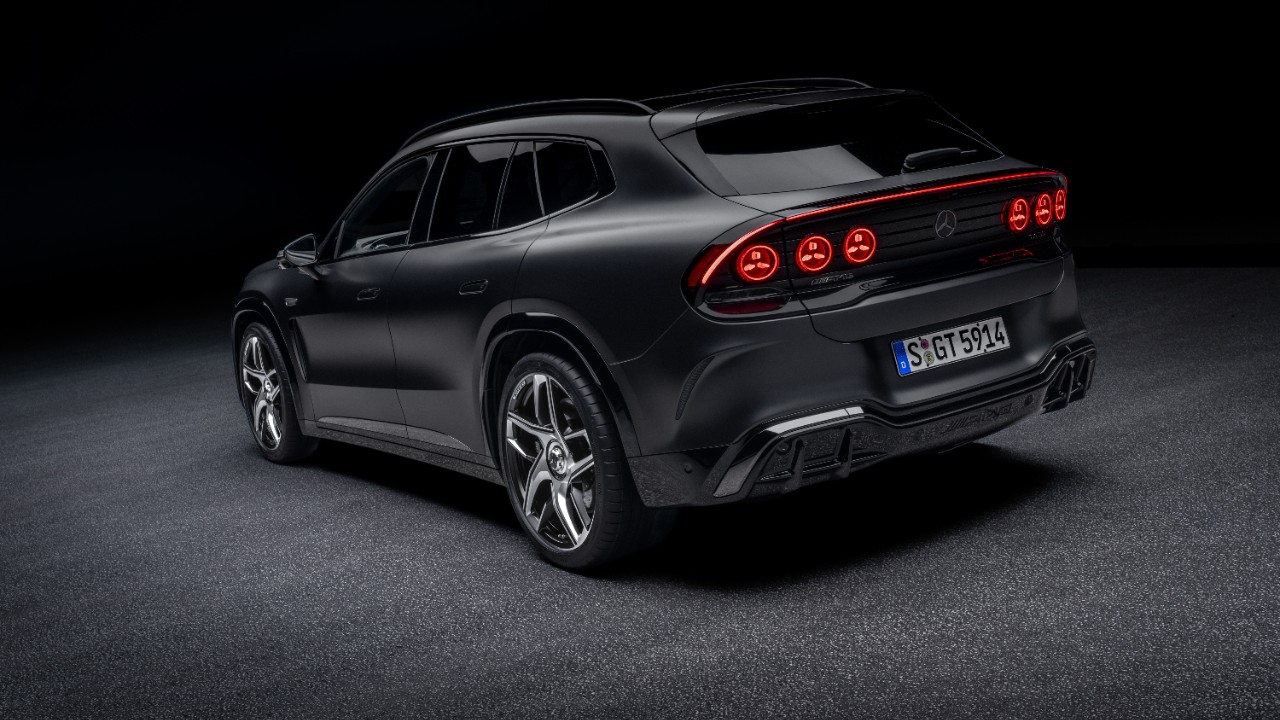
According to the Mercedes-Benz USA press release dated October 17, 2026, the SUV is the second model on AMG.EA, the brand’s new high-performance architecture. Then, in summer 2027, the first U.S. cars reach dealers. Mercedes builds the SUV in Hall 32 at its Sindelfingen plant, a factory founded in 1915.
It is also a big vehicle. Mercedes lists the GT 63 and GT 55 at 200.2 inches long, 78.8 inches wide without mirrors and 65.2 inches tall, on a 119.7-inch wheelbase. A three-passenger rear seat is standard. Behind it, the trunk holds 21.4 cubic feet, while a small front trunk adds 2.8 cubic feet.
The Mercedes festival release repeats the same “developed entirely in-house” wording. It also notes that Mercedes-AMG turns 60 in 2027, the year the SUV goes on sale here.
Three versions, from 536 to 1,153 hp
First, the GT 63. Its three axial-flux motors make 1,153 horsepower and 1,475 lb-ft of torque at peak, according to Mercedes. That peak is a boost figure, though. Continuous output is 711 horsepower, and Mercedes quotes a boost duration of 63 seconds.
Next comes the GT 55, which also uses three axial-flux motors. It makes 805 horsepower and 1,372 lb-ft at peak, with the same 711 horsepower continuous rating. By comparison, the entry GT 53 uses two permanently excited synchronous motors. Mercedes rates it at 536 horsepower peak, 362 horsepower continuous and 590 lb-ft.
Mercedes estimates the GT 63 reaches 60 mph in 2.6 seconds. With a one-foot rollout, the drag-strip method that ignores the first foot of travel, the estimate drops to 2.4 seconds. However, Mercedes limits top speed electronically to 168 mph. The GT 53 tops out at 143 mph and needs an estimated 4.1 seconds to 60 mph.
None of this is light. In fact, Mercedes gives the GT 63 a DIN curb weight of 2,695 kg. Electrek’s report on the reveal converts that to 5,942 pounds. All three versions use AMG Performance 4MATIC+ all-wheel drive, and the GT 63 and GT 55 add torque vectoring between the rear wheels.
The battery and the 710-kW charging claim
Both bigger versions carry an 800-volt battery with 128 kWh of usable capacity in 22 modules. Meanwhile, the GT 53 makes do with 106 kWh in 18 modules. Mercedes says coolant flows directly around the cylindrical cells, which use an NCMA cathode with a silicon-containing anode.
Peak DC charging is 710 kW on the GT 63 and GT 55, and 600 kW on the GT 53. As a result, Mercedes claims a 10 to 80 percent charge takes 12 minutes on the big battery. At a more common 400 kW station, that stretches to 16 minutes. Mercedes stresses that these values are preliminary and not yet confirmed by an official testing body.
For now, Mercedes quotes range only on the European WLTP cycle. That gives the big-battery models 620 to 700 km, which Electrek converts to 385 to 435 miles. So far, Mercedes has not published an EPA estimate.
For context, Electrek lines the GT 63 up against the Porsche Cayenne Turbo Electric. There, Electrek lists the Porsche at 1,139 horsepower peak, 400 kW maximum charging and a U.S. price of $163,000.
A simulated V8 and simulated gearshifts
Because there is no engine, Mercedes built one in software. In the AMGFORCE Sport+ drive program, the GT 63 and GT 55 play a V8 soundtrack, while the GT 53 plays a six-cylinder. Mercedes says engineers based the sound on more than 100 measurements taken with 16 microphones, using an AMG GT R as the reference car.
The system also fakes gear changes like an AMG SPEEDSHIFT transmission. The driver pulls the steering-wheel paddles, and the seat vibrates while the display reacts. A slider then lets the driver pick “Powerful,” “Balanced” or “Silent,” and Mercedes says more sound modes will follow later.
Chassis hardware on the Mercedes-AMG GT SUV
Instead of mechanical anti-roll bars, the Mercedes-AMG GT SUV uses AMG ACTIVE RIDE CONTROL+, a hydraulic system that actively controls pitch and roll. It works with three-stage adjustable air springs. Rear-axle steering is standard and turns the rear wheels up to 6 degrees opposite the fronts below 50 mph.
Brakes depend on the version. The GT 63 gets carbon-ceramic brakes as standard, and they are optional on the GT 55. The GT 53, by contrast, uses steel brakes. Mercedes lists seven drive programs, from Comfort and Eco to RACE and Slippery.
Mercedes has not announced pricing. For now, the record is this: Mercedes says the first Mercedes-AMG GT SUVs reach U.S. dealerships in summer 2027, built in Hall 32 at Sindelfingen.
More from Fast Lane Only