Tesla, Inc has reached a turning point where its bold promise of self driving is no longer a distant narrative but the central test of its financial future. As growth in its core electric vehicle business slows and margins come under pressure, Elon Musk is betting that software, autonomy and robotaxis can justify a valuation that still prices in years of rapid expansion. The coming earnings cycles will show whether that gamble can offset weakening fundamentals or expose how much of Tesla’s story still rests on faith.
Margins under strain as the car business cools
For years, Tesla’s ability to earn healthy profits on electric vehicles set it apart from legacy automakers and underpinned its stock market premium. That advantage is now eroding as price cuts, softer demand and rising competition squeeze the economics of selling cars. Analysts tracking the company describe a picture of deteriorating automotive fundamentals, with lower average selling prices and higher costs weighing on earnings even as the company maintains a lofty market capitalization that assumes significant future upside.
Recent commentary on Tesla, Inc characterizes the shares as highly valued relative to peers, with the equity market still assigning a growth multiple despite evidence that the traditional vehicle business is slowing. One detailed assessment argues that the stock looks overpriced given the current trajectory of margins and volumes, and that there is “no clear catalyst” in the near term to unlock further upside from the car segment alone. That disconnect between valuation and the underlying vehicle making business is precisely why Musk’s push into self driving and software is taking center stage for investors.
Self driving as the new core business thesis
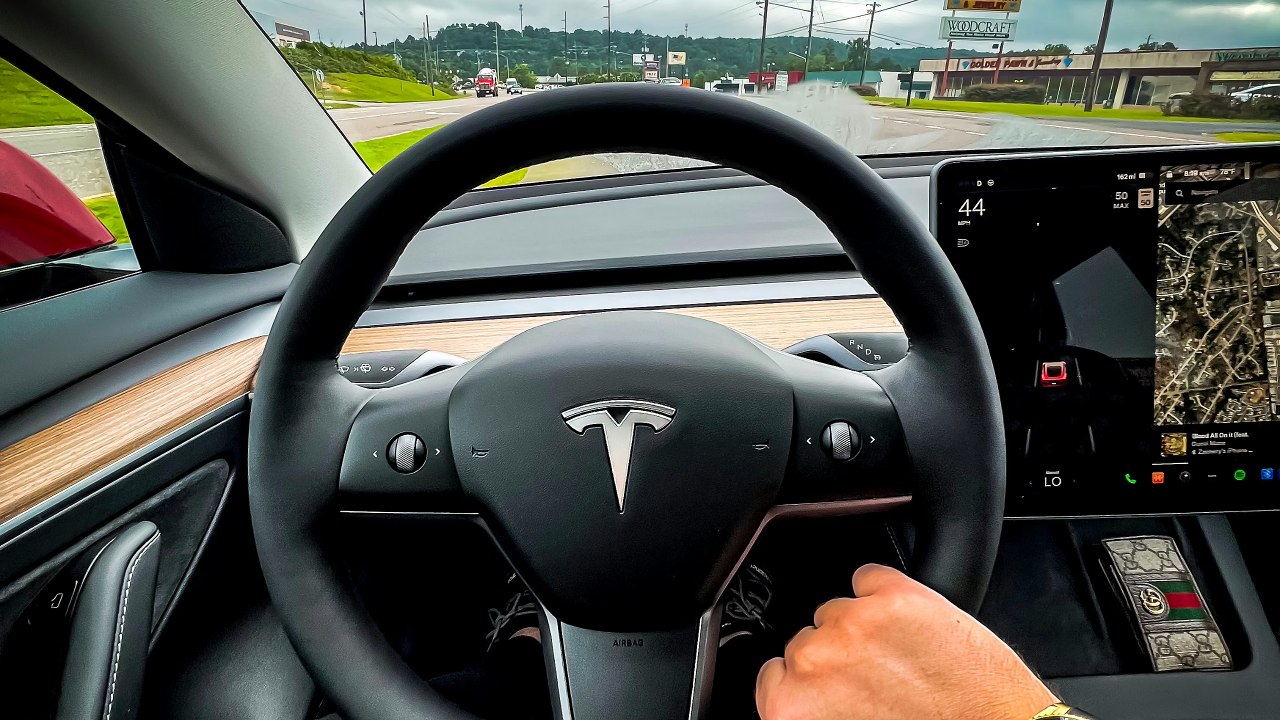
Elon Musk has long framed autonomy as the feature that transforms Tesla from a car manufacturer into a technology and services platform, and that narrative is now being operationalized in the numbers. The company has disclosed that Tesla Reports 1.1 M Million FSD Subscribers as Autonomy Becomes a Core Business, underscoring how Full Self driving (Supervised) has shifted from a niche add on to a material revenue stream. With each subscription sold on top of a vehicle, Tesla moves closer to a model where software and data, rather than hardware alone, drive profitability.
That pivot is also visible in how management and analysts describe the business model. A detailed review of Tesla’s Q4 and full year performance notes that FSD is reshaping the economics of the company, with a growing share of value coming from recurring software revenue rather than one time car sales. The same analysis highlights that Deliveries were down, reflecting lower volumes and pricing pressure, which makes the expansion of FSD subscriptions even more critical to sustaining earnings. In effect, autonomy is being positioned as the answer to a maturing EV market, and the company is asking shareholders to judge it less on units shipped and more on software attached to each vehicle.
Robotaxis, Cybercabs and the xAI bet
Musk is not stopping at driver assistance software sold to individual owners. He is also promising a future fleet of robotaxis and so called Cybercabs that would turn Tesla vehicles into revenue generating assets, potentially operating as autonomous ride hailing cars. On a recent Tesla Conference call, the company outlined plans to expand robotaxi operations and signaled that Model S and Model X production would end, a shift that frees capital and engineering resources for new autonomous platforms. The same discussion emphasized that Tesla Earnings Fall 17%, a reminder that the robotaxi vision is being advanced from a position of financial pressure rather than surplus.
To support this strategy, Tesla has committed substantial capital to artificial intelligence infrastructure. According to reporting from Maaal, Riyadh, Publish, Tesla announced Wednesday that it will invest $2 billion in Elon Musk’s artificial intelligence venture xAI, a move that ties the automaker’s future even more tightly to Musk’s broader AI ambitions. Separate analysis of this decision notes that Impact on Investor Confidence Reiterating Tesla production plans is crucial, because the company has repeatedly missed aggressive timelines for new products. By channeling $2 billion into xAI while talking up Cybercab production, Tesla is effectively asking investors to trust that this time the technology and the schedule will align.
Investors weigh slowing growth against autonomy hype
The tension between Tesla’s slowing car business and its autonomy narrative is increasingly visible in market commentary. One widely circulated assessment of the so called “Magnificent 7” technology leaders argues that Among the group, Tesla trades in its own universe, with a valuation that seems detached from near term earnings trends. Heading into the latest earnings release, that analysis pointed to weakening fundamentals and questioned whether investors were giving the company too much credit for future self driving profits that remain unproven at scale.
Other detailed breakdowns of Tesla’s financials echo that concern. A review of the company’s recent results describes the year as a period when management “stabilized the machine while eating headwinds,” noting that Deliveries were down and that lower volumes and pricing weighed on revenue. Another valuation focused piece concludes that Tesla, Inc remains overpriced, yet without a clear short term catalyst to “break” the stock, precisely because so much of the bull case rests on long dated expectations for autonomy and software. In this view, Musk’s aggressive self driving push is less a bonus and more a necessity to justify a market value that the current vehicle making business alone cannot support.
Regulation, competition and the risk of delay
Even if Tesla executes flawlessly on technology, the path to fully autonomous driving is constrained by regulation, safety scrutiny and intense competition. Academic work on the sector notes that Collaboration and investment among autonomous driving technology companies are increasing, with partnerships and joint ventures accelerating development across the industry. That dynamic means Tesla is no longer the only company pouring resources into self driving, and rivals with deep pockets and strong regulatory relationships are racing to deploy their own systems, from highway pilot features to urban robotaxis.
Regulators and policymakers are also moving cautiously, which could slow the timeline for Musk’s most ambitious promises. Reporting focused on Musk’s self driving ambitions stresses that VEHICLE MAKING BUSINESS Tesla profit margins have historically been central to investor confidence, and that a drop in Q4 revenue tied to lower deliveries has sharpened attention on how quickly autonomy can scale. Separate coverage of Musk, Tesla, Investors highlights that the company’s Q4 revenue is expected to fall by about 4 percent because of weaker volumes, and that shareholders are increasingly focused on concrete milestones for self driving deployment rather than aspirational timelines. If approvals, safety incidents or technical setbacks delay widespread robotaxi operations, the gap between Tesla’s valuation and its realized earnings could become harder to defend.
More from Fast Lane Only