NASCAR has always been a sport where paint schemes tell a parallel story to the racing itself, and few families illustrate that better than the Elliotts. Bill Elliott’s red and yellow liveries, backed by household-name corporations, became part of the visual language of stock car racing. His son, Chase Elliott, has become a modern star in his own right, but the commercial terrain around him looks very different, leaving him to build a sponsor portfolio that shares little with his father’s legendary backers.
The shift is not simply a matter of taste or timing. It reflects how corporate priorities, media habits, and even legal disputes have reshaped which brands want their logos on a Cup car. As long-time partners tied to Bill Elliott exit the series without ever appearing on Chase’s No. 9, new players from streaming to workwear have stepped in, underscoring how dramatically NASCAR’s sponsorship economy has evolved.
From Bill Elliott’s golden era to a different corporate playbook
Bill Elliott rose to prominence in an era when fast food chains and consumer giants used NASCAR as a primary billboard to reach middle America. His name became tightly linked with McDonalds and other major brands, and those partnerships helped define both his public image and the look of the series. The bright, easily recognizable schemes were designed for a world where fans followed races on broadcast television and in-person at packed speedways, and where a single sponsor could dominate a car’s identity for years at a time.
That model has fractured. Reporting on Bill Elliott’s commercial legacy notes that McDonalds, one of the companies most closely associated with his career, has now left NASCAR without ever partnering with his son Chase. The same coverage highlights that Bill Elliott is still regarded as one of NASCAR’s most iconic names, yet the corporations that once built campaigns around him have chosen a different direction as the sport’s audience and media environment have changed. The departure of these long-standing backers underlines how the sponsorship calculus has shifted away from simple continuity between generations, even when the surname on the door remains the same.
Iconic brands exit while new money chases different stories
The most striking example of that break with the past is the decision by Bill Elliott’s former sponsors to leave the series entirely without ever appearing on Chase Elliott’s car. Coverage of their exit describes them as $220 billion dollar giants that had been fixtures in the sport, only to opt out just as Chase was cementing his status as a Cup champion and perennial title contender. Instead of migrating to the No. 9, those companies stepped away, and Hardee’s was unveiled as a replacement sponsor for Wallace and his team, a reminder that even legacy brands now reassess where NASCAR fits in their broader marketing mix.
For years, many observers assumed that the natural progression would see these same corporations follow Bill’s fan base to Chase, especially as he emerged as one of NASCAR’s most popular drivers. The fact that they did not, and instead left the grid while other partners like Hardee’s moved in elsewhere, shows how little sentimentality drives modern sponsorship decisions. The Elliott name still carries weight, but the brands that once built their motorsports identity around Bill have chosen to invest their $220 billion scale in other platforms, leaving Chase to cultivate a very different roster of backers.
Chase Elliott’s modern sponsor mix: NAPA, streaming, and new categories
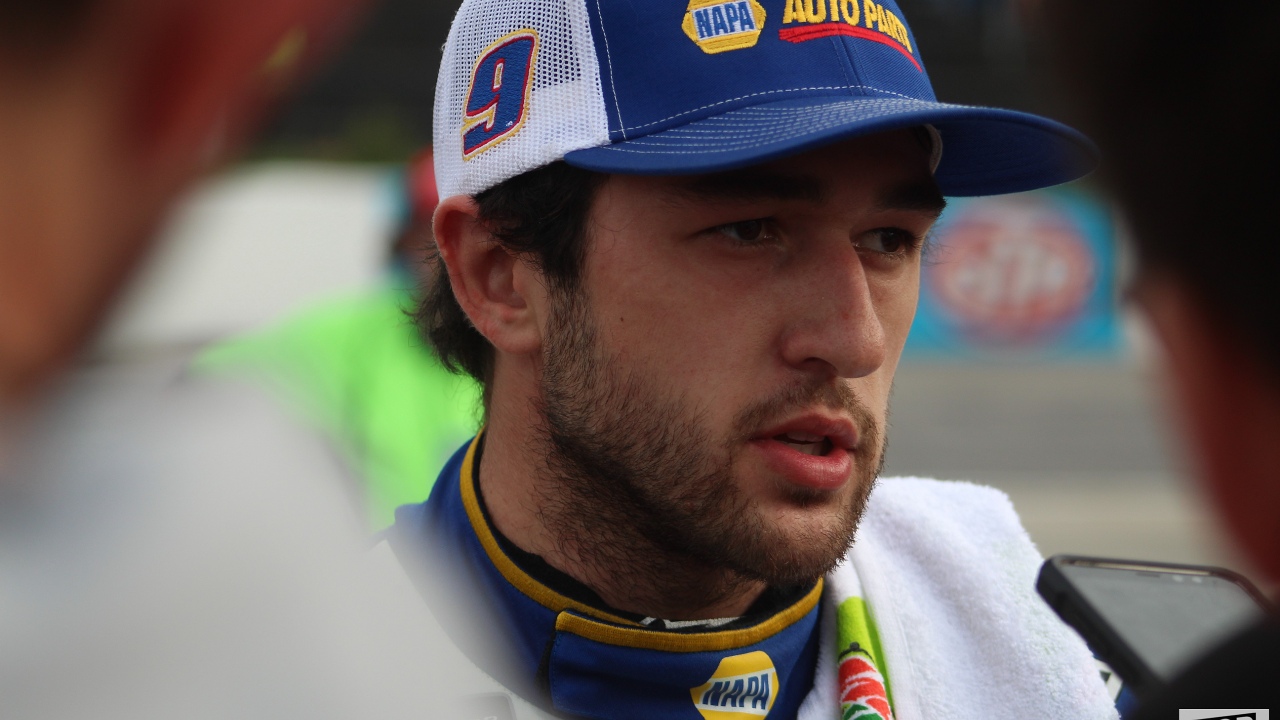
In place of his father’s fast food and consumer-goods heavy lineup, Chase Elliott has assembled a portfolio that reflects NASCAR’s current commercial center of gravity. At the core is his long-running relationship with NAPA, which has followed him from the lower series into the Cup Series with Hendrick Motorsports. Reporting on that partnership notes that Chase Elliott and NAPA share one of the longest and most visible driver relationships in NASCAR, with the brand serving as a primary backer on the No. 9 as he moved into the top level with Hendrick Motorsports. That continuity has given Elliott a stable visual identity, even as other logos have rotated around the car.
Alongside that traditional automotive partner, Elliott has attracted newer categories that did not exist in Bill’s heyday. Amazon Prime Video has joined as a primary sponsor for Chase Elliott and the Hendrick Motorsports No. 9 Chevrolet, with Hendrick Motorsports describing the deal as part of its broader NASCAR relationship with the streaming platform. The presence of Amazon Prime Video on the car signals how media and technology companies now see value in NASCAR’s audience, using race weekends to promote subscription services and original content rather than burgers or soft drinks. It is a sponsorship profile built for a digital, on-demand era, and it underscores how far the sport has moved from the corporate landscape that once surrounded Bill Elliott.
Hooters, lawsuits, and the risks of the new sponsorship economy
The modern environment has also proven more volatile, as illustrated by Chase Elliott’s experience with Hooters. Hendrick Motorsports ended its sponsorship arrangement with Hooters, with reporting noting that Hooters is no longer sponsoring NASCAR driver Chase Elliott’s Chevy due to issues that emerged around the agreement. That decision removed a recognizable restaurant brand from Elliott’s car and highlighted how quickly a partnership can unravel when expectations on either side are not met, whether in terms of activation, payment, or performance.
The fallout did not stop at a simple split. A separate report detailed that Hooters agreed to pay Hendrick Motorsports $900,000 to settle a lawsuit over unpaid Chase Elliott sponsorship. The settlement, described as Hooters paying Hendrick Motorsports $900,000, underscores the financial stakes involved when a sponsor fails to deliver on contracted commitments. For Elliott, the episode meant losing a high-profile partner and navigating the public glare of a legal dispute, a scenario that would have been far less common in the more straightforward, long-term deals that characterized much of his father’s era.
What the Elliott divide says about NASCAR’s future
The contrast between Bill and Chase Elliott’s sponsor portfolios is not simply a quirk of family history, it is a case study in how NASCAR’s commercial base has been reconfigured. Bill Elliott’s career unfolded when a handful of consumer brands could anchor the sport’s image for decades, and when a driver’s success almost guaranteed that his backers would follow his lineage. In Chase’s time, even as he has become one of NASCAR’s central figures, those same companies have exited without ever appearing on his car, while new partners from automotive parts, streaming, and other sectors have stepped into the spotlight.
That shift carries implications beyond one driver. As Chase Elliott and NAPA continue their long-running alliance and Amazon Prime Video plants its logo on the Hendrick Motorsports No. 9 Chevrolet, the sport is signaling that its future lies with brands that see value in data-rich, cross-platform storytelling rather than simple logo exposure. At the same time, the Hooters dispute and the departure of Bill Elliott’s former $220 billion dollar sponsors show that loyalty is no longer guaranteed on either side. For NASCAR, the challenge will be to harness the star power of drivers like Chase while offering enough stability and return on investment to keep both traditional partners and new entrants committed, even as the landscape that once made Bill Elliott a commercial icon recedes further into the rearview mirror.
More from Fast Lane Only