New York lawmakers are weighing a proposal that would force some of the state’s most persistent speeders to let their cars slow them down. The “Stop Super Speeders Act” would require certain high risk drivers to install speed limiting technology that keeps vehicles from traveling far above posted limits. Supporters frame it as a targeted safety measure, while critics see a costly and intrusive experiment in automated enforcement.
How the Stop Super Speeders Act would work
At the heart of the proposal is a simple idea: if a driver repeatedly racks up serious speeding violations, the state would no longer trust that person to control their own top speed. The Senate version, identified as 2025 S4045, and the Assembly companion, 2025 A2299, both state that “Requires the” installation of intelligent speed assistance devices when a motorist hits a specific threshold of violations or points. Earlier versions of the bill describe that trigger as eleven or more points on a license within an eighteen month period, or a pattern of high speed tickets, which would then allow or require a judge to order a limiter installed in the driver’s car.
The legislation focuses on what it calls “intelligent speed assistance,” often shortened to Intelligent Speed Assistant, a system that uses GPS and a database of speed limits to compare how fast a car is traveling with the legal maximum on that stretch of road. If the driver tries to go too fast, the technology can either warn them or physically prevent the car from exceeding a set margin above the limit. The Senate summary for 2025 S4045 and the Assembly summary for 2025 A2299 both spell out that the devices would be calibrated so that a vehicle could not travel more than a small amount higher than the posted limit, and that a motorist who meets the criteria would have to keep the system active as a condition of being allowed to drive.
Who would be forced to install speed limiters
The proposal is not aimed at every driver who has ever crept a few miles per hour over the limit. Instead, it targets what the bill language and supporting commentary describe as “repeatedly reckless” motorists. Reporting on the Stop Super Speeders Act notes that a judge would be required to order the technology for drivers who either accumulate eleven or more points on their license within eighteen months or receive a set number of speeding tickets at very high speeds, such as 30 miles per hour or more above the limit. In practice, that means a motorist who gets one or two minor tickets would not be affected, while someone who keeps getting caught at extreme speeds would face a mandatory limiter order.
Some versions of the proposal also extend the requirement to drivers with a history of dangerous behavior beyond speeding alone. The Assembly bill 2025 A2299, which also carries the “Requires the” summary, includes language that covers motorists with a previously revoked license who are allowed back on the road, as well as those with multiple camera based speeding violations in school zones. Coverage of the measure explains that the goal is to capture people who have shown, through repeated infractions, that fines and points are not enough to change their behavior. For those drivers, the state would effectively say that continued access to a full power vehicle is contingent on accepting a technological governor.
What Intelligent Speed Assistant actually does
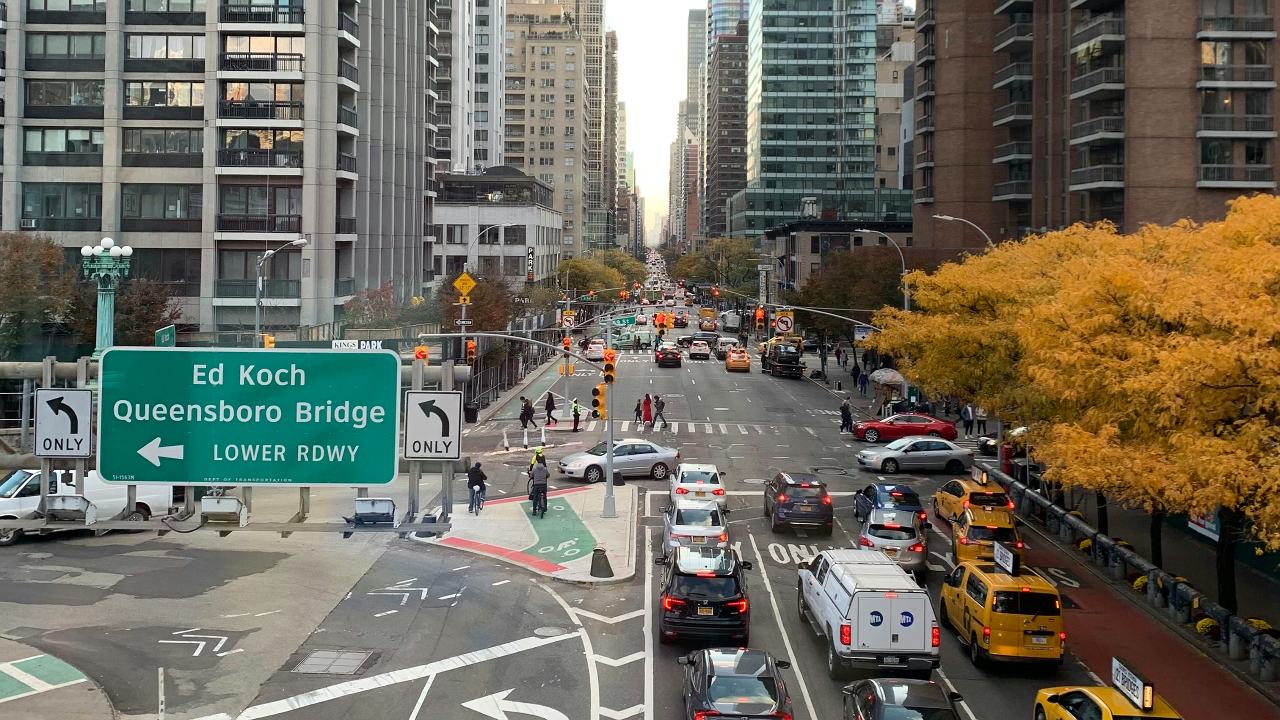
Intelligent Speed Assistant is not a brand new invention, but the New York proposal would be one of the first attempts to tie it directly to individual driving records. The technology combines GPS location data with a constantly updated map of speed limits, then compares that information with the vehicle’s current speed. If the car is traveling faster than allowed, the system can respond in several ways, from flashing dashboard warnings and audible alerts to automatically reducing engine power so the driver cannot accelerate beyond a preset threshold. Reporting on the New York legislation explains that the bill envisions a version that actively limits speed rather than simply nagging the driver.
State Senator Andrew Gounardes has already showcased how such a system might work in practice. In a press event described as “Sen, Gounardes Joins Advocates, Test, Drive Vehicle, Speed, Limiting Tech for Repeatedly Reckless Drivers,” he and safety advocates took a car equipped with a limiter onto city streets to demonstrate that it could keep up with traffic while still preventing extreme speeding. Separate coverage of the proposed law notes that the devices would be certified to ensure they are tamper resistant and accurate, and that they would be installed at the driver’s expense. One report on New York Hopes To Control How Fast Cars Can Drive states that New York drivers may be forced to spend $1,000 to get a speed limiter in their car, a cost that has quickly become one of the most contentious aspects of the plan.
Why New York is turning to tech to curb speeding
Supporters of the Stop Super Speeders Act argue that the state has already tried traditional tools like fines, points, and license suspensions, and that a small but dangerous group of drivers continues to rack up violations anyway. They point to national data showing that aggressive driving and speeding remain major contributors to traffic deaths. One report on states cracking down on aggressive driving cites The CDC as finding that the United States performs poorly compared with 27 other high income countries when it comes to road related deaths, and that speeding is a key factor in those fatalities. In that context, advocates say, using technology to physically prevent the worst offenders from driving far above the limit is a logical next step.
New York has already experimented with automated enforcement through red light and speed cameras, particularly in New York City school zones, and the new proposal builds on that experience. Coverage of the Stop Super Speeders Act notes that drivers who collect a high number of camera tickets in a year could be among those ordered to install Intelligent Speed Assistant. A detailed explainer titled “Can New York Force You, Slow Down, Understanding the Proposed, Stop Super Speeders Act” describes how the bill is designed to work alongside existing penalties rather than replace them, so a driver could still face fines, points, and even suspension in addition to the limiter requirement. Proponents say that combination is necessary to break patterns of chronic speeding that have persisted despite years of stepped up enforcement.
Privacy, cost, and the road ahead for the bill
For all the safety arguments, the proposal raises difficult questions about privacy, cost, and the scope of state power over private vehicles. Some drivers worry that a system capable of tracking speed and location could be used to monitor their movements, even if the bill does not explicitly authorize such data collection. Legal analysis of the Stop Super Speeders Act stresses that Intelligent Speed Assistant can be configured to operate locally in the vehicle without transmitting data, but skeptics note that any connected system could be expanded later. Others argue that forcing people to pay $1,000 for a speed limiter, as reported in coverage of New York Hopes To Control How Fast Cars Can Drive, amounts to an extra financial penalty that will hit lower income drivers hardest.
There is also debate over how far the mandate might eventually reach. A report on N.Y. legislation that could mandate speed limiters in vehicles notes that the Stop Super Speeders Act is currently framed around high risk drivers, but some safety advocates have floated the idea of requiring similar technology in all new cars, at least in a warning only mode. Another piece on N.Y. legislation that would require serial speeders to use Intelligent Speed Assistant tech when driving explains that the current bill would rely on judges to order the devices after a qualifying record is established, rather than installing them by default. For now, the measure remains a targeted response to a specific group of drivers, but the debate it has sparked goes to a broader question: how much control over the gas pedal should belong to the person behind the wheel, and how much should be handed to software.
More from Fast Lane Only: