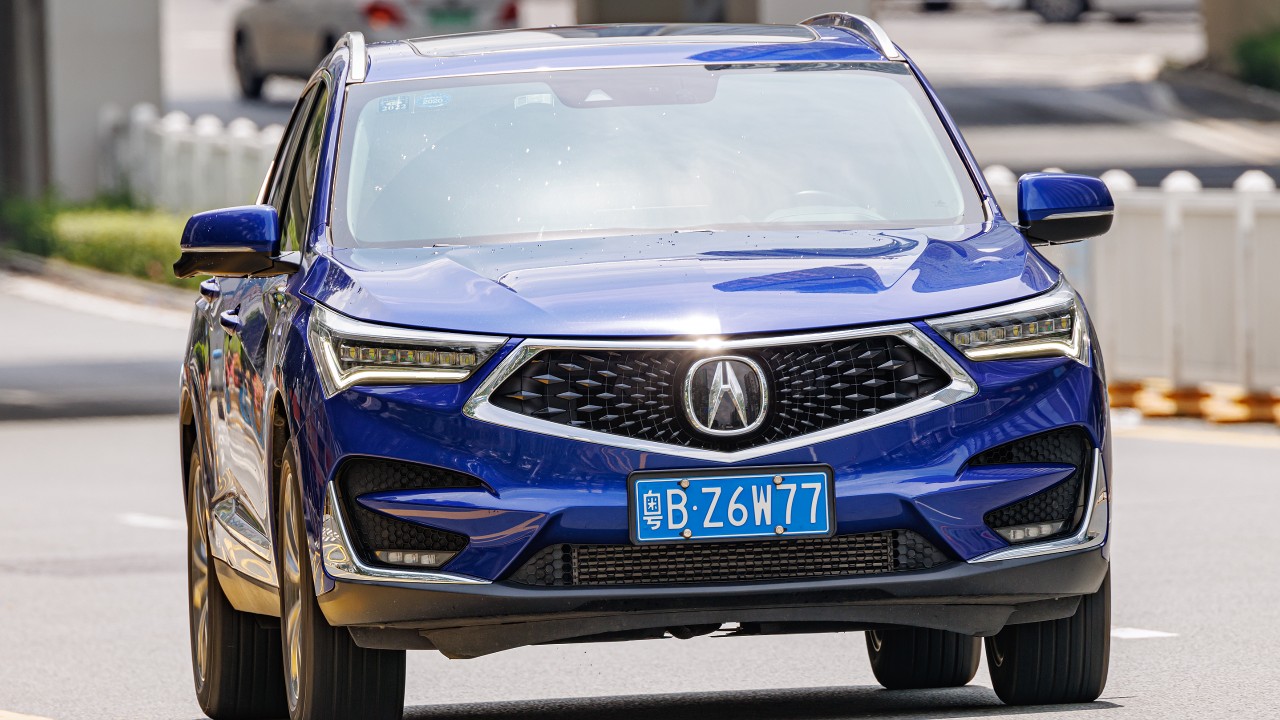
The next-generation Acura RDX is officially on a new trajectory, with Honda confirming that the compact luxury SUV will adopt a dual-motor hybrid powertrain. That single decision signals a major shift in how Acura intends to balance performance, efficiency, and all-weather usability in one of its core models. As the brand works toward the new RDX’s arrival later this decade, the hybrid confirmation offers an early look at where Acura’s engineering priorities now lie.
What Honda has confirmed about the next RDX
Honda has made one key point unmistakably clear: the upcoming Acura RDX will use a two-motor hybrid system rather than a traditional gasoline-only setup. The company has not yet released output figures, battery specifications, or detailed component layouts, but it has stated that the next RDX will feature a dual-motor hybrid powertrain, marking a decisive move away from the current model’s turbocharged internal combustion focus. That confirmation alone places the RDX in line with Honda’s broader electrified strategy, which increasingly leans on multi-motor hybrid architectures for both efficiency and responsive power delivery, as reflected in early information on the future RDX hybrid.
Honda has also signaled that the next generation is not imminent, describing the new RDX as still a couple of years away rather than a near-term showroom arrival. That timing aligns with projections that the fourth-generation Acura RDX SUV is being prepared for a model-year launch later in the decade, with reporting indicating that Acura is on track to introduce a new RDX for the 2028 model year and that a hybrid powertrain is central to that plan. In other words, the company is not rushing a mid-cycle tweak, but instead appears to be engineering a ground-up successor that will debut as a fully hybridized compact luxury SUV, consistent with the 2028 Acura RDX overview.
How the dual-motor hybrid fits Acura’s SUV strategy
From my perspective, the decision to move the RDX to a two-motor hybrid layout is less an isolated product choice and more a statement about Acura’s direction in the premium SUV space. The RDX has long served as the brand’s volume-oriented crossover, sitting below larger models yet often acting as the entry point for new customers. By committing this core SUV to a dual-motor hybrid system, Acura is effectively making electrified performance the default for one of its most important nameplates. That approach mirrors Honda’s broader push to integrate two-motor hybrid systems into mainstream products, and it suggests that Acura intends to compete directly with other luxury brands that are pivoting their compact SUVs toward hybrid and electrified drivetrains, a trend underscored by the planned hybrid focus in the future Acura RDX SUV.
The dual-motor configuration also gives Acura a flexible foundation for tuning the RDX’s character. Two-motor hybrid systems can be calibrated to prioritize fuel economy, brisk acceleration, or a blend of both, depending on how the electric motors and combustion engine share the workload. In the context of a compact luxury SUV, that flexibility is crucial, because buyers expect both refinement and real-world performance. The confirmation that the next RDX will pack a two-motor hybrid powertrain indicates that Acura is betting on this architecture to deliver the kind of smooth, immediate response that electric assistance can provide, while still maintaining the long-range capability and quick refueling of a gasoline engine, as highlighted in early reporting that the next-gen Acura RDX will pack a two-motor hybrid.
AWD expectations and the role of Honda’s existing hybrid hardware
One of the most pressing questions I hear from RDX shoppers is how the hybrid system will interact with all-wheel drive. While Honda has not yet detailed the exact configuration for the next RDX, there is useful context in how the company’s existing two-motor hybrid hardware already works with on-demand AWD setups in other Hondas. Enthusiast discussions have pointed out that the current two-motor system is compatible with the less sophisticated on-demand all-wheel-drive systems used in some Honda models, which suggests that adapting a similar layout to a premium Acura SUV is technically feasible. In particular, commentary on the future 2027 Acura RDX has emphasized that the existing two-motor system is already compatible with on-demand AWD in Hondas with AWD, reinforcing the idea that Acura has a ready-made toolkit for pairing hybrid power with four driven wheels.
From a product-planning standpoint, I would be surprised if Acura did not leverage that compatibility to keep an all-wheel-drive option in the next RDX lineup. The current RDX has built much of its appeal on the promise of year-round usability, and the compact luxury SUV segment is crowded with rivals that offer some form of AWD, whether mechanical or electrically assisted. Since the two-motor hybrid system can already work with on-demand AWD in other applications, it is reasonable to expect that Acura will adapt a similar approach, even if the exact torque split, rear-axle hardware, or control logic remains undisclosed for now. While the precise configuration for the upcoming RDX is unverified based on available sources, the existing pairing of two-motor hybrids and AWD in other Hondas provides a strong hint at how Acura might execute the hybrid RDX’s drivetrain strategy.
Timing, model-year positioning, and what “a couple of years away” really means
Honda’s description of the next RDX as still a couple of years away has important implications for how I interpret the model’s development timeline. Rather than signaling a quick refresh, that phrasing aligns with reporting that Acura is preparing a fourth-generation RDX for the 2028 model year, which would place the hybrid debut closer to the end of the decade. In practice, that means the current RDX is likely to continue for several more model years, potentially with incremental updates, while engineers finalize the hybrid platform and associated technologies. The projection that Acura is on track to introduce the new fourth-generation RDX SUV for 2028, with a hybrid powertrain as a central feature, supports the idea that the company is pacing this transition carefully, as reflected in the 2028 RDX overview.
That longer runway also gives Acura time to refine the RDX’s packaging, design, and interior technology around the hybrid system rather than simply dropping new hardware into an existing shell. Early reporting has suggested that the next-generation RDX will receive exterior and interior changes alongside the hybrid powertrain, and that the new model could be larger than the current car. If Acura does increase the RDX’s dimensions, it would likely be positioning the SUV more assertively within the compact luxury segment, where cabin space and cargo flexibility are key differentiators. The combination of a dual-motor hybrid setup, updated styling, and a potentially larger footprint would mark a significant evolution from the current RDX, consistent with the notion that the next generation is being engineered as a comprehensive redesign rather than a modest update, as indicated by early details on the next-generation RDX.
What the hybrid RDX signals for Acura’s broader future
Looking beyond the RDX itself, I see the confirmed dual-motor hybrid powertrain as a bellwether for Acura’s broader trajectory. The RDX sits at the heart of Acura’s SUV lineup, and committing it to a two-motor hybrid system signals that electrified drivetrains are moving from niche options to core identity for the brand. As Acura prepares the fourth-generation RDX SUV with a hybrid powertrain as a defining feature, it is effectively telling customers that future performance and refinement will be delivered through a blend of combustion and electric power. That message aligns with Honda’s wider strategy of deploying two-motor hybrid systems across key models, and it suggests that other Acura vehicles may follow a similar path as the decade progresses, a direction underscored by the hybrid-centric plans described in the future RDX overview.
More from Fast Lane Only