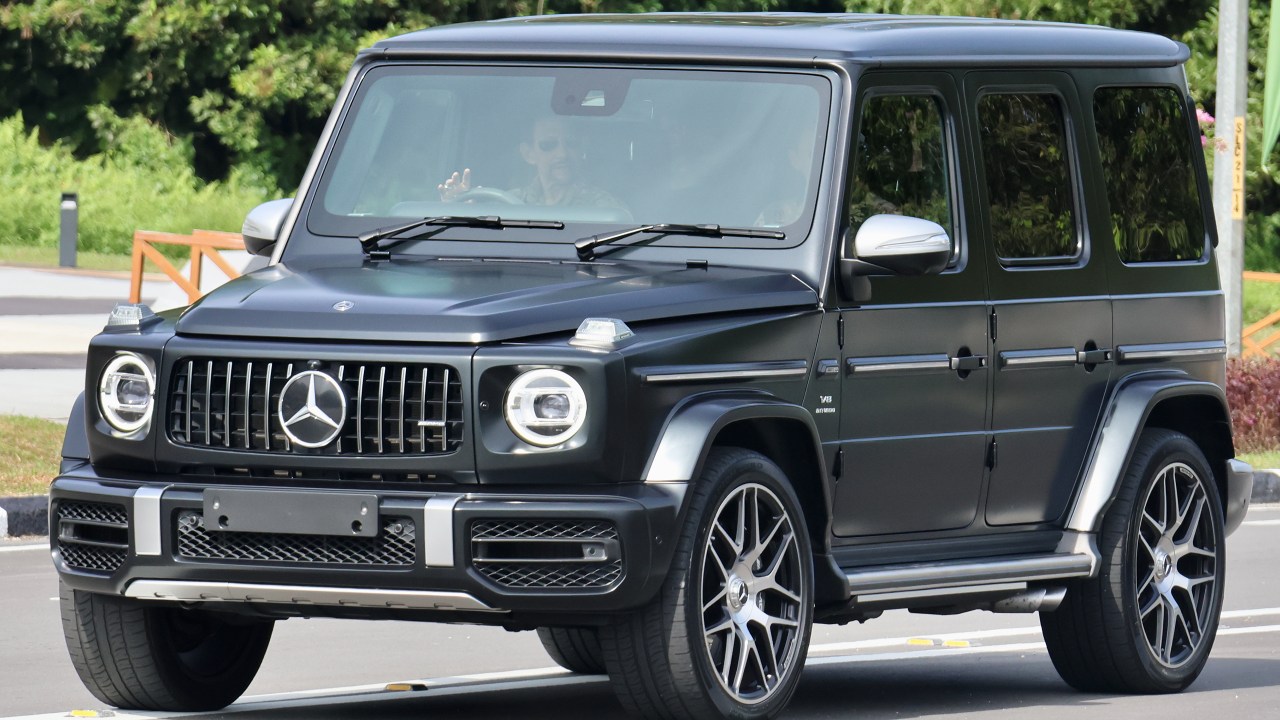
Mercedes-Benz spent 2025 wrestling with a market that suddenly looked far less forgiving, from softening demand for premium cars to a sharp reset in electric vehicle expectations. Yet in the middle of that turbulence, one hulking, boxy SUV did not just hold its ground, it surged ahead and quietly rewrote the company’s internal pecking order. The G-Class, long a niche status symbol, turned into a volume and profit engine at the very moment the rest of the portfolio faltered.
As I sift through the numbers and the company’s own framing of its performance, the contrast is striking. Overall sales slipped, electric ambitions stalled, and core sedans lost momentum, but the G-Class and other top-end models delivered growth that executives will struggle to ignore when they decide where to invest next.
Global sales stumble while the top end shines
The headline for Mercedes in 2025 was simple and uncomfortable: global car sales fell by 9 percent compared with the previous year. That drop reflected a tougher macroeconomic backdrop, higher borrowing costs for buyers, and intensifying competition in both combustion and electric segments. The company itself acknowledged that it was navigating a “challenging market” as fourth quarter car sales came in at 459,400 units, a figure that underscored how sharply momentum had cooled by the end of the year.
Yet buried within that overall decline was a very different story at the top of the range. Internal reporting grouped Mercedes-AMG, Mercedes-Maybach, the G-Class, S-Class, GLS, EQS and EQS SUV into a “Top-End” category that actually expanded even as total volume shrank. In some markets, those top-end vehicles posted double digit growth, with one report highlighting that so-called Top-End Vehicle sales grew 11 per cent year on year even while broader Mercedes-Benz Sales Decline figures were negative and the company sold 19,007 Units in a key national market. That divergence between shrinking mass-market demand and resilient appetite for high priced flagships set the stage for the G-Class to stand out.
The G-Class turns from niche icon into volume driver
Within that top tier, the G-Class emerged as the clear outlier. While many Mercedes models struggled to match prior year volumes, the boxy SUV “flew off the shelves,” with demand so strong that it effectively defied the broader slump. Reporting on the company’s 2025 performance singled out the G-Class as an “another outlier” in a year when plug-in hybrid models managed a modest 9 percent gain but battery electric vehicles lost ground. In other words, the G-Class did not just outperform electric siblings, it outpaced almost everything else wearing a three-pointed star.
What makes that surge more striking is that it came alongside a broader strategic emphasis on the so-called Top-End segment, where Mercedes-AMG and Maybach also sit. The company’s own breakdown of 2025 results highlighted that Mercedes-AMG and G-Class Sales Increased even as overall Mercedes sales fell by 9 percent. That combination of higher margins and rising volumes in a single model line is rare in a down year, and it helps explain why executives are now talking about “Top-End” as a pillar of the brand rather than a decorative halo.
Electric ambitions stall as buyers pivot to hybrids and heritage
While the G-Class and its top-end peers were thriving, Mercedes’ electric story in 2025 was far less flattering. Battery electric vehicle deliveries declined, widening the gap with key rivals and forcing a rethink of how quickly customers are willing to abandon combustion engines. The company’s own quarterly breakdown showed that fourth-quarter battery electric sales fell even as total fourth-quarter car sales of 459,400 units ticked up slightly versus the previous quarter, a sign that the recovery was driven by traditional powertrains rather than zero-emission models.
Plug-in hybrids, by contrast, posted a 9 percent gain over the year, suggesting that buyers were more comfortable with a transitional technology than a full leap into electric. In that context, the G-Class looks less like an anomaly and more like a beneficiary of a broader consumer pivot back toward familiar formats and emotional purchases. Customers who might once have been steered toward an EQS SUV instead gravitated to a heritage-laden, combustion-powered G-Class, reinforcing the idea that brand mythology and perceived authenticity still matter more than drivetrain novelty for a significant slice of the luxury market.
Regional snapshots reveal how the slump played out
The global 9 percent decline masked meaningful regional variation, and those differences help explain why Mercedes is leaning so heavily on the G-Class and other top-end models. In the United States, for example, Mercedes Q1 2025 US Sales were reported to be down 9.2 percent, a drop that mirrored the global trend and reflected what one analysis described as “Despite the US” economic uncertainty weighing on big-ticket purchases. That early weakness set the tone for the year and left the brand relying on high-margin vehicles to protect profitability.
In at least one major market, the pattern was similar: Auto Sales data showed that Mercedes-Benz Sales Decline came to 3 Per Cent in calendar 2025, with 19,007 Units Sold In total. Yet even there, Top-End Vehicle sales grew 11 per cent year on year, underscoring how resilient wealthy buyers proved to be. When I look at those figures alongside the global breakdown that groups Mercedes-AMG, Mercedes-Maybach and the G-Class under a single Top-End banner, the conclusion is hard to avoid. The company is increasingly dependent on a relatively small set of expensive models to offset softness in its traditional C-Class and E-Class based “Core” segment.
Strategy, risk, and what the G-Class boom means next
From a strategic perspective, the G-Class boom is both a blessing and a warning. On one hand, it validates Mercedes’ decision to elevate the Top-End category and to treat models like the G-Class, S-Class and GLS as the financial backbone of the brand. Internal commentary from the Mercedes-Benz Group leadership, including the CEO, has stressed that the company “delivered solid results” over the past four years “despite difficulties,” and that reassurance rests heavily on the profitability of these high-end vehicles. The fact that Mercedes-AMG and G-Class Sales Increased in a year when overall volume fell gives management a compelling story to tell investors about pricing power and brand strength.
On the other hand, leaning too hard on a single SUV, even one as iconic as the G-Class, carries obvious risks. Demand for ultra-luxury off-roaders can be cyclical, and regulatory pressure on emissions is only likely to intensify. The company has already forecast a sales slump for 2025 in earlier guidance, signaling that it does not expect the broader market to bail it out. As I weigh those signals against the hard numbers, I see a manufacturer that must thread a narrow path: continue to harvest the G-Class and its Top-End siblings for profit, while rebuilding momentum in electric and core segments that currently look exposed. If Mercedes can use the cash and cachet from its runaway SUV star to fund that transition, 2025’s painful headline decline may eventually read less like a warning and more like an inflection point.
More from Fast Lane Only