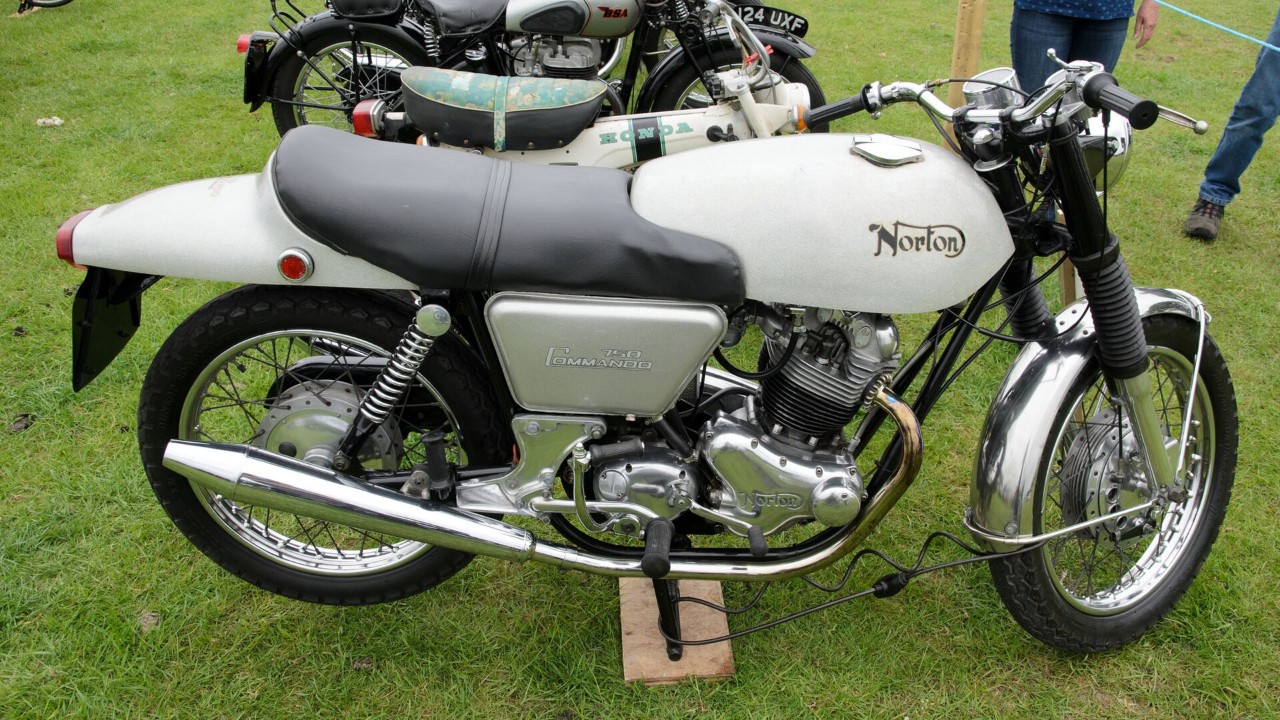
Norton’s Isolastic system hung the Commando’s engine, gearbox and swingarm from the frame on rubber bushes. The engine still shook, but the frame, the seat and the handlebars no longer shook with it. That simple idea let Norton keep an old twin in production. It also made the bike far easier to live with.
It also took a small team, a former Rolls-Royce engineer and some careful geometry. Rather than redesign the engine, Norton chose to isolate it. In fact, Old Bike Mart’s history of the project says the goal was simply that the rider “no longer suffered from its effects.”
Here is what the problem was, who solved it, how the mounts worked and what owners still do to keep them right. Along the way, the Commando also picked up a long run of Motor Cycle News awards.
The problem the Norton Isolastic mounts had to solve
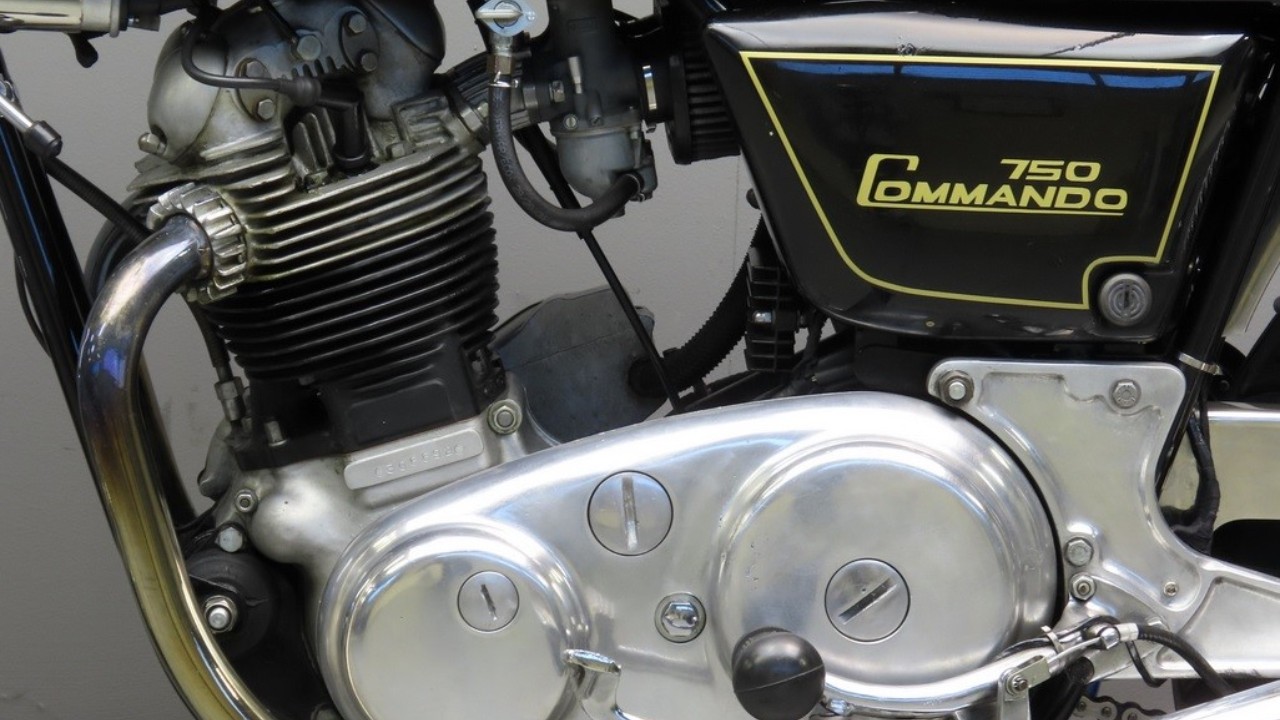
The Commando’s engine was not new. Silodrome traces the design to 1949 and gives the Commando’s twin a displacement of 745cc. According to Access Norton’s Commando history, the twin grew into the 650cc Dominator and then the 750cc Atlas. After that, it went into the Commando.
By the Atlas era, however, vibration had become the big complaint. Old Bike Mart says the shaking “tended to restrict its high performance capabilities.”
So Norton looked at the frame instead of the engine. If the rider never felt the vibration, the old twin could stay in service.
Who designed the Isolastic frame
Norton appointed Dr. Stefan Bauer, who came from Rolls-Royce, to lead the project on January 1, 1967, Old Bike Mart reports. His team also included Bernard Hooper and Bob Trigg, two motorcycle development engineers.
Bauer drew the new frame around a single 2.25-inch top tube, according to Access Norton. Meanwhile, the same history names Hooper as the lead inventor on the Isolastic patent. Later, the inventors earned a Castrol award for the engineering, Old Bike Mart says.
How the Norton Isolastic system worked
The key move was to treat the engine, gearbox and swinging rear fork as one assembly. That whole package then hung from the main frame on rubber. As a result, the frame and rider sat on one side of the rubber. The shaking parts sat on the other.
At the front, two small lugs on the front downtubes held the engine through rubber mountings, Old Bike Mart explains. At the back, the engine bolted to a pair of plates. Those plates also carried the swingarm’s pivot bearing. They met the rear of the main frame at two more rubber-mounted points.
Because the swingarm pivot lived on the engine plates, the rear fork moved with the engine. In other words, the drivetrain and rear suspension stayed tied together. Meanwhile, the rubber soaked up the twin’s movement before it reached the rider. A workshop guide from Sump Magazine describes three mounts in all: front, rear and top.
Shims, clearance and handling
Rubber that lets an engine move can also let a rear wheel wander. For that reason, the Isolastics need correct side clearance, and early bikes set it with shims. Sump Magazine gives a figure of 0.010 to 0.020 inch. However, readers in the same piece argue for a tighter 0.004 to 0.006 inch.
Getting it wrong shows up fast. If the mounts run loose, Sump says, the result is “excessive lateral movement of the rear wheel” and poor handling. Overtighten them, on the other hand, and the same article shows a frame that cracked.
Today, many owners fit vernier adjuster kits, such as Mick Hemmings’ kits, which Sump calls “easy to fit and adjust.” Still, the workshop rule it ends on is simple: “get the mounts as tight as possible without locking them rigid.”
Earls Court, Machine of the Year and the 828cc twin
The public first saw the Commando at the 1967 Earls Court show. Old Bike Mart says it appeared in “Fastback” form with a distinctive silver finish. Silodrome calls it “a huge hit with attendees.” Production followed in 1968, although sources disagree on the month.
Then the awards came. Access Norton and Silodrome both say the Commando won Motor Cycle News’ Machine of the Year from 1968 to 1972. That is five straight years. By comparison, Old Bike Mart puts the streak at six years. Still, the five-year figure has two sources behind it.
Later, the engine grew. Access Norton says the first 850 machines launched in April 1973. The Roadster, Hi Rider and Interstate all moved to a new 828cc engine. Meanwhile, Old Bike Mart notes that the Plumstead works closed in 1969, and engine production moved to Wolverhampton.
How many Commandos are left
Commando production ended in October 1977, Old Bike Mart reports. That gave the Isolastic Commando roughly a decade on the market. It ran from the first 1968 production bikes to the 828cc machines.
Many of those bikes are still around. Old Bike Mart estimates that about 50,000 Commandos still exist worldwide. Each one rides on the rubber-mounted idea that Bauer, Hooper and Trigg began in 1967.
More from Fast Lane Only
- Unboxing the WWII Jeep in a Crate
- 15 rare Chevys collectors are quietly buying
- 10 underrated V8s still worth hunting down
- Police notice this before you even roll window down
This article was created with the help of AI and was reviewed and edited by Fast Lane Only editors before publication.