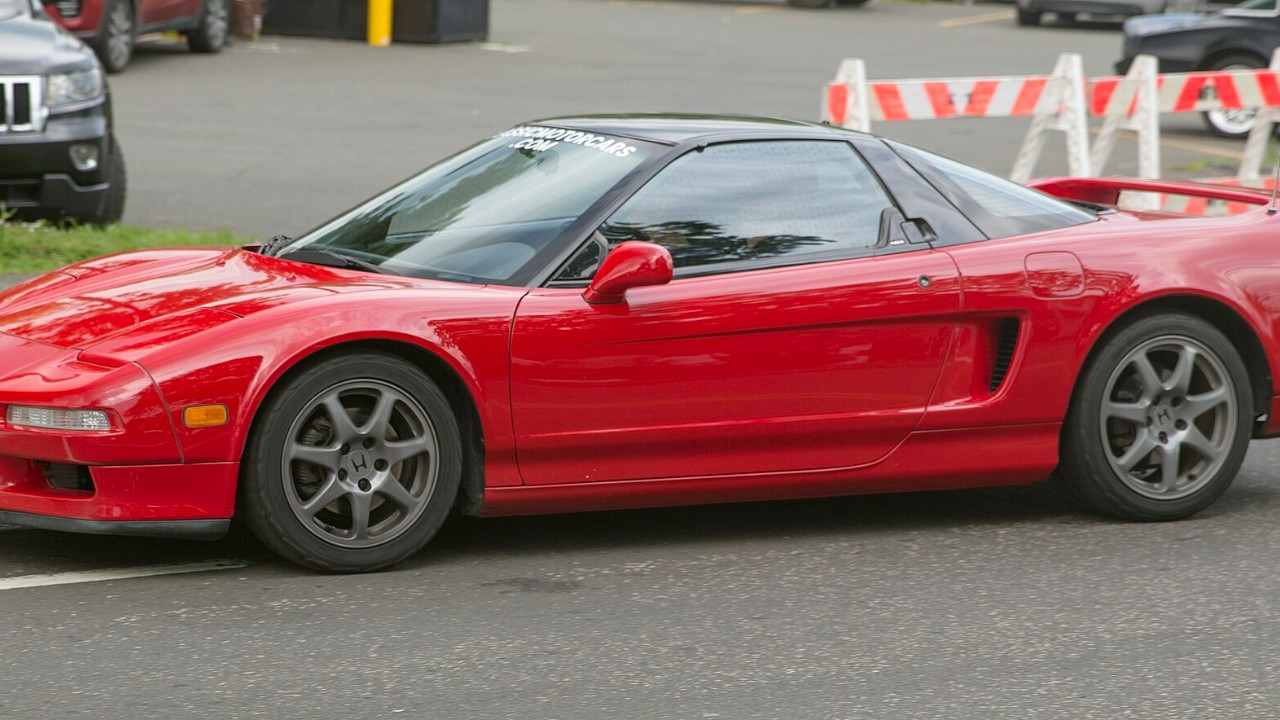
The NSX aluminum body is the part of Honda’s mid-engine sports car that most owners never see. Under the paint, the 1991 Acura NSX used a monocoque made almost entirely of aluminum instead of pressed steel. Honda calls it the first mass-production car to offer one, and that choice shaped everything from the car’s weight to the factory that built it.
Aluminum was not an easy pick in the late 1980s. Honda itself says the metal was hard to stamp and weld, so carmakers rarely used it in mass production. That meant Honda had to change its methods before it could change the car.
Here is how the company did it, using Honda’s own heritage history and Acura’s 1991 press materials.
Why Honda chose aluminum for the NSX
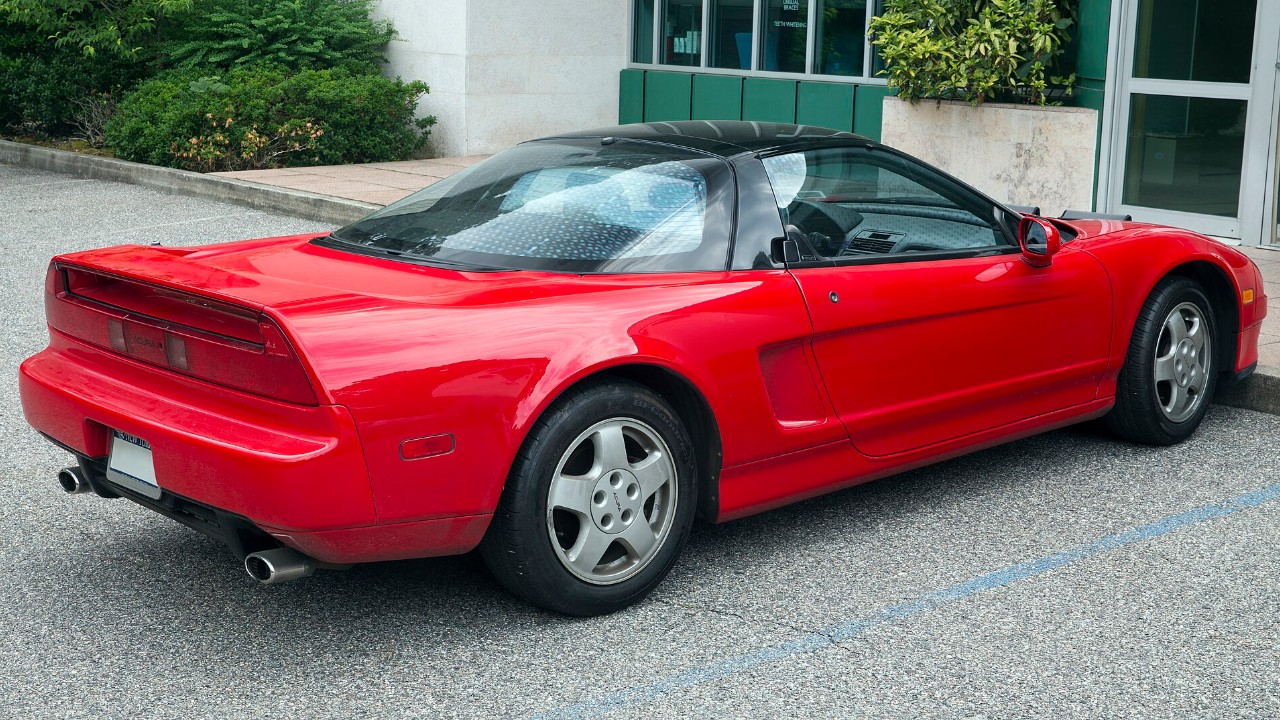
Honda wanted a mid-engine car with the running performance of what it called a “midrange, F-1 class car.” According to Honda’s heritage account of the NSX, engineers weighed steel sheet against aluminum. Steel lost, because it would make that performance target harder to reach.
The decision followed directly from that. In Honda’s words, “it was decided that the NSX would have the world’s first all-aluminum, monocoque body.” Shigeru Uehara, who worked on the project as its LPL, or project leader, summed up the mood: “It’s the dream of every development engineer to create a sportscar.”
However, wanting aluminum and building with it were two different problems. Honda notes that aluminum “is prone to buckling during stamping work and is difficult to weld.” As a result, its use in mass-production cars had been limited.
How the NSX aluminum body was made
To get around those limits, Honda devised a new forming process for parts of the structure. The company says the aluminum was heated to 600 degrees, poured into dies, and extruded from the dies while being drawn.
Acura’s 1991 NSX introduction press kit adds the detail. The structural sections used an alloy Acura lists as HA5182P-O. Meanwhile, the exterior body panels used three different 6000-series alloys.
The side sills show the thinking best. Acura describes “a large hollow-section aluminum extrusion” with “an internal web which imparts enormous rigidity.” In other words, Honda used the extrusion’s shape, not extra metal, to make the sill stiff.
What the aluminum saved
The two companies give the weight savings in slightly different ways, so each figure belongs to its source. Honda’s heritage page says the body weighed 140 kg less than a steel-bodied equivalent. It also says the whole car came in nearly 200 kg lighter.
Acura’s press kit, by comparison, quotes the finished chassis itself. It “weighs 210 kg (462 lbs.) with doors, hood and deck lids installed,” which Acura put at about 40% less than a steel chassis. The press kit lists a curb weight of 3,010 lb for the five-speed car.
The savings didn’t stop at the body, either. Acura says every suspension component was an aluminum forging or casting. Together those parts weighed more than 20 kg (44 lb) less than comparable steel pieces.
Senna, the Nürburgring and a stiffer shell
Light was only half the job, because a sports car also has to be rigid. In February 1989, Honda asked Ayrton Senna to drive the car. His verdict, as Honda records it, was polite but blunt: “I’m not sure I can really give you appropriate advice on a mass-production car, but I feel it’s a little fragile.”
Honda also took the car to Germany. The team set up a facility just two kilometers from the Nürburgring and spent eight long months testing there. By the end, Honda says, the car’s rigidity had risen 50 percent over the figure before those West German tests.
An independent account from SlashGear tells the same story. It says Senna called the prototype “fragile” and asked for chassis stiffening, which the engineers carried out. SlashGear also describes the NSX as the world’s first mass-production vehicle with an all-aluminum monocoque body.
An aluminum engine to match
The engine followed the same idea. Acura’s press kit lists an all-aluminum 3.0-liter V6 of 2,977cc. With the five-speed manual, it made 270 hp at 7,100 rpm and 210 lb-ft of torque at 5,300 rpm.
Acura says the VTEC valve system added 20 hp on its own. Also, the engine used titanium connecting rods, which weighed 190 grams less than steel rods for the same engine. Cars with the four-speed automatic got 252 hp at 6,600 rpm instead.
A factory built around the NSX aluminum body
An unusual body also needed an unusual plant. Honda completed a dedicated NSX factory in Tochigi in May 1990, and it had “not a single conveyor belt.” Because volume was low, at just 25 cars a day, Honda wanted its workers to bring “handcrafted” levels of detail.
Acura’s NSX chronology describes the same setup from the American side. It says each car was hand-assembled by a special team of technicians at that dedicated Tochigi factory.
From Chicago show car to showroom
The public first saw the car as the NS-X, at the Chicago Auto Show on February 9, 1989. Acura then invited American journalists to Japan in June 1989 to drive two prototypes. That was more than a year before the car went on sale.
Finally, in August 1990, the NSX went on sale in America as a 1991 model. Acura’s chronology calls it “the first production car with an all-aluminum chassis and body.” It carried a $65,000 price, which Acura said made it the most expensive Japanese car in history.
More from Fast Lane Only
- Unboxing the WWII Jeep in a Crate
- 15 rare Chevys collectors are quietly buying
- 10 underrated V8s still worth hunting down
- Police notice this before you even roll window down
This article was created with the help of AI and was reviewed and edited by Fast Lane Only editors before publication.