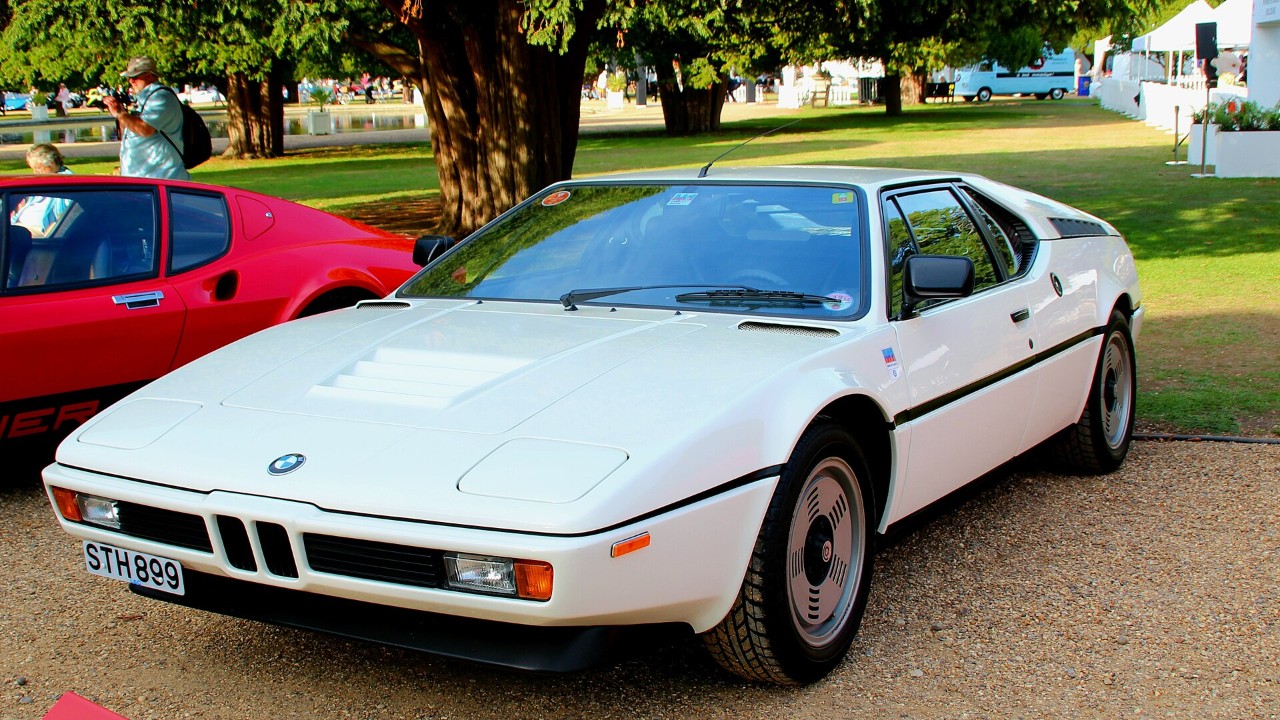
The BMW M1 Lamborghini partnership aimed to give Munich a mid-engined race car built in Italy. Instead, the project nearly collapsed, and the finished cars came together at a coachbuilder in Germany. As a result, that detour shaped the M1, from how many BMW made to the series it ended up racing in.
BMW built the M1 from 1978 to 1981. It was a homologation car, which means a maker had to build a set number of road cars before the racing version could compete. For the M1, that number was 400.
So the story of the car is really a story about logistics. In the end, several companies in two countries each built one piece, and the plan changed halfway through.
Why BMW needed the BMW M1 Lamborghini deal
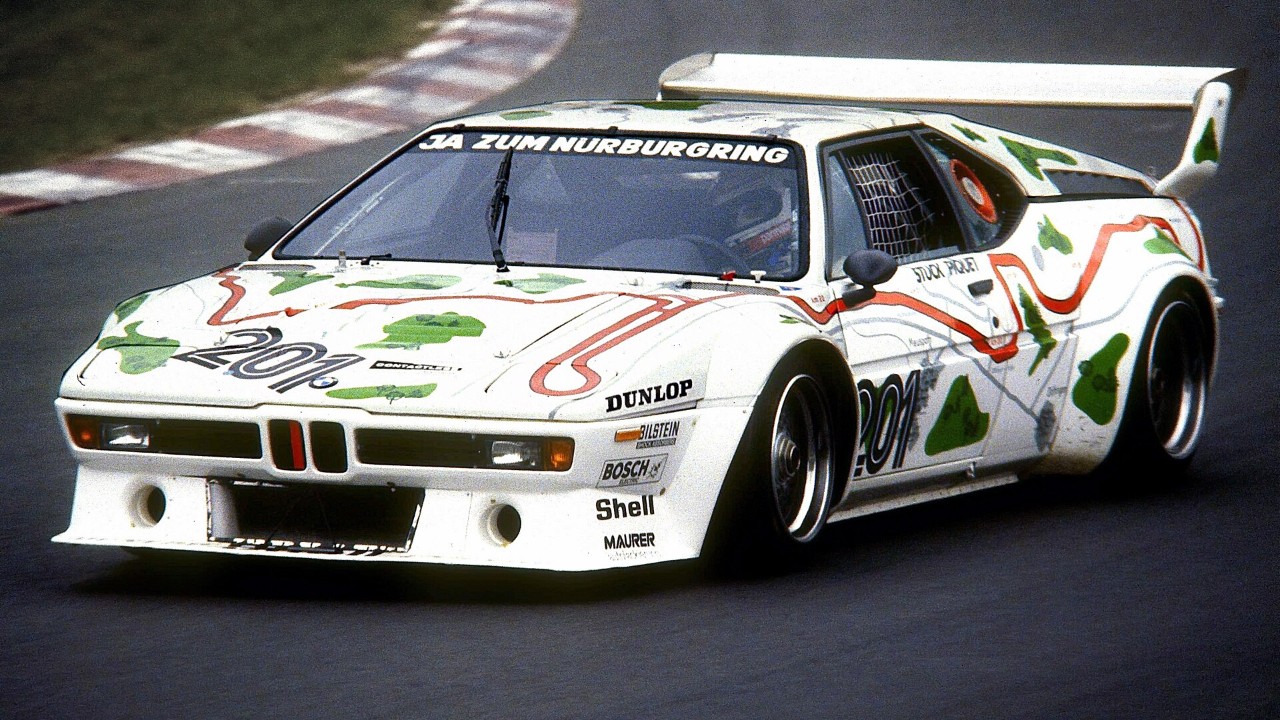
According to BMW Group Classic, the M1 was the first completely new development from Motorsport GmbH. BMW also says the company meant it for Group 4 racing. To qualify, BMW developed a series version of 400 examples for homologation.
However, BMW’s Motorsport division, headed by Jochen Neerpasch, wanted outside help to build it. So it contacted Lamborghini, RM Sotheby’s writes. Internally, the project carried the code E26. BMWBlog notes that the car became the first of only two mid-engined BMWs.
Also, the Italian connection ran deep. For example, a later RM Sotheby’s catalogue says Gianpaolo Dallara is said to have given input on the tubular steel spaceframe. BMWBlog adds that Dallara, an ex-Lamborghini employee, did the double-wishbone suspension.
Lamborghini runs out of money
Then the plan fell apart. Lamborghini’s financial situation, already precarious, got worse. RM Sotheby’s says Lamborghini had finished seven prototypes. Even so, BMW took over control of the project in April 1978.
However, Neerpasch remembered the count a little differently. “After they made the first five or six prototypes, we found out that Lamborghini was in financial trouble,” he told Hagerty. In the same piece, Hagerty reports that the project nearly collapsed because suppliers were not being paid.
BMW Group Classic puts it more briefly. The project, it says, began in cooperation with Lamborghini, but BMW had to complete it with another company. Notably, BMW’s own page spells that company “Bauer.” The coachbuilder’s name is Baur, and that is how RM Sotheby’s and BMWBlog spell it.
Four suppliers, two countries
With Lamborghini out, BMW split up the build. RM Sotheby’s says Marchesi made the multi-tube chassis. Meanwhile, Trasformazione Italiana Resina, known as TIR, made the fiberglass body. Giorgetto Giugiaro’s Ital Design handled the styling.
That shape had roots at home, too. BMWBlog says Giugiaro’s design drew on the 1972 BMW Turbo concept penned by Paul Bracq. As a result, the wedge looked Italian but carried a BMW idea.
Hagerty describes how the pieces moved. First, Italdesign fitted the interior. Then the whole lot traveled from Italy to Germany. There, Baur oversaw final assembly. Meanwhile, BMWBlog says Baur hand-assembled the cars in Stuttgart. RM Sotheby’s notes that the German coachbuilder had a long history with BMW.
The chain had a cost, though. That’s because, as Hagerty writes, the delays from such fundamental manufacturing changes meant there was no hope of building enough M1s to homologate the car for Group 4 racing in 1979.
What sat behind the seats
At least the engine came from BMW. According to BMWBlog, it sat behind the seats. The M88 was a 3,453 cc inline six with a twin-cam head, four valves per cylinder and Kugelfischer mechanical fuel injection, according to RM Sotheby’s. In road trim, it made 277 horsepower and drove through a five-speed manual.
By comparison, BMWBlog lists 243 lb-ft of torque and a dry weight of 1,300 kg, or 2,866 pounds. It also gives a top speed of 265 km/h (165 mph). That figure, BMW says, made the M1 “the fastest German road sports car of the era,” as quoted in BMWBlog’s history of the car.
Procar: a series built around the problem
Since the M1 couldn’t race in Group 4 on time, BMW made its own stage. Hagerty says Neerpasch, Max Mosley and Bernie Ecclestone created the Procar series. Mosley took the idea to Ecclestone, who thought it would pull bigger Saturday crowds at Formula 1 races.
The series ran in 1979 and 1980, with Formula 1 drivers such as Mario Andretti on the grid. In the end, Niki Lauda and Nelson Piquet won the championships, Hagerty reports. Each took home a championship car as a prize. In addition, its spec sheet lists 46 Procar race cars, each priced at 150,000 DM new.
How many BMW M1s were built
Exact totals vary by source, so here they are side by side. RM Sotheby’s says BMW built 450 M1s, of which about 50 were pure racing machines. By contrast, BMWBlog puts the total at 460. Either way, BMW cleared the 400-car homologation target it had set.
Earlier, the car had made its public debut at the 1978 Paris Motor Show, according to BMW Group Classic.
One car, two auctions
A single M1 shows how the market has moved. Baur finished chassis 4301011 on December 21, 1978, according to RM Sotheby’s. Also, the M1 Registry lists it as a BMW promotional car, and the auction house believes it served as a press vehicle.
At RM Sotheby’s Arizona sale in 2016, it carried a $400,000 to $500,000 estimate and did not sell. Eight years later, the same chassis crossed the block again. This time, RM Sotheby’s sold it at Monterey in 2024 for $516,500.
More from Fast Lane Only
- Unboxing the WWII Jeep in a Crate
- 15 rare Chevys collectors are quietly buying
- 10 underrated V8s still worth hunting down
- Police notice this before you even roll window down
This article was created with the help of AI and was reviewed and edited by Fast Lane Only editors before publication.