Parking lots concentrate moving vehicles, distracted pedestrians, and tight spaces into a few confusing acres, which is why small lapses in courtesy so often turn into bent fenders and frayed tempers. The rules are not complicated, yet the same breaches keep repeating: drivers cut across lanes, ignore lines, and treat shared space as a personal driveway. I want to decode five of the most common missteps I see, and show how a few simple habits can turn these asphalt free‑for‑alls into safer, calmer places for everyone.
1. Treating lanes like a racetrack instead of a low‑speed zone
Every parking lot has a posted speed limit, formal or implied, and drivers break it constantly. I see people accelerate between rows as if shaving ten seconds off the walk to the store justifies doubling their speed. That impatience is not just rude, it is a direct collision risk, because parked SUVs and delivery vans hide children, carts, and other cars edging out of spaces. Guidance on Speeding in car parks is blunt: moving too fast around fixed and moving obstructions sharply raises the chance of a crash, and the only real remedy is to Follow the posted limits and adjust for congestion.
When I watch drivers fly down the center aisle, I see the same mindset that leads to tickets on open roads. One of the primary factors behind traffic violations is impatience, and One of the key observations from traffic safety guidance is that many of the offenses people are cited for have a lot to do with that urge to hurry. In a parking lot, that same impulse translates into rolling stops at crosswalks, tailgating a car that is hunting for a space, or darting around a vehicle that has paused for a pedestrian. Slowing to a crawl, covering the brake, and assuming someone could step out from between any two bumpers is not just polite, it is a basic duty of care.
2. Ignoring turn signals and right‑of‑way in the scramble for spaces
Few things reveal a driver’s character faster than how they behave when a coveted spot opens up. I regularly see people dive across lanes without signaling, or steal a space that another car has clearly been waiting for with its indicator on. That kind of move is more than a social slight, it is a recipe for side‑swipes and rear‑end collisions, because the drivers behind you cannot predict a sudden stop or sharp turn. Parking guidance stresses that, just as blinkers are helpful in regular traffic, using turn signals in a lot can actually save your life, and that applies both when you are turning into an aisle and when you are claiming an empty spot, especially if cars are behind you, as highlighted in Just the same way.
Right‑of‑way confusion is another chronic problem. Drivers often treat the end of each row like a four‑way free‑for‑all, inching out until someone yields. In reality, the same basic rules apply as on public streets: cars in the main through‑lane have priority, and vehicles backing out of spaces must wait until the path is clear. When that hierarchy is ignored, near misses multiply, and so do disputes. In commercial settings, Tenant Usage Conflicts Conflicts over parking often stem from a lack of clear guidelines about who may use which spaces and how, which shows how quickly ambiguous rules can sour relationships. In a shared lot, signaling early, waiting your turn, and respecting another driver’s obvious claim to a space are small acts that prevent both fender damage and simmering resentment.
3. Parking like your car is the only one that matters
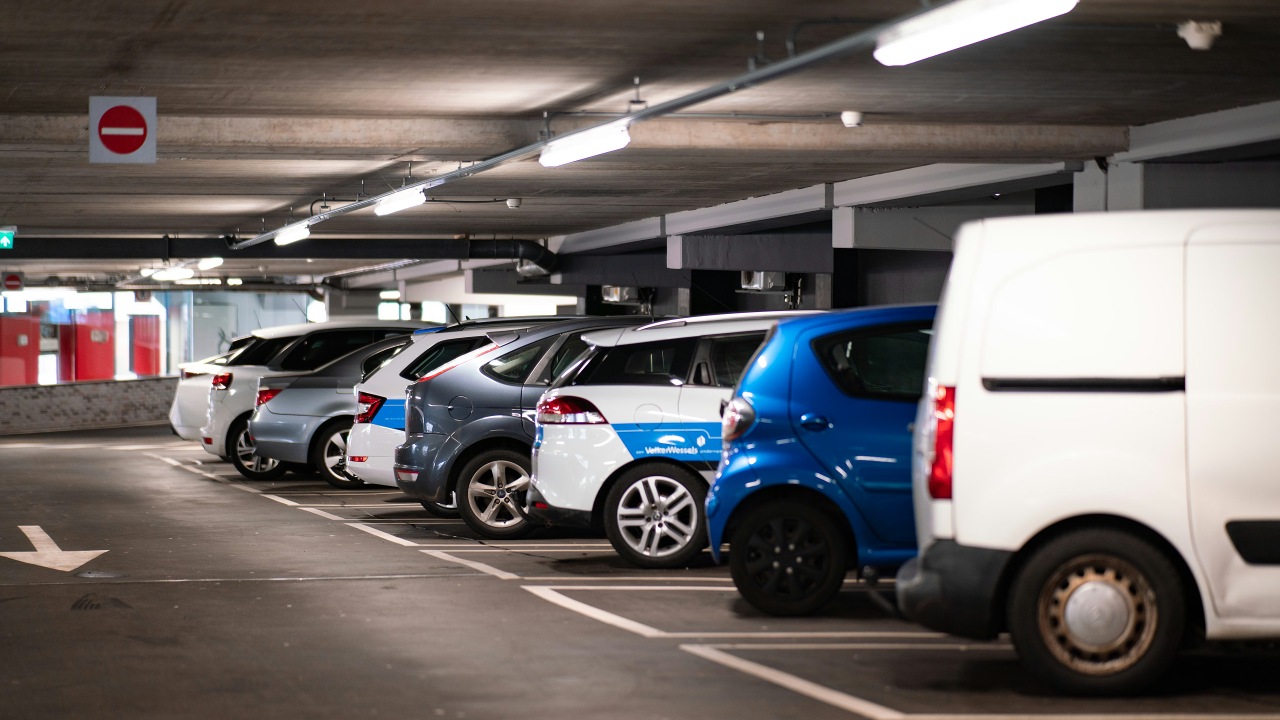
Nothing undermines civility faster than a car sprawled across the line, or a pickup wedged so close to the next vehicle that the neighbor has to climb in from the passenger side. I see this constantly, and it is usually not malice, just laziness: a driver swings in at an angle, decides it is “good enough,” and walks away. Yet one of the most basic etiquettes in any lot is to park within the lines of a space, a point underscored in guidance that notes One of the the simplest courtesies is to center your vehicle even when you are in a rush. When drivers ignore that, they effectively steal capacity from the lot and force others into equally awkward positions.
Careless door opening is the other half of this problem. I have watched people fling open the rear door of a Honda CR‑V into the side of a neighboring Toyota Camry while juggling coffee and shopping bags, then shrug and walk away. Community advice on preventing car door damage is blunt that, Firstly, this is an etiquette or awareness issue, and, Secondly, you should avoid cramped spaces where you or your passengers are likely to hit adjacent cars. Choosing a slightly more distant spot with room to open doors fully, and teaching children to ease doors open with a hand on the edge, are simple habits that protect everyone’s paintwork.
4. Forgetting that pedestrians, not bumpers, have priority
Parking lots blur the line between roadway and sidewalk, which is exactly why drivers need to overcorrect in favor of people on foot. I often see cars roll through crosswalks while someone is still halfway across, or swing around the front of a minivan without considering that a stroller might be emerging from the blind side. Safety guidance for drivers and pedestrians in lots urges people to Try to choose spots that are close enough to the destination to avoid long walks through traffic, but also away from clusters of other vehicles that block sightlines. That advice cuts both ways: drivers should anticipate that pedestrians will appear between cars, and pedestrians should assume that a reversing driver may not see them until the last second.
National Highway Traffic Safety Administration resources are explicit that drivers must Keep themselves, their families, and their neighbors safe by following simple rules every time they get behind the wheel, including scanning for pedestrians and children in areas like parking lots. The same agency, identified as the NHTSA or National Highway Traffic Safety Administration, issues Guidelines Lawyers rely on for distracted driving cases, and those principles apply directly in lots where phones, navigation screens, and in‑car entertainment compete for attention. Putting the phone away, pausing the podcast, and creeping through the aisles with the same caution you would use in a school zone is not overkill, it is the minimum standard.
5. Treating rules and markings as optional suggestions
From time limits to permit zones, parking lots are full of quiet rules that many drivers treat as decorative. I see people slide into “customer only” spaces while heading to another building, or overstay in short‑term bays because enforcement seems lax. That behavior is not victimless. Guidance on common parking mistakes highlights that Dec guidance on Forgetting to note time limits or display permits is a leading source of tickets, and it also deprives others of access to spaces they are entitled to use. In shared commercial lots, that kind of casual rule‑breaking feeds the Tenant Usage Conflicts Conflicts that arise when businesses feel their customers are being crowded out by people who ignore designated areas.
Markings on the pavement deserve the same respect. Drivers who cut diagonally across empty rows, or who nose through a space to exit against the directional arrows, may think they are being efficient, but they are undermining the flow that keeps everyone predictable. Safety advice for young motorists from the National Highway Traffic Safety Administration, including its NHTSA Teen Driving Resources, Provides information on safe driving practices and crash prevention that translates neatly to parking environments: follow arrows, obey signs, and treat every painted symbol as a compact with other users. When I align my own behavior with those markings, I am not just avoiding a ticket, I am signaling to everyone around me that their time, safety, and property matter as much as my own.
More from Fast Lane Only: