BMW has opened the new year in China with one of its most aggressive pricing resets in recent memory, cutting sticker prices on electric and combustion models by as much as 24 percent. The steepest reductions on its battery cars translate into savings of roughly $42,000 for some buyers, a move that underlines how intense the country’s discount battle has become as growth in new energy vehicles cools. I see this as more than a tactical promotion; it is a structural response to a market that is forcing even premium brands to rethink what “luxury” can cost.
BMW’s sweeping price reset in China
BMW China has adjusted the recommended retail prices of more than 30 models, a sweeping change that took effect at the start of the year and reaches across sedans, SUVs, and high-end electric flagships. The company has confirmed that 31 models are affected, with cuts of more than 10 percent on 24 of them and a maximum reduction of 24 percent, signaling that this is not a marginal tweak but a broad repricing of its China portfolio. I read that as a clear attempt to align official list prices with what buyers were already negotiating in showrooms, and to regain control of a discount narrative that had drifted toward dealers.
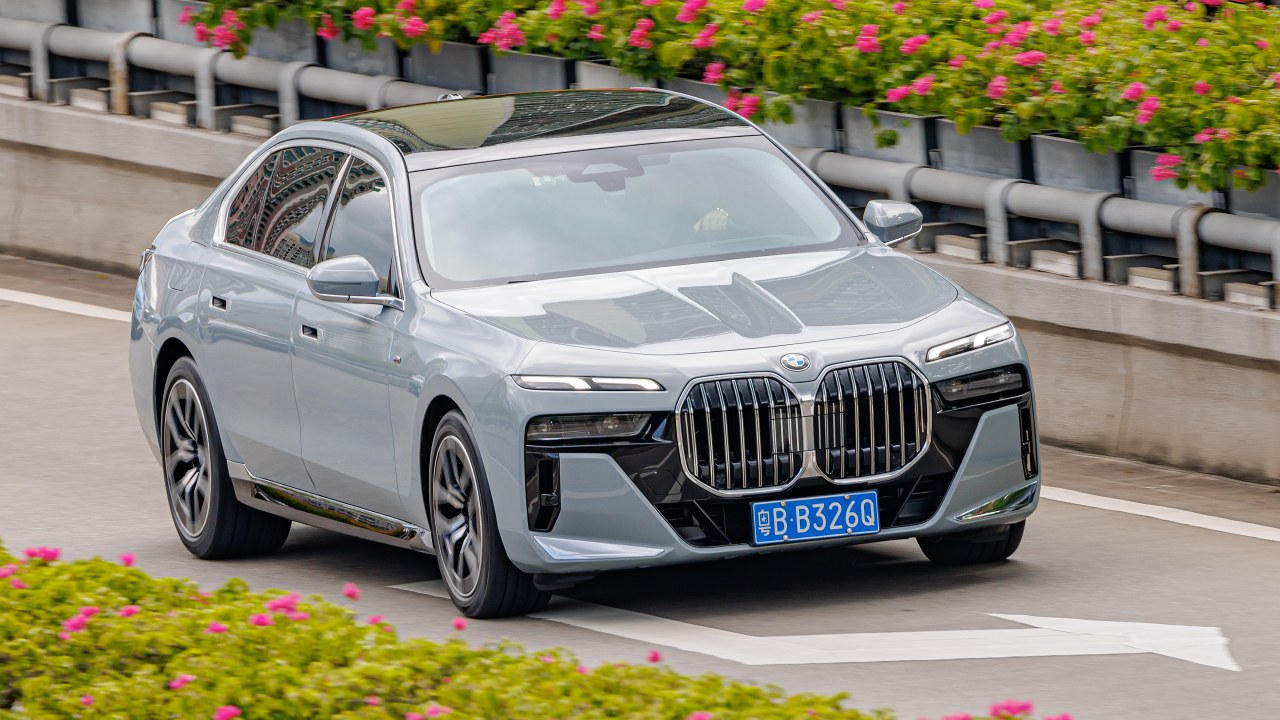
The most eye-catching changes sit at the top of the range, where the long-wheelbase i7 M70 reportedly becomes $43,000 cheaper, while the stretched iX1 sees its guide price reduced by nearly a quarter. At the other end of the line-up, the guide price of one compact model has been cut from 299,900 to 228,000 yuan, a decrease of 24 percent that brings a premium badge into closer contention with domestic rivals on pure price. Even the fuel version of the X1 follows similar cuts, which tells me BMW is not ringfencing its electric cars but instead repositioning the brand as a whole in China’s hyper-competitive premium segment.
How a $42,000 discount fits into China’s EV price war
When a global luxury marque trims up to 24 percent off list prices in its largest market, it is responding to more than a seasonal lull. In China, BMW is narrowing the gap between official stickers and the deals that had already become common at the dealer level, effectively formalizing discounts that were once the product of haggling. The fact that the steepest cuts on its electric models amount to roughly $42,000 underscores how far pricing had drifted from what customers were willing to pay, and how much pressure the brand feels from domestic electric vehicle specialists that have normalized aggressive promotions.
I see BMW’s move as part of a broader pattern in which China’s EV sector is doubling down on discounts and cheap financing as growth slows from its earlier breakneck pace. Reports from China describe a market where manufacturers are layering cash incentives, subsidized loans, and extended warranties on top of already lower prices, in an effort to keep factory utilization high and market share intact. Against that backdrop, BMW’s decision to codify large cuts on both the i7 M70 and the stretched iX1 is less an outlier and more a sign that the premium end of the market is being pulled into the same gravitational field of price competition that has long defined the mass segment.
Strategic motives behind BMW’s China repricing
From my perspective, the breadth of BMW’s price adjustments in China reflects a strategic recalibration rather than a short-term clearance sale. By cutting recommended prices on 31 models at once, the company is simplifying its message to consumers and signaling that the era of opaque, dealer-by-dealer bargaining is giving way to more transparent national pricing. That is particularly important for electric vehicles, where domestic brands have trained buyers to expect frequent updates and rapid depreciation, and where a premium badge alone no longer guarantees pricing power.
There is also a clear volume logic at work. China remains one of BMW’s most important markets, and the company faces a crowded field of competitors that includes both traditional luxury rivals and aggressive local EV makers. By reducing the guide price of a model from 299,900 to 228,000 yuan and applying similar double-digit percentage cuts across much of the range, BMW is effectively buying back relevance among buyers who might otherwise default to a domestic electric SUV or sedan. I interpret the inclusion of both electric and fuel versions of the X1 in these cuts as an acknowledgment that Chinese consumers are cross-shopping powertrains less by ideology and more by value, and that BMW must meet them on that ground.
Implications for China’s cooling EV market
The timing of BMW’s repricing coincides with a noticeable cooling in China’s new energy vehicle growth, which has shifted from explosive expansion to a more mature, contested phase. As the sector leans on heavier discounts and cheaper financing, margins are being squeezed across the board, and even established players are being forced to choose between profitability and share. I see BMW’s decision to slash prices by up to 24 percent as an admission that, in the near term, maintaining volume and showroom traffic in China is more important than defending historical margins on each car sold.
For consumers, the immediate effect is a windfall: a long-wheelbase i7 M70 that is $43,000 cheaper and a stretched iX1 with nearly a quarter of its price shaved off make premium electric ownership more attainable than at any point in recent memory. For the industry, however, the signal is more sobering. If a brand with BMW’s heritage is compelled to align its pricing with a discount-driven market, it suggests that the floor for EV prices in China is still falling, and that the competitive environment will remain unforgiving for any manufacturer that cannot match both the technology and the value proposition of local rivals.
What BMW’s move signals for global automakers
As I weigh the implications of these cuts, I see BMW’s China strategy as a bellwether for how global automakers will navigate the next phase of electrification in their most contested markets. The decision to formalize discounts of up to 24 percent, including a roughly $42,000 reduction on some electric models, shows that even premium brands are willing to reset expectations when confronted with a combination of slowing demand and aggressive local competition. It also raises difficult questions about how such pricing will be reconciled with higher stickers in Europe or North America, where customers may soon notice that the same badge commands very different sums.
At the same time, the breadth of the repricing, from the i7 M70 to the fuel version of the X1 and the compact model that dropped from 299,900 to 228,000 yuan, suggests that BMW is using China as a laboratory for a more flexible, market-responsive approach to pricing. If the strategy succeeds in stabilizing volumes and preserving brand desirability in a discount-saturated environment, I expect other global manufacturers to follow with their own large-scale adjustments, not only in China but in any market where electric vehicle adoption is colliding with economic headwinds. For now, BMW’s cuts stand as one of the clearest signs that the global EV transition is entering a tougher, more price-sensitive chapter, in which even the most established names must fight harder for every sale.
More from Fast Lane Only: