A private jet registered to a company owned by former NASCAR driver Greg Biffle crashed and erupted in flames while attempting to land at Statesville Regional Airport in North Carolina, killing people on board and jolting a tight-knit racing community. Early details from aviation and local officials point to a harrowing sequence in which the Cessna business jet came down short of the runway and burned intensely on impact, leaving investigators to piece together what went wrong.
Although Biffle was not reported to be on the aircraft, the crash of a plane tied to his business interests has raised urgent questions about who was aboard, how the flight unfolded, and what the incident means for private aviation that serves NASCAR teams and sponsors. With federal investigators now involved, the focus is shifting from the initial shock of the fiery wreck to the methodical work of determining its cause.
What officials say about the deadly Statesville crash
Initial accounts from authorities describe a violent landing attempt that ended just short of the runway at Statesville Regional Airport, where the jet came down and caught fire. The aircraft, identified as a Cessna C550 business jet, was attempting to land at the airport on a Thursday morning when it crashed near the airfield perimeter and ignited, creating a plume of smoke visible from surrounding roads and neighborhoods. Federal aviation officials have confirmed that the Cessna was on approach to Statesville Regional Airport around 10:20 a.m. Thursday when it went down, and that the crash occurred during the landing phase rather than in cruise or climb.
Local leaders in Statesville have characterized the incident as a deadly crash involving a private jet, with fatalities reported among those on board. Officials have noted that the Cessna seats about 7 to 8 people, although they have not publicly confirmed how many occupants were actually on the flight or released their identities, stating that next-of-kin notifications and investigative protocols must come first. A planned briefing by Statesville officials, scheduled for early afternoon on Thursday, is expected to provide more detail on the number of victims and the condition of any survivors, as well as clarify the sequence of events that led to the jet’s fiery impact at the airport.
How the jet is tied to Greg Biffle and his racing ventures
While the crash is being investigated as an aviation accident, the story has drawn national attention because of its connection to Greg Biffle, a former NASCAR driver with a long history in top-level stock car racing. Federal records show that the plane, a Cessna C550 with the tail number N257BW, is registered to an LLC called GB Aviation, which is associated with Biffle’s business interests. Additional reporting has noted that the aircraft is linked to a private North Carolina company at the same address as Biffle, reinforcing that the jet is part of the infrastructure that supports his post-driving ventures and travel.
Racing-focused outlets have reported that the plane involved in the crash is owned by Greg Biffle, describing it as a private jet tied directly to the former NASCAR driver rather than a chartered or leased aircraft. Coverage from motorsports and entertainment sources has framed the incident as a plane belonging to a motorsports legend, with fatalities confirmed among those aboard, while also emphasizing that authorities have not publicly identified any of the victims or specified whether Biffle or any family members were on the manifest. At this stage, officials have stressed that they do not yet know who was on the plane, and that the National Transportation Safety Board is investigating, leaving key questions about the passengers and purpose of the flight unresolved and explicitly marked as unverified based on available sources.
What is known about the flight, impact, and fire
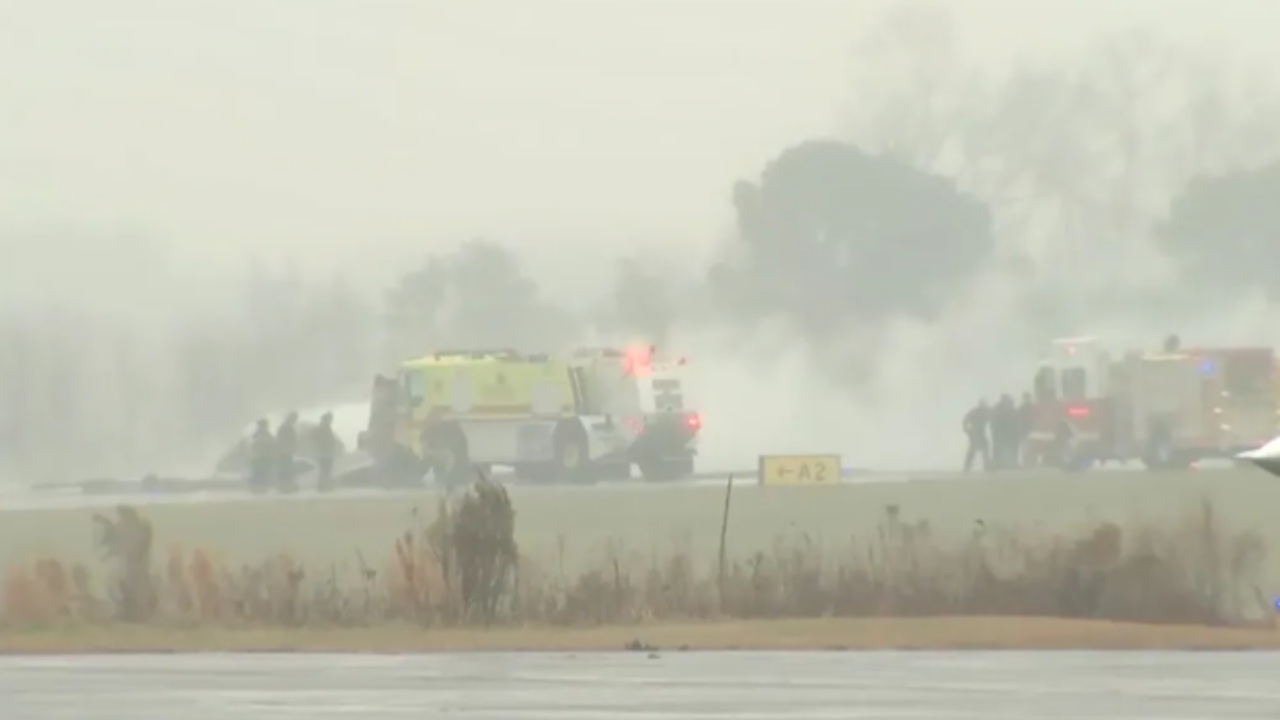
Based on early federal and local accounts, the Cessna’s final minutes appear to have been both brief and catastrophic. Aviation officials have said that the Cessna C550 crashed while landing at Statesville Regional Airport, indicating that the crew was in the process of returning to the field rather than diverting elsewhere. One report describes the jet as a small aircraft that attempted to return shortly after departure, suggesting that the crew may have experienced an issue soon after takeoff and chose to come back to Statesville, only for the landing attempt to end in disaster near the runway. That detail, while still subject to confirmation by investigators, points to a compressed timeline in which any mechanical or operational problem would have unfolded quickly.
Witness descriptions and official summaries converge on the same core image: a small jet coming down at or near the airport, then bursting into flames. Reports describe the plane crashing while landing and catching fire at Statesville Regional Airport, with the wreckage engulfed in flames that required a significant emergency response. The intensity of the fire has been cited by officials as one reason why confirming the number of victims and identifying them will take time, since the condition of the remains and the aircraft structure complicates recovery work. Federal investigators will examine the Cessna’s maintenance records, pilot qualifications, and any available flight data or cockpit voice information, but for now, the public picture is limited to the fact that the jet crashed during landing, burned heavily, and left fatalities at the scene.
Statesville’s response and the federal investigation
In the hours after the crash, Statesville officials moved to secure the site, coordinate emergency services, and prepare for a more detailed public briefing. Authorities have urged residents to avoid the area around Statesville Regional Airport while crews work the scene, both to preserve evidence for investigators and to allow fire and medical personnel to operate without interference. A live update from Statesville officials has been scheduled for early afternoon on Thursday, with local coverage directing viewers to watch at 12:30 p.m. as leaders provide an update on the deadly plane crash involving a private North Carolina company. That briefing is expected to address not only the casualties but also the status of airport operations and any immediate safety measures.
At the federal level, the National Transportation Safety Board and the Federal Aviation Administration have begun their standard post-crash procedures. The FAA has confirmed key details about the aircraft type, the fact that the Cessna crashed while landing at Statesville Regional Airport, and the approximate time of the incident on Thursday morning. The NTSB, which is responsible for determining probable cause, will send investigators to document the wreckage, interview witnesses, and analyze radar, weather, and maintenance data. Officials have already cautioned that they do not know who was on the plane and that a full investigation will take time, a reminder that while the jet’s ownership and registration are public, the circumstances that led to the fiery impact remain under active review and cannot yet be pinned on any single factor.
Why this crash resonates across NASCAR and private aviation
Even before investigators release their findings, the crash of a jet tied to Greg Biffle is reverberating through the NASCAR world and the broader ecosystem of private aviation that supports professional sports. For decades, drivers, team owners, and sponsors have relied on small jets and business aircraft to move quickly between races, shops, and corporate events, especially in regions like North Carolina where motorsports operations are concentrated. A deadly accident involving a Cessna C550 registered to an LLC associated with a former NASCAR driver underscores how deeply private aviation is woven into the sport’s logistics, and how vulnerable that system is when something goes wrong during a critical phase like landing.
From a safety perspective, the Statesville crash will likely renew scrutiny of how small jets are operated, maintained, and crewed for high-profile clients. Reports that a small jet attempted to return shortly after departure, then crashed while landing and caught fire, highlight the narrow margin for error when a flight experiences trouble close to the airport. The fact that the Cessna seats about 7 to 8 people and is used by a private North Carolina company tied to a well-known racing figure will keep public attention on the investigation, and may prompt teams and aviation providers to revisit their own risk management practices. Until the NTSB releases a probable cause, many of the most pressing questions will remain unanswered and must be treated as unverified based on available sources, but the combination of a fiery crash, confirmed fatalities, and a direct link to Greg Biffle ensures that this incident will shape conversations about travel and safety in NASCAR for a long time to come.