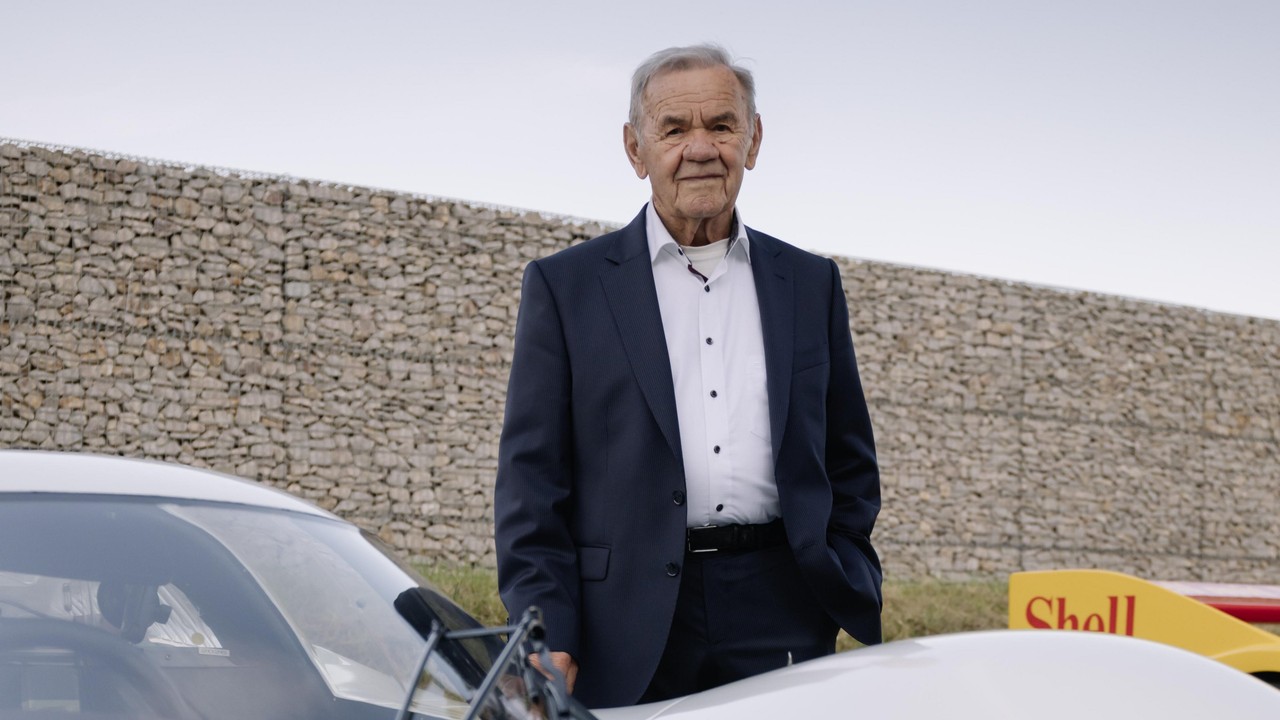
Valentin Schäffer, the engineer who led Porsche 917 engine development as head of racing engines, turned 95 on October 8, 2026. His engines powered Porsche’s first Le Mans win in 1970. Later, his turbocharged twelve-cylinder carried Mark Donohue to a world speed record at Talladega in 1975.
Porsche marked the birthday with a tribute two days early. The company traced a career that started on the shop floor in 1955 and ran to his retirement in 1989. In between, Schäffer’s name sat on the engine programs behind the 550A, the 906, the 908 and the 917.
His colleagues also gave him a nickname that tells most of the story. After 1971, people at Porsche called him “Turbo-Valentin.”
Who Valentin Schäffer is
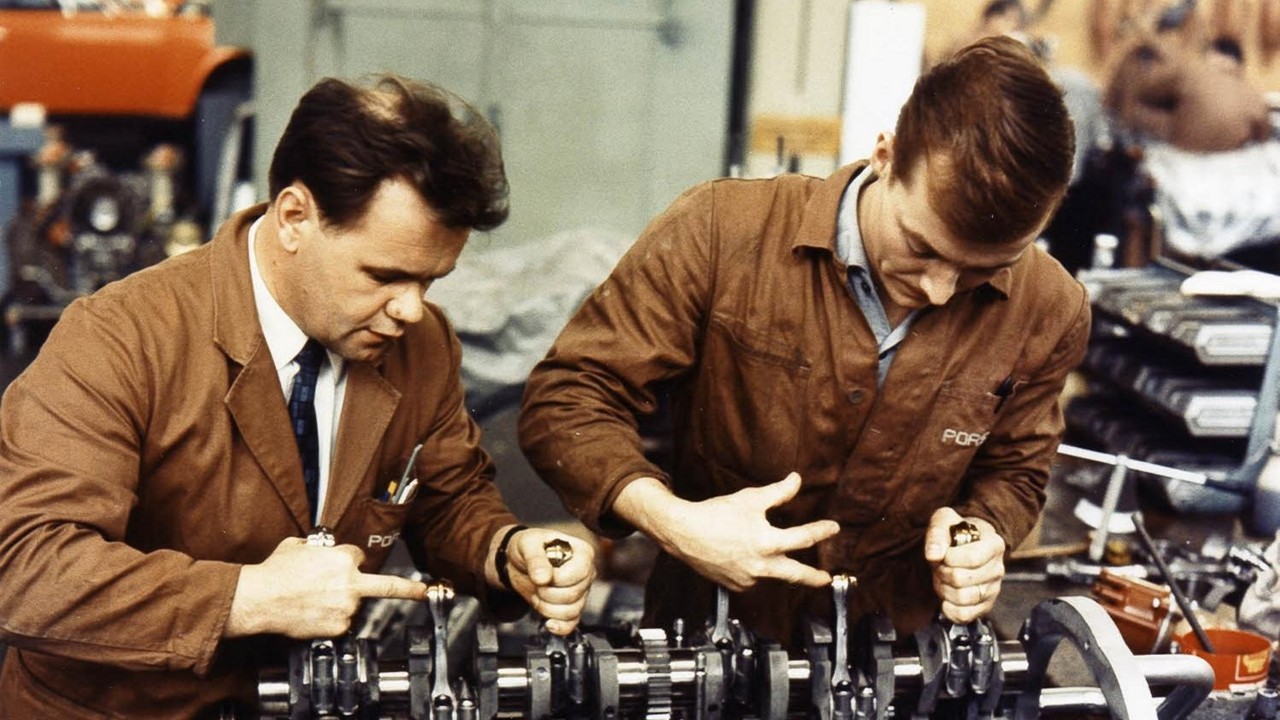
According to the Porsche Newsroom tribute published October 6, Schäffer was born in Hungary on October 8, 1931. He joined Porsche in 1955 as an engine mechanic. Then, in 1961, he passed his technician and master craftsman exams.
Porsche’s 2021 tribute for his 90th birthday adds a detail about how he got there. He had planned to attend an engineering school in Stockach. Instead, he moved to Tamm, near Ludwigsburg, and went to work for Porsche.
In 1966, Schäffer became head of racing-engine development, reporting to Ferdinand Piëch. From 1956 until 1982, he also oversaw race campaigns that included the Targa Florio, Can-Am and the 24 Hours of Le Mans, the company says.
From the 550A four to the 771 eight
His first big job came early. As early as 1956, Porsche says, Schäffer worked on the Type 547/2 four-cylinder for the 550A RS Spyder. After that he moved on to the Type 753 and Type 771 eight-cylinder engines, which used a cross-plane crankshaft.
The 771 was the one he loved most. “The eight-cylinder 771 was my absolute favourite engine,” Schäffer told Porsche. He also called it “the best engine for hill climbs.” That makes sense, because Porsche credits the 771 with 138 PS per liter.
Porsche’s 2021 tribute lists where those engines went. The 753 powered the 804 Formula 1 car in 1962. Meanwhile, the 771 went into the 718, 904, 906, 910, 907 and 909. By Porsche’s account, it won in Formula 1, the European Hill Climb Championship and the World Sportscar Championship.
The Porsche 917 engine family
Once he took charge in 1966, Schäffer’s team built six-cylinder engines for the 906 Carrera 6 and the 910. Next came the eight-cylinder for the 908. The Type 916 six-cylinder boxer then served as a base for the 908 and as a test bed for the 917’s twelve-cylinder, Porsche says.
That Porsche 917 engine was the Type 912 twelve-cylinder. Porsche’s 2021 tribute calls it one of the high points of his career. In fact, it grew through three main stages. The 912 arrived for the 917 in 1969. Then came the 912/51 for the 917/10 in 1972 and the 912/52 for the 917/30 in 1973.
The first payoff came at Le Mans. On June 14, 1970, Hans Herrmann and Richard Attwood won the 24 Hours in a 917 KH. It was Porsche’s first Le Mans victory, and Schäffer was there to see it.
Why they called him Turbo-Valentin
A year after that win, Schäffer went back to the turbo engine. Porsche says he redesigned it from the ground up in 1971. That work earned him the nickname “Turbo-Valentin.” Even so, he kept it modest, describing the result as “a simple engine,” according to the 2021 tribute.
Those turbo twelves went into the 917/10 and the 917/30, the last steps of the Porsche 917 engine story. Porsche also lists the Can-Am series among the campaigns Schäffer oversaw. However, Porsche’s tributes do not credit him with the later 935 or 956 programs. For that reason, this story sticks to the engines the company names.
Mark Donohue’s record at Talladega
The record in the headline came on August 9, 1975. That day, Mark Donohue drove a 917/30 fitted with the 912/52 turbo engine at Talladega Superspeedway. According to Porsche, he averaged 355.78 km/h on the 2.66-kilometer oval.
Motor Sport magazine’s 2019 account of the run puts the lap at 221.160 mph. By that report, Donohue had convinced Porsche to build a smaller 5-liter turbocharged twelve-cylinder with extra intercoolers. Even in that form, the magazine says, the car could make upwards of 1,500 bhp.
The two figures differ slightly by source. Either way, the 917/30 went around Talladega at better than 220 mph on a Porsche 917 engine from Schäffer’s department.
Retirement and the birthday tribute
Schäffer retired in 1989. Still, Porsche says he stayed in the company’s service for several more years. The 2021 tribute puts that at another five years of close ties to Porsche.
For the 95th birthday, Thomas Laudenbach, head of Porsche Motorsport, summed up his approach. Schäffer, he said, “never viewed racing engines as machines, but as precisely tuned systems.” Porsche also shared Schäffer’s own memory of weekends at work: “I’d drive to the test bench and keep tinkering until I’d got the engine running.”
On August 9, 1975, that tinkering helped a 917/30 set a world speed record at 355.78 km/h. Porsche’s tribute also lists the engine by its type number: the 912/52.
More from Fast Lane Only
- Unboxing the WWII Jeep in a Crate
- 15 rare Chevys collectors are quietly buying
- 10 underrated V8s still worth hunting down
- Police notice this before you even roll window down
This article was created with the help of AI and was reviewed and edited by Fast Lane Only editors before publication.