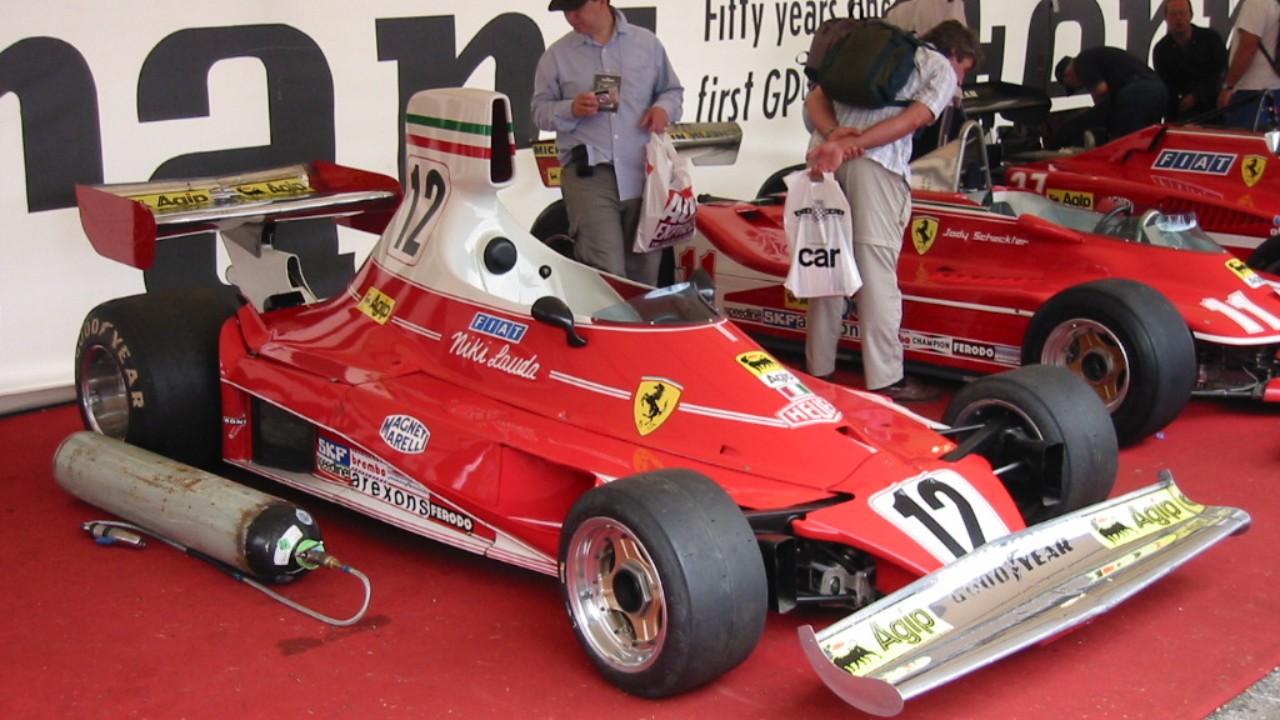
The “T” in Ferrari 312T stands for trasversale, Italian for transverse. It refers to the car’s gearbox, which Ferrari mounted crosswise instead of lengthways. In 1975, that car carried Niki Lauda to his first Formula 1 world title.
It also ended a long wait for Ferrari. The team had gone 11 years without a constructors’ championship, and the 312T won one in its first season. Then it became the start of a family of cars that kept Ferrari at the front for the rest of the decade.
Here is what the name means, why the gearbox mattered, and what the car won.
What the T in Ferrari 312T means
Mauro Forghieri, head of Ferrari’s technical department, designed the car, according to Ferrari’s own 50th-anniversary history of the 312 T. He had spent time on FIAT special projects during Enzo Ferrari’s illness, and then he returned to lead the department.
His key move was to turn the gearbox 90 degrees relative to the engine. On most cars of the era, the gearbox sat lengthways behind the engine. Forghieri’s layout, by contrast, reduced the mass hanging out behind the rear axle, Ferrari explains.
The gearbox sat ahead of the rear-axle line, notes OldRacingCars’ history of the model. Forghieri was chasing the lowest possible polar moment, the same source says. Put simply, he wanted the heavy parts close to the middle of the car, so it would change direction more readily.
The flat-12 behind the driver
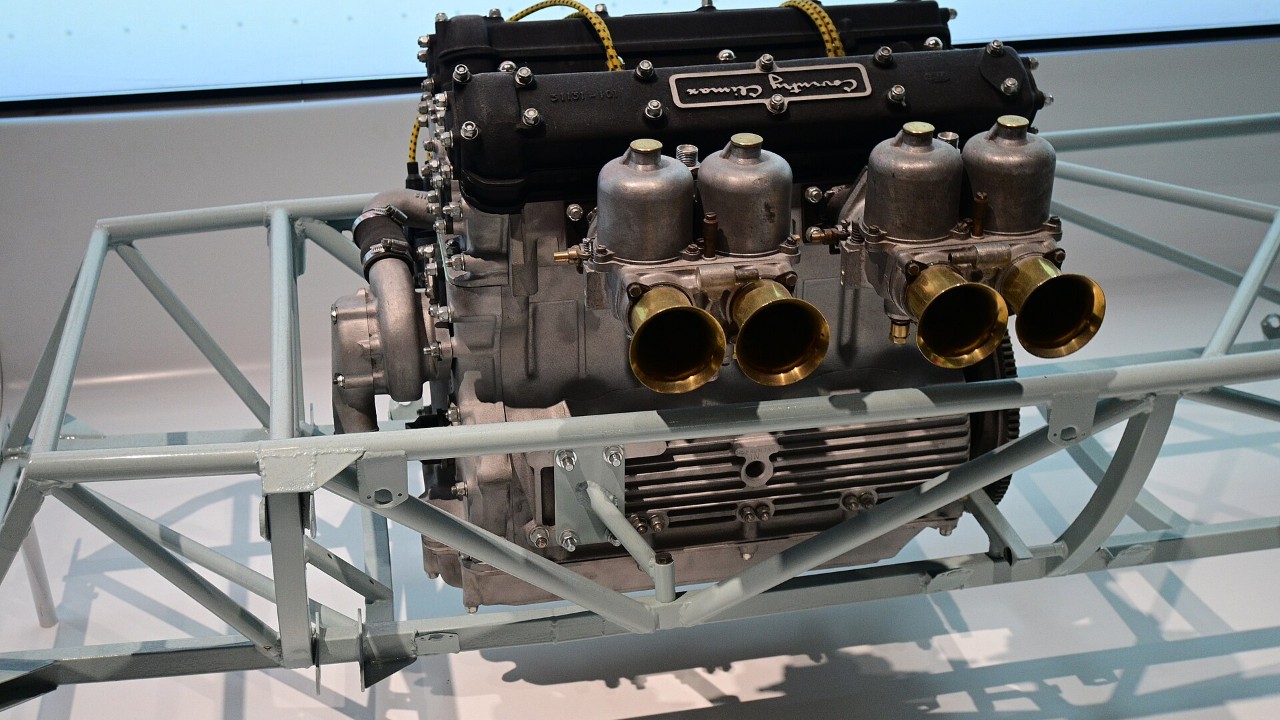
The “312” half of the name points to the engine. The car used a 3.0-liter flat-12 rated at 495 cv, according to Ferrari. That is a metric horsepower figure, and Ferrari says the engine had an edge on the Cosworth DFV that powered most of the grid.
Because the flat-12 sat low, it also lowered the car’s center of gravity compared with a traditional V engine, Ferrari notes. The engine carried over from the 312 T’s immediate predecessors.
The rest of the car was just as carefully packaged. Ferrari describes a semi-monocoque built on a tubular spaceframe, with structural aluminum panels and light glass-reinforced plastic bodywork. In addition, OldRacingCars notes outboard front brakes, inboard rear brakes and a slimmer nose than the 312B3 that came before.
A slow start, then a fast season
Ferrari presented the car in late September 1974, between the Canadian and United States Grands Prix, the Ferrari history says. Lauda drove it first in testing at Fiorano. However, early tests at Fiorano and Vallelunga went poorly at first while Lauda adapted, OldRacingCars says, so the team used the older 312B3 in the South American races.
The 312T made its debut at the South African Grand Prix at Kyalami on March 1, 1975. Lauda finished fifth that day, and teammate Clay Regazzoni finished 16th, according to Ferrari.
After that, the season turned. The official Formula 1 results for 1975 show Lauda winning in Monaco on May 11, Belgium on May 25 and Sweden on June 8. He then won in France on July 6, and Regazzoni won the Italian Grand Prix on September 7.
Lauda’s first title
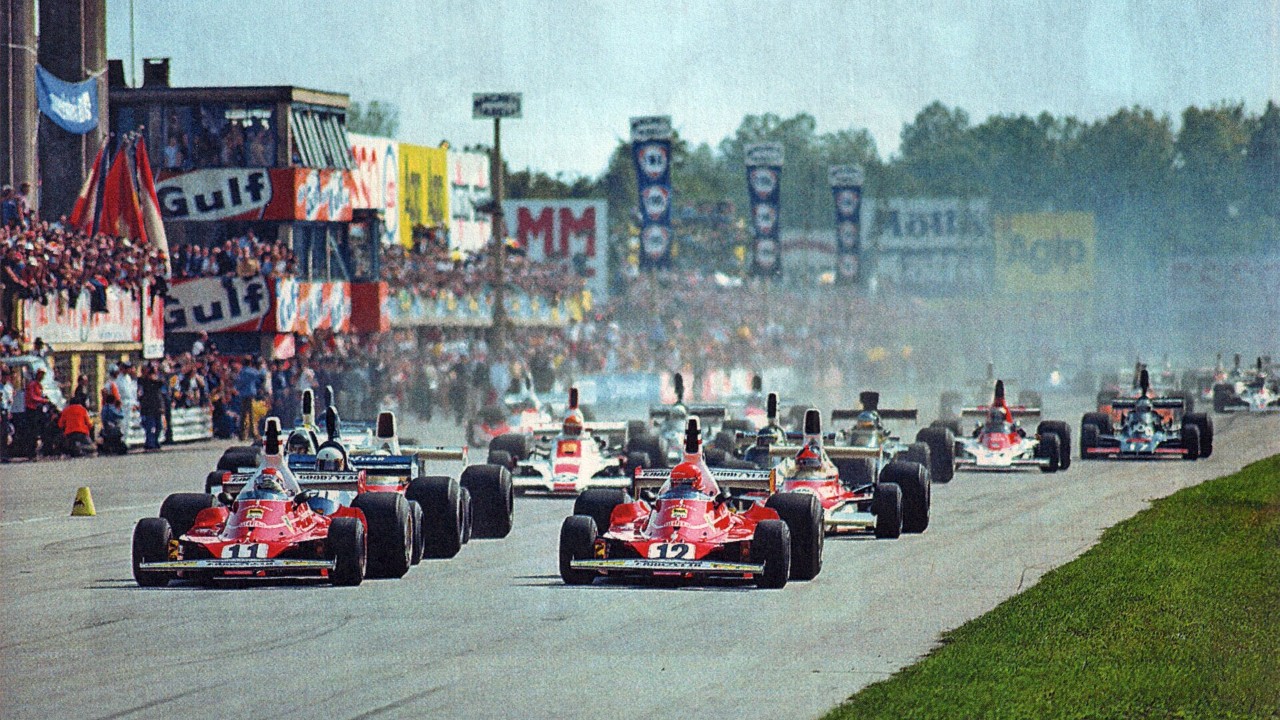
Lauda clinched the drivers’ championship with third place at Monza, the second-to-last round, Ferrari says. Then he closed the year by winning the United States Grand Prix on October 5, the official results show.
He finished the season on 64.5 points, well clear of Emerson Fittipaldi’s 45 for McLaren, according to Formula 1’s 1975 drivers’ standings. Ferrari, meanwhile, took the constructors’ title with 72.5 points, ahead of Brabham on 54, the 1975 team standings show.
The car Lauda used most was chassis 023. It was his regular car from the Monaco Grand Prix onward, and it took him to six Grand Prix wins, OldRacingCars records.
The family that followed
The original 312T raced into early 1976. Regazzoni won at Long Beach that year, and then the 312T2 replaced it, OldRacingCars says.
The line kept evolving after that, through the 312 T2, T3 and T4. For example, Jody Scheckter won the 1979 title after starting the season in a 312 T3 and switching to the ground-effect 312 T4, Ferrari says. As a result, the whole 312 T family won 27 races, four constructors’ titles and three drivers’ titles, according to Ferrari’s history.
Lauda’s own 1975 title was the first of three drivers’ championships, OldRacingCars notes. And the Ferrari 312T that started it all made its debut at Kyalami on March 1, 1975.
More from Fast Lane Only
- Unboxing the WWII Jeep in a Crate
- 15 rare Chevys collectors are quietly buying
- 10 underrated V8s still worth hunting down
- Police notice this before you even roll window down
This article was created with the help of AI and was reviewed and edited by Fast Lane Only editors before publication.