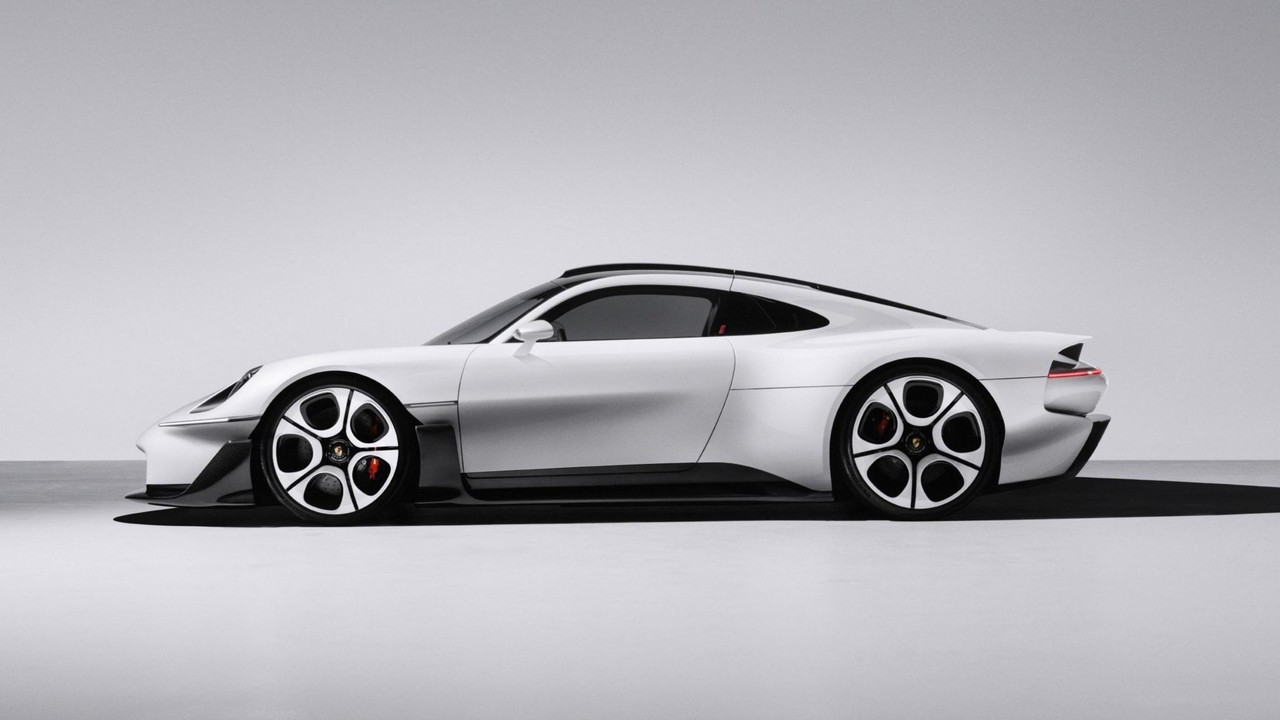
Porsche revealed the Porsche Mission S vision model on October 15, 2026, and it points to a new kind of Porsche. The concept previews a mid-engined super sports car platform that will sit above the 911. Porsche says that car will be a permanent part of the range, not a one-off hypercar. One detail also reaches back to the racetrack: a cooling setup that recalls the radiator fan of the 917.
The setting carried history, too. Porsche staged the world premiere on a pier in Queens, New York, with the Manhattan skyline behind the car. According to Porsche, photographers took the first pictures of the mid-engined 550 Spyder on that same pier in 1953.
However, the concept is a design study first. Porsche has not released an engine, a power figure, a price or a production date. So the Mission S shows where Porsche styling is going, and it makes a promise about the lineup.
What the Porsche Mission S previews
In its Mission S release on the Porsche Newsroom, the company says it is developing the new mid-engined platform as a lasting addition to its range. Dr Michael Leiters, chairman of the executive board, described it “not as a one-off hypercar, but as a permanent and versatile addition to our customer offering.” According to Porsche, it would be the brand’s first permanently available super sports car offer above the 911.
That is a real change of course. By comparison, Edmunds notes that the last Porsche supercar was the 2015 918 Spyder. That car was hybrid-only and used a dual-clutch automatic, Edmunds adds.
The Mission S also opens a wider plan. Porsche calls it a first look at its evolved design identity, as part of a strategic realignment named Sportwagenschmiede ’35. Tobias Sühlmann, head of Style Porsche, said the vision model shows a direction the company “will soon be translating into our future product portfolio.”
The 917-style cooling fan and other racing cues
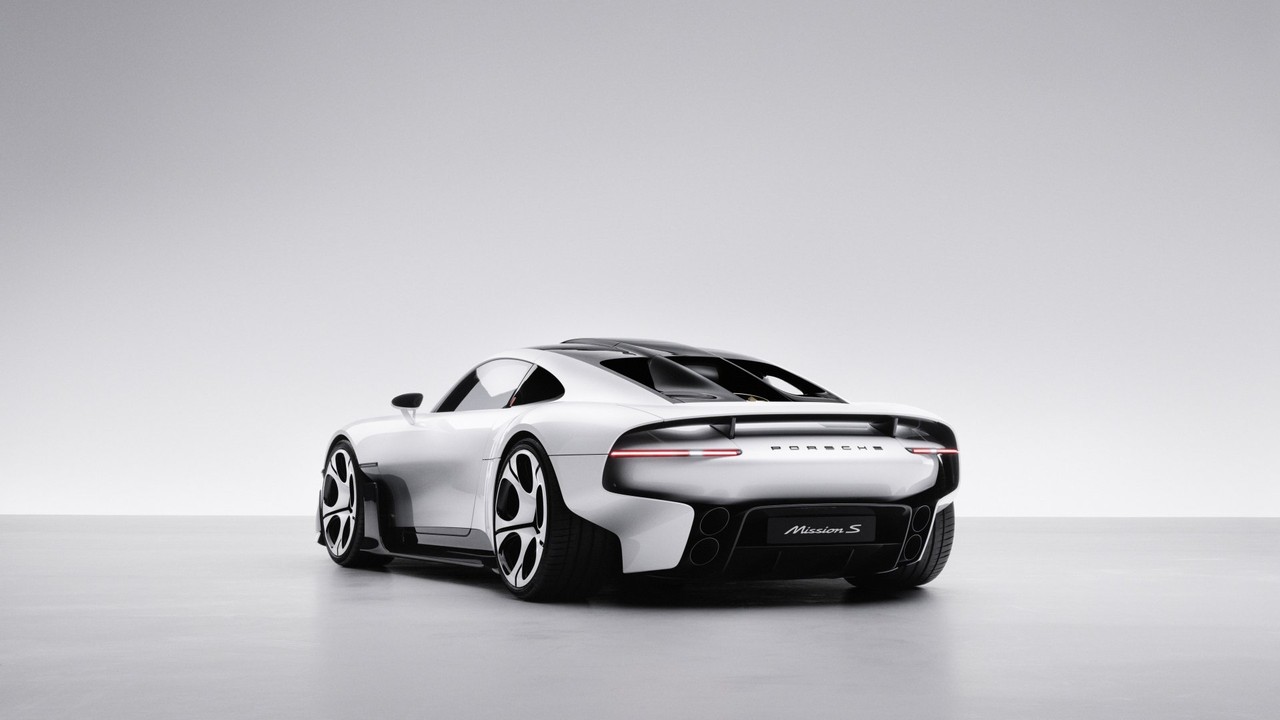
Porsche says the concept uses a cooling solution reminiscent of the 917’s radiator fan. Edmunds describes it as a horizontal fan under the rear window that pulls air out of the engine bay. Meanwhile, a roof scoop runs along the length of the car and feeds air to the engine, according to Edmunds.
The mid-engine layout shapes the rest of the body. Porsche says it allows the car’s low “flyline.” Also, the roofline runs beneath the rear wing in a way that recalls the 959, and it carries on through to the tail. Porsche fully integrates that active rear wing into the body, and Edmunds reports that it rises at speed.
Other cues come from Porsche’s GT1. For example, Porsche says the flat front comes from that car, and the rear uses a “car-in-car” concept derived from it. Edmunds identifies the source as the 1996–1998 911 GT1, which also inspired the rear fenders.
Design cues from the 911, the 928 and the 550 Spyder
Round headlights and fenders echo the 911, Porsche says. In addition, shut lines merge into the light graphics as a nod to the G model. A wraparound main line links the front and rear light signatures. Above that line, the surfaces stress muscle, while the areas below show technical functions and lightweight construction.
The wheels borrow the 928’s “dial design,” redeveloped for light weight. Edmunds reports staggered sizes, with 21-inch wheels in front and 22-inch wheels at the rear. As for paint, the concept wears Firn White Metallic, Light Red Metallic and Black Chrome, with Special Black inside. Porsche says those shades reinterpret classic Porsche Motorsport colors.
The cabin looks back as well. Its architecture draws on historic cars including the 550 Spyder and the 356, according to Porsche. Two lines run through the dashboard and doors, so the driver feels seated deep within the car.
Five round gauges and no center screen
Five round instruments sit behind the steering wheel. The central rev counter has an analog needle with a display behind it, and it moves closer to the driver in certain drive modes. Edmunds reports an 8,000-rpm redline on that tachometer. As is customary at Porsche, the key holder sits to the left of the wheel.
Instead of a fixed center display, the concept uses a retractable smartphone holder that works with MagSafe. There is no fixed passenger display either. Through the My Porsche App, owners could pick historically inspired designs for the round gauges. Porsche also redesigned the Sport Chrono clock and added push-pull dashboard controls.
Edmunds spotted a shifter that looks like a manual lever, but the concept also has paddle shifters. As a result, the outlet suggests the lever may be purely decorative. Other touches include pull straps on the doors and seat belt buckles built into the center of each seat, Edmunds says.
What Porsche has not said yet
The engine is the biggest open question. Porsche gave no powertrain, output, weight, dimensions, price or production timing. Edmunds reports rumors of an eight-cylinder engine, but nobody has confirmed one. According to Edmunds, Porsche says the car will offer gas or hybrid power rather than full electric, with manual or automatic transmissions.
Price is another unknown. Edmunds estimates that the production car will likely cost more than $200,000. That figure is the outlet’s own estimate, though, not a Porsche number.
For now, the Porsche Mission S lives in a media kit of 19 images, 11 design drawings and two videos. Porsche calls the 550 Spyder its first super sports car, and the company unveiled this one on the same Queens pier where photographers first pictured that car in 1953.
More from Fast Lane Only
- Unboxing the WWII Jeep in a Crate
- 15 rare Chevys collectors are quietly buying
- 10 underrated V8s still worth hunting down
- Police notice this before you even roll window down
This article was created with the help of AI and was reviewed and edited by Fast Lane Only editors before publication.