
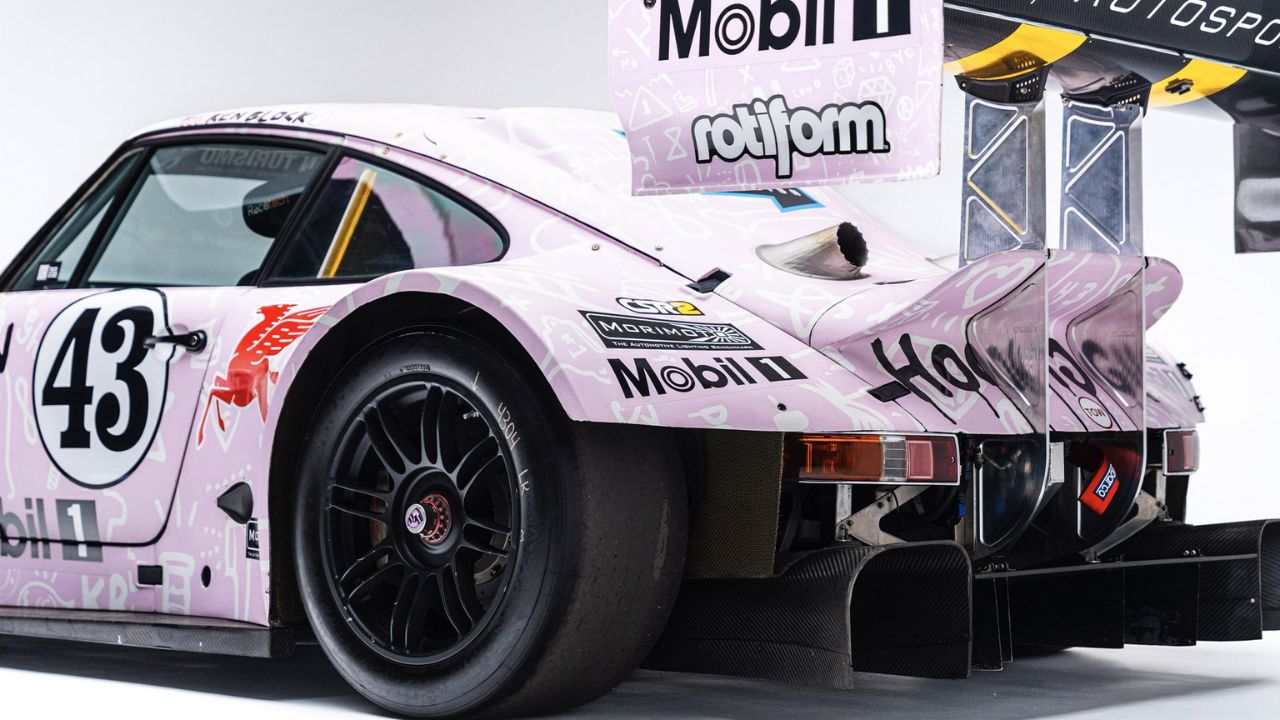
Built to tackle Pikes Peak with no compromises, the Hoonipigasus was one of Ken Block’s most ambitious machines. It started with the shape of a vintage 911, but beyond the silhouette, there’s nothing old about it. This thing was engineered from the ground up to handle altitude, speed, and abuse—packed with the kind of power and control you only see in top-tier race programs.
From the twin-turbo flat-six to the GPS-linked suspension and all-wheel-drive setup, this car was made to attack corners at 14,000 feet like it was nothing. It’s not a tribute car—it’s a purpose-built monster that just happens to wear a familiar face.
Built to Race Pikes Peak at Full Send
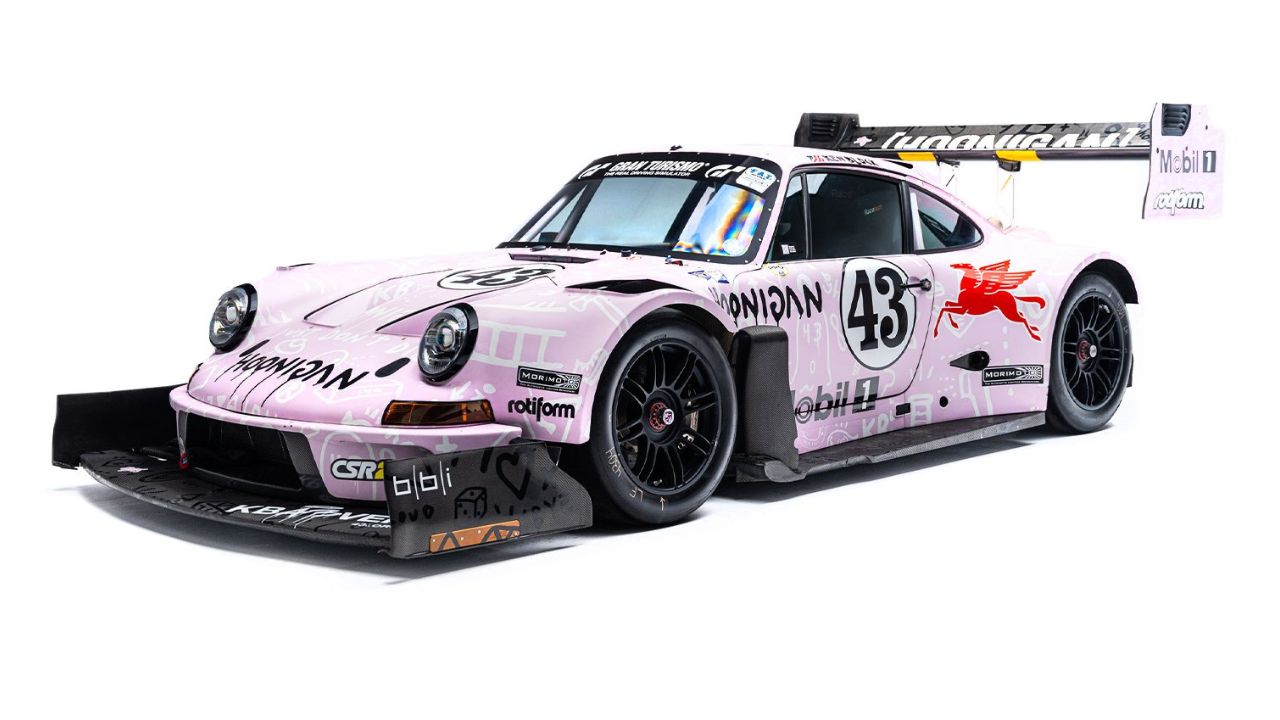
The Hoonipigasus was developed for one purpose—Pikes Peak. This isn’t a modified street car or track toy. It’s a custom-built, mid-engine 911 race machine created from the ground up by BBi Autosport and Hoonigan specifically for Ken Block’s assault on the mountain.
Everything about it screams function-first. It’s stripped, caged, and aerodynamically tuned to survive 12.42 miles of altitude gain. With nearly 5,000 feet of elevation change and 156 turns, there’s no room for guesswork. This car was built to handle extremes—both in terrain and expectation.
A Twin-Turbo Flat-Six Pushing 1,400 HP
At the heart of the Hoonipigasus sits a twin-turbocharged 4.0-liter flat-six engine making an estimated 1,400 horsepower. The engine is mounted midship for better balance—an unusual twist for a 911 chassis, but one that made sense for the demands of Pikes Peak.
This setup wasn’t just about raw numbers. With the thin air at altitude, power loss is a real concern. That’s where forced induction pays off. The car was built to maintain maximum output all the way to 14,115 feet, something naturally aspirated builds struggle with at the Peak.
All-Wheel Drive With Race-Grade Hardware

Unlike most traditional 911s, the Hoonipigasus features a full all-wheel-drive system. It uses a custom setup with active differentials and torque distribution, engineered to handle high-speed sections and sharp technical corners with the same confidence.
AWD is almost mandatory when chasing fast times on Pikes Peak. The road surface changes constantly, and traction is never guaranteed. This drivetrain keeps the power flowing without lighting up tires unnecessarily. It also lets the car transition between grip and slip quickly—critical for time attack strategy.
Aerodynamics That Actually Do the Work
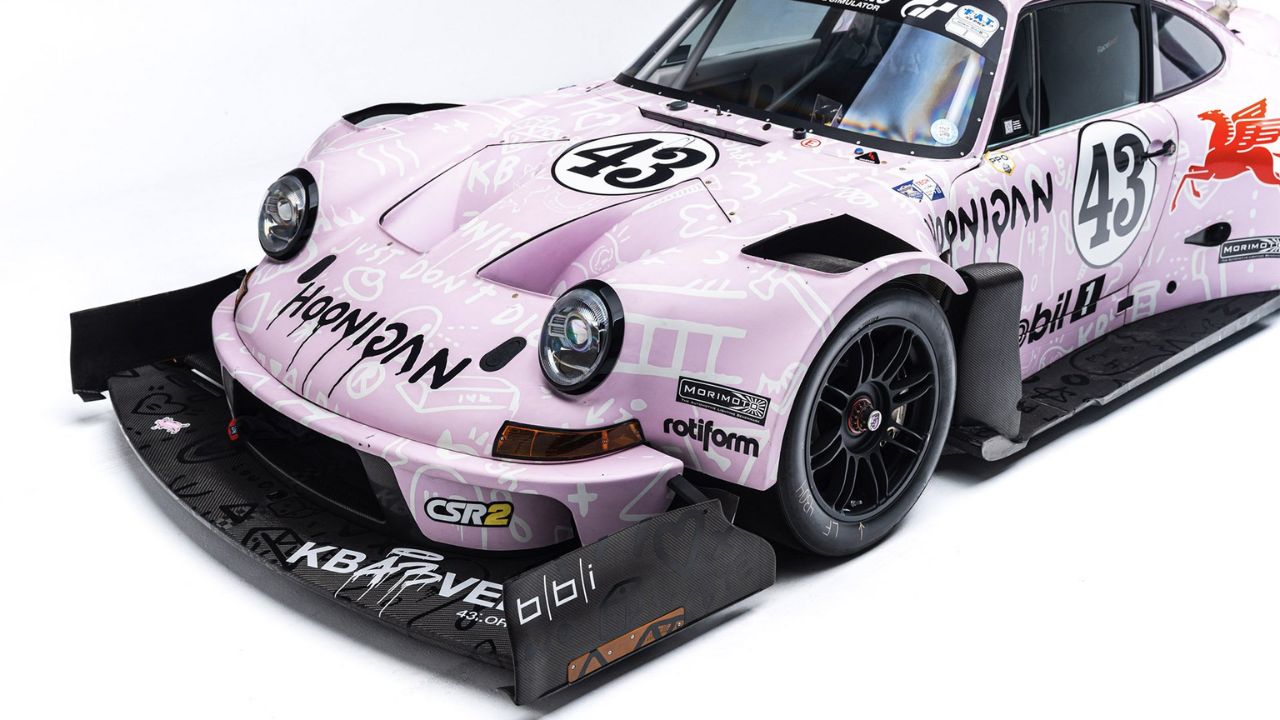
The aero package on the Hoonipigasus isn’t for style points. It includes a massive rear wing, aggressive splitters, and a fully vented body—all calculated to generate real downforce in high-altitude air. At Pikes Peak, thin atmosphere makes effective aero even harder to get right.
Everything is tuned to counter lift and keep the tires planted. From the cut fenders to the rear diffuser, there’s nothing added that doesn’t serve a purpose. With speeds hitting triple digits on cliffside straights, you want every bit of that grip sticking around.
Custom Widebody with Racing Roots
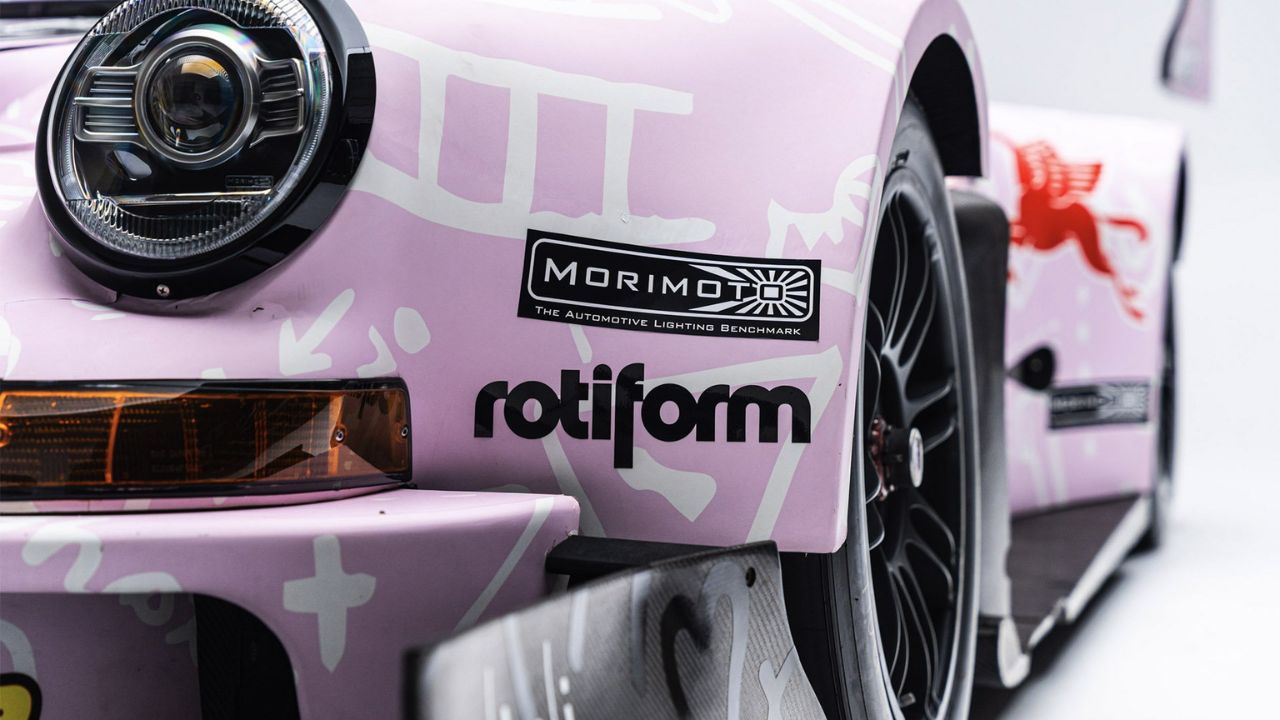
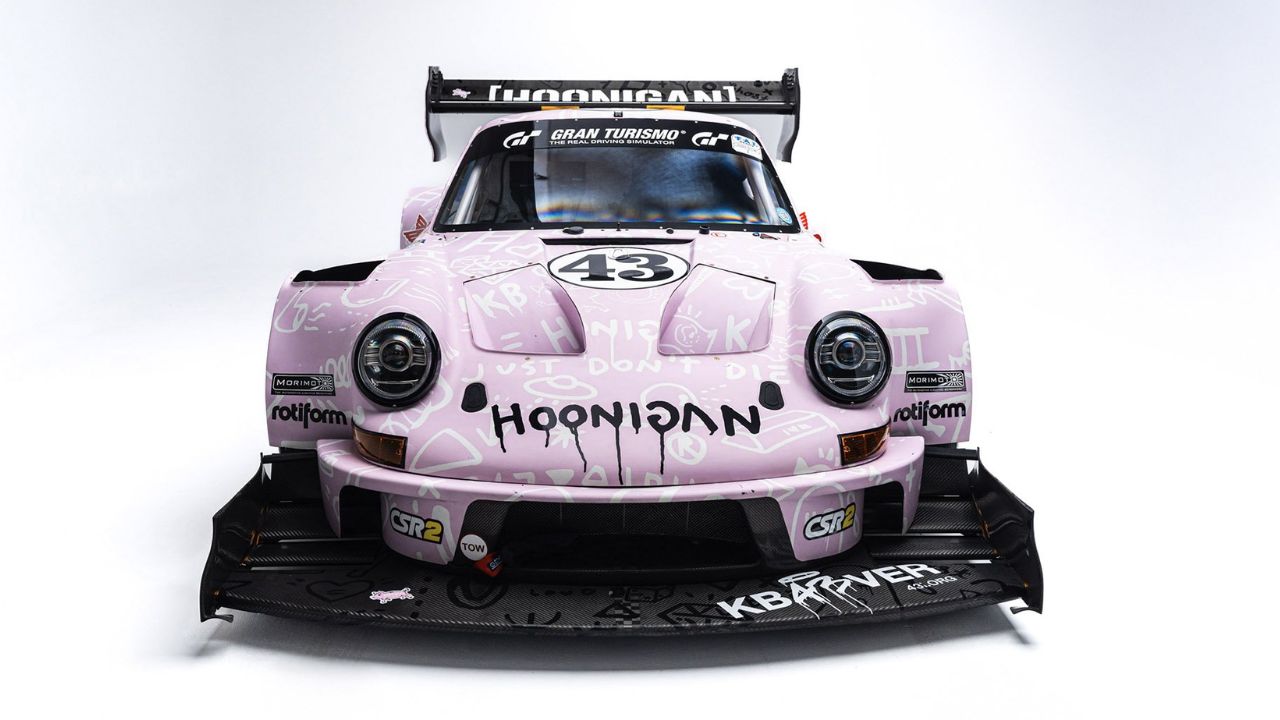
The Hoonipigasus runs a full widebody shell based on a 964 Porsche, but don’t let the retro curves fool you. Every panel has been redesigned for clearance, airflow, and weight savings. The body is carbon composite, shaped to handle both stress and speed.
It’s functional in every sense, but it also pulls inspiration from Porsche’s past. The pink livery was a nod to the 1971 “Pink Pig” Le Mans 917. So while this car’s all business under the skin, it still pays tribute to one of the most recognizable racing liveries ever.
Active Suspension Tuned for Altitude
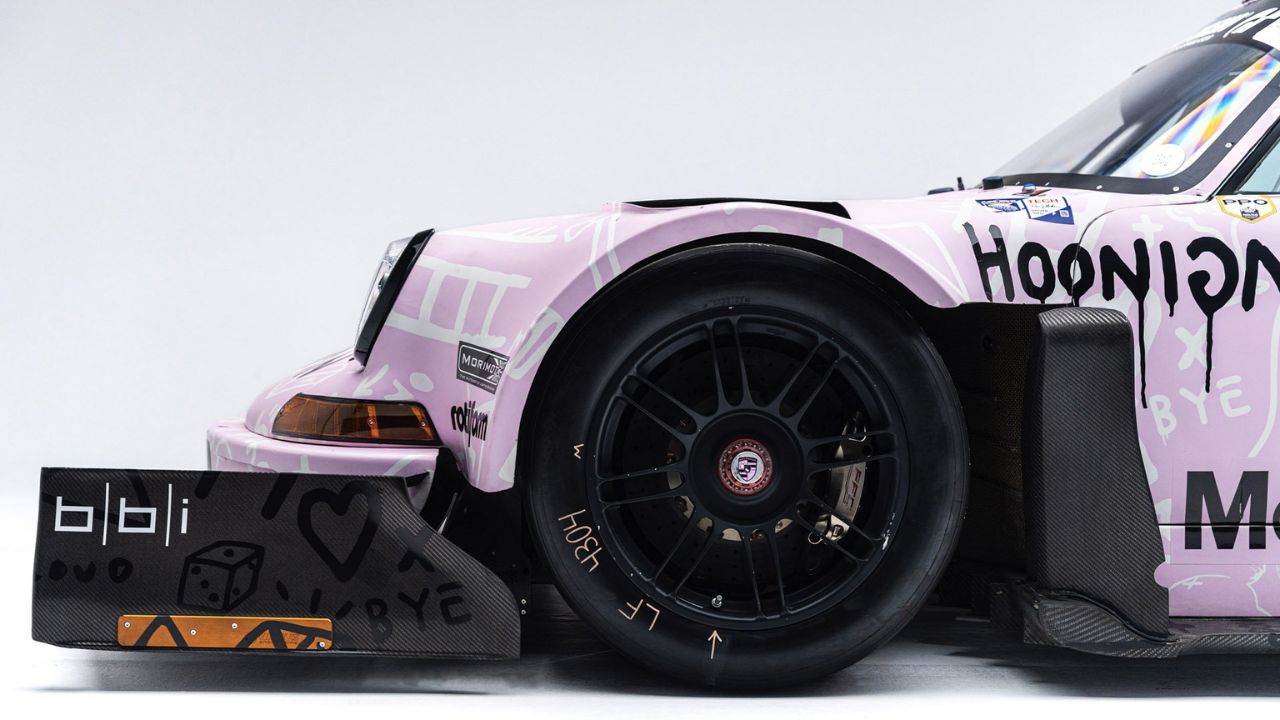
Suspension work was handled by BBi with a fully active setup. The system includes GPS-linked ride height control to adapt in real time to changes in the road surface and elevation. At Pikes Peak, where the terrain is unpredictable, that level of control is huge.
The setup uses double wishbones and race-grade dampers with adjustability at every corner. The goal was to keep the car flat and stable whether it was compressing into a fast sweeper or floating over uneven patches. Grip isn’t just mechanical—it’s also electronic, and this build uses both.
Lightweight Design, Built for Balance
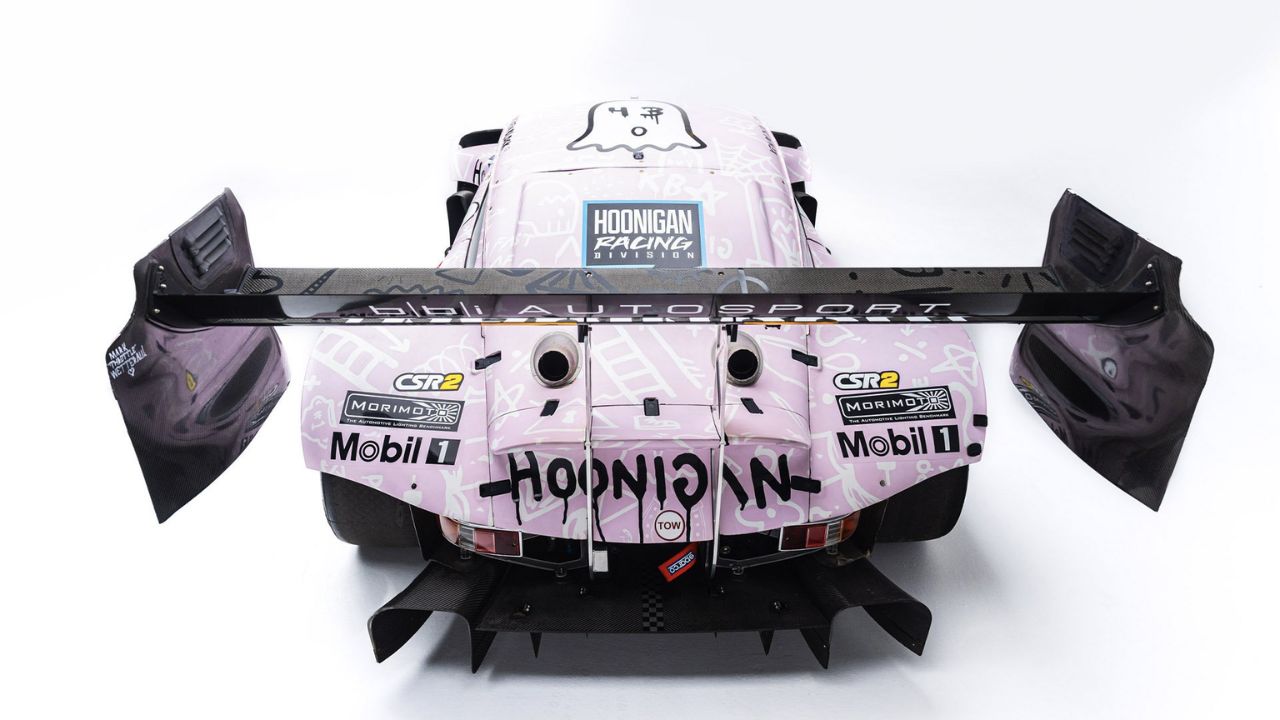
Weight is always the enemy in racing, and the Hoonipigasus fights back with everything from a carbon body to a stripped, bare-metal cabin. It weighs in around 1,000 kg (about 2,200 pounds), giving it an exceptional power-to-weight ratio even before factoring in AWD traction.
That lightness helps in more ways than just acceleration. It reduces brake wear, improves responsiveness, and lets the car recover faster from corrections. When you’re throwing a car around blind corners at altitude, that nimbleness isn’t optional—it’s survival.
Purpose-Built Interior, Zero Distractions
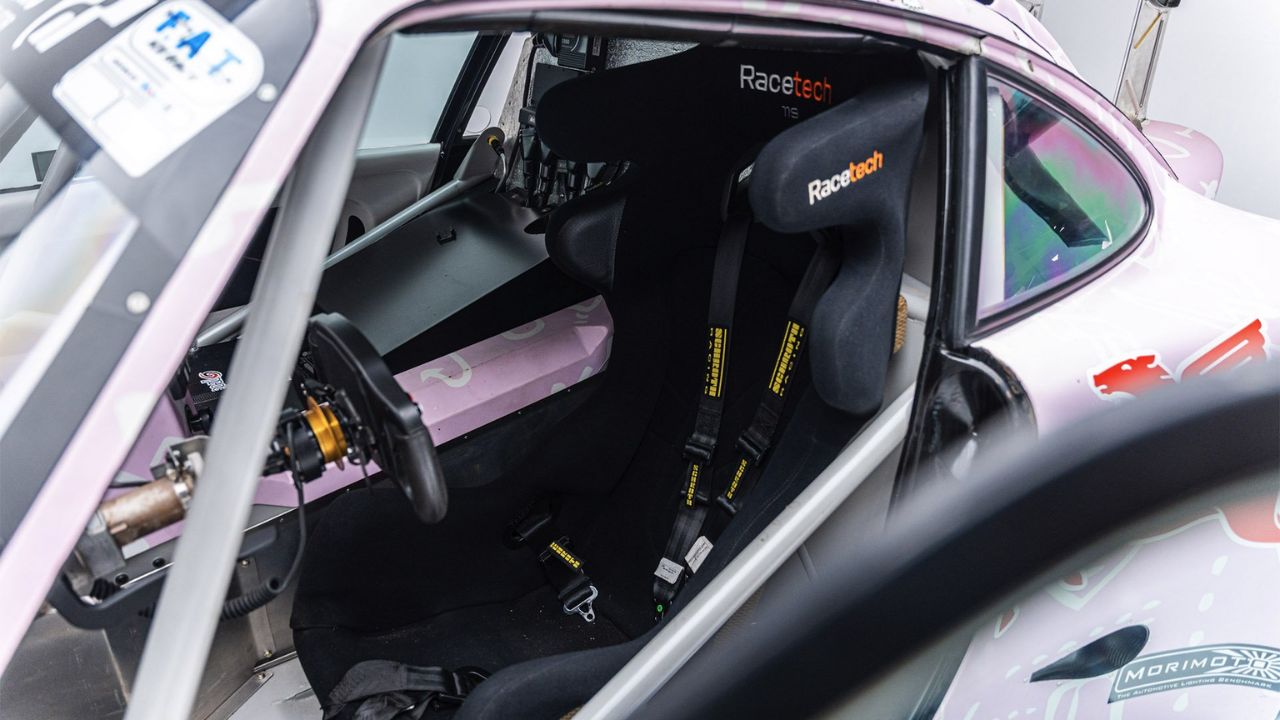
Inside, the Hoonipigasus is all function. There’s a single race seat, a digital display, and a simple control layout within arm’s reach. The cage is FIA-spec, fully integrated into the chassis for rigidity and driver safety, with no padding for comfort or show.
It’s the kind of cabin that doesn’t pretend to be anything else. No sound deadening, no touchscreen distractions. Just a stripped environment that puts the driver in full control. Every pound saved went into making this thing faster, and it shows.
Tech Stack That Goes Deep
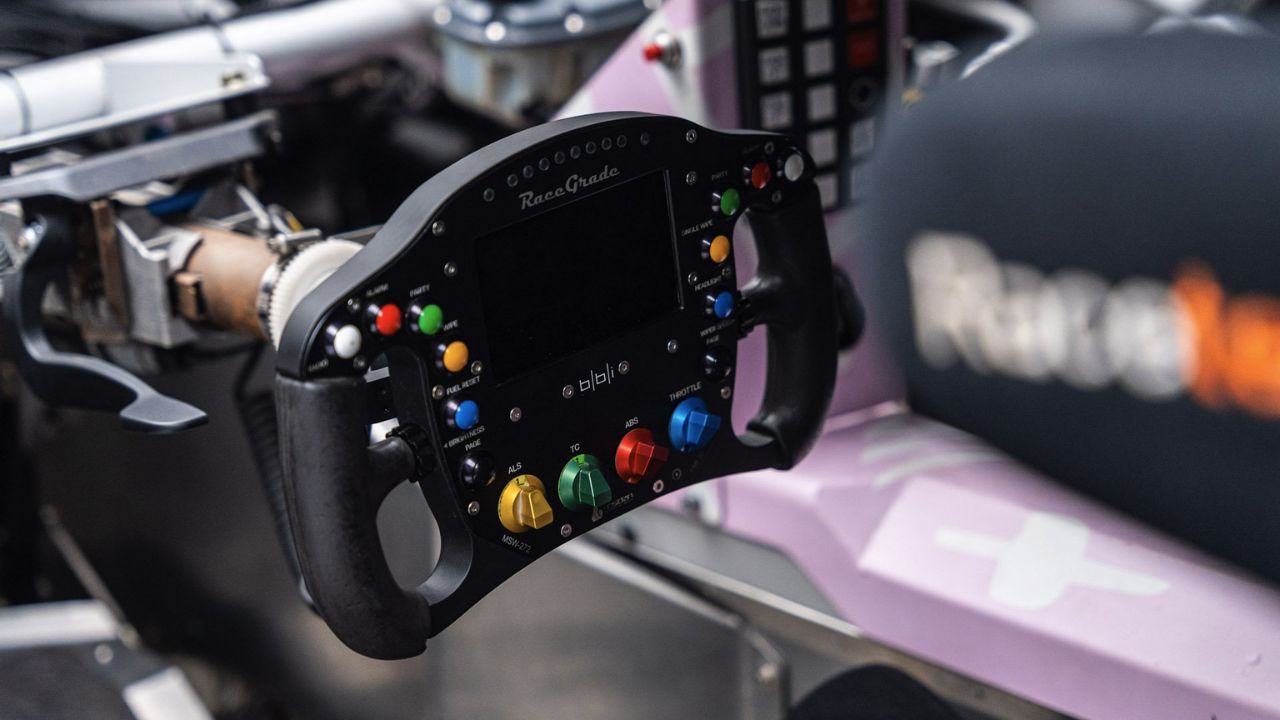
The car runs on a full motorsport-grade data system, capturing everything from suspension telemetry to GPS mapping for elevation tracking. This isn’t just a brute force machine—it’s wired for strategy, with live feedback helping tune performance mid-run.
It also features advanced traction management and launch control, all adjustable based on course conditions. With weather at Pikes Peak changing by the hour, having real-time adaptability is critical. The car wasn’t just built to survive one race—it was designed to learn from it.
Ken Block’s Vision, Realized Through Precision
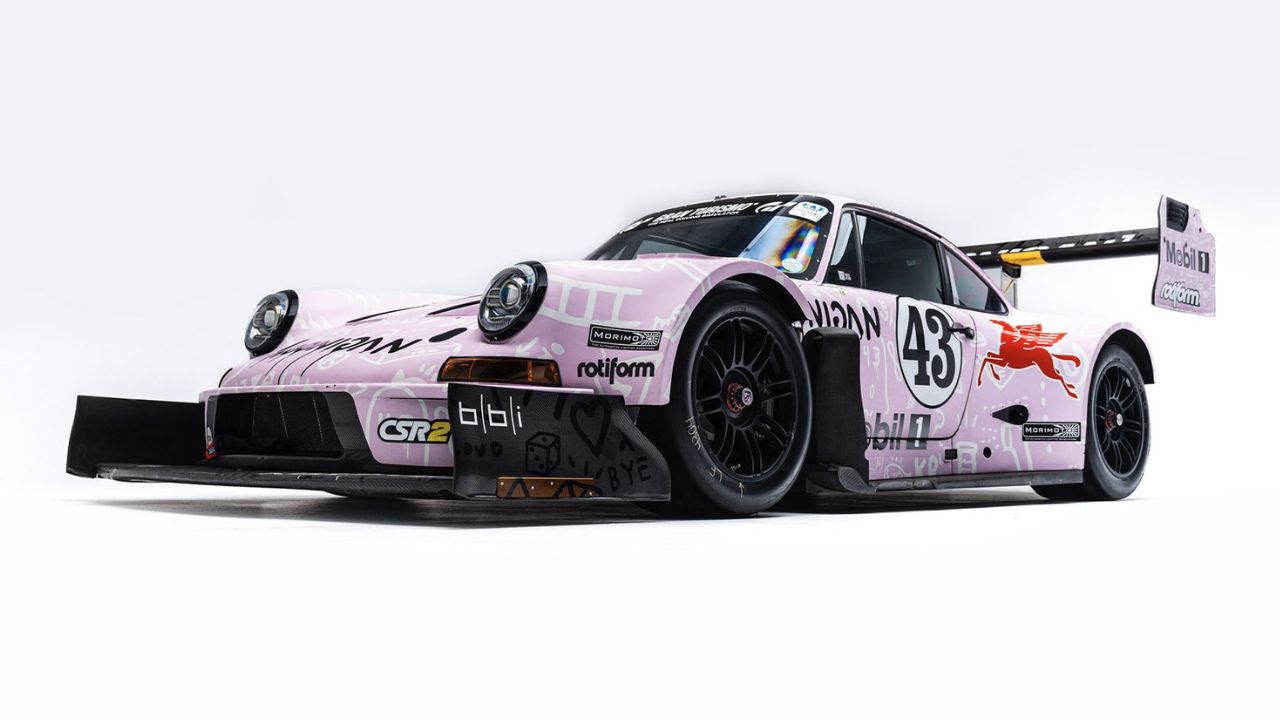
The Hoonipigasus was one of Ken Block’s final big projects—a car that blended outrageous design with no-nonsense race engineering. It may look like a fantasy build, but every decision was calculated, tested, and refined to push the limits of what’s possible in a hillclimb car.
Unfortunately, Block never got the chance to race it at Pikes Peak due to engine failure during testing. But the car remains a symbol of how far you can take an idea when you have the right mix of vision, backing, and engineering firepower.
Like what you read? Here’s more by us:
*Created with AI assistance and editor review.



Leave a Reply