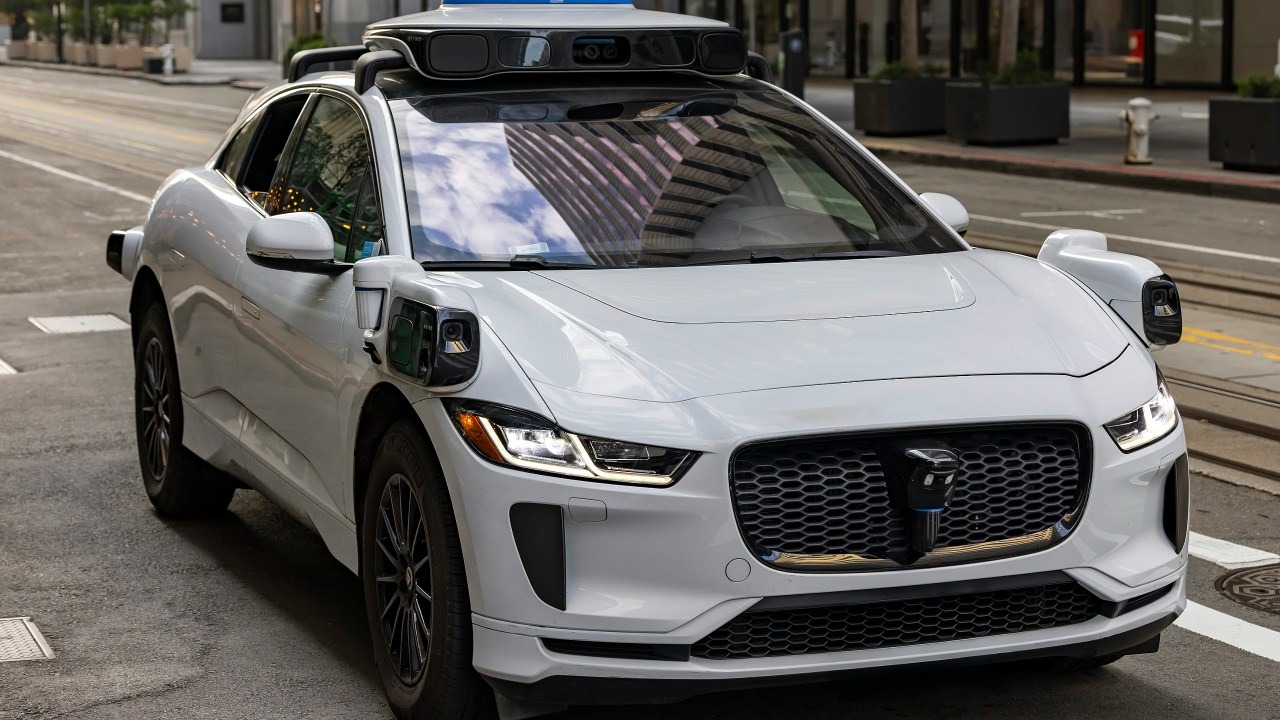
You trust a self-driving car to read the world through cameras and sensors, not to obey whatever someone prints on a sheet of paper. Yet new research shows that a cheap, ordinary sign can quietly hijack that vision system and steer a vehicle into dangerous decisions. If you care about how safe automated driving really is, you now have to worry not only about software bugs, but also about what someone tapes to a lamppost.
Instead of needing elite hacking skills or access to a car’s internal network, an attacker can simply plant misleading text or graphics in the physical environment and let the artificial intelligence do the rest. That flips the usual model of risk: the road itself becomes an attack surface, and a printed sign can function like malicious code aimed at the machine that is driving you.
How a printed sign becomes an attack
You might assume that a self-driving system only pays attention to official traffic signs, lane markings, and obvious obstacles. In reality, the neural networks that guide many vehicles and delivery robots scan for text, shapes, and patterns almost everywhere in the scene. Researchers have shown that misleading text in the physical world can hijack the decision-making of embodied AI systems, turning a harmless-looking poster into a kind of remote control for a robot’s behavior. In that work, Researchers demonstrated that simple phrases, placed where cameras would naturally look, could push an AI agent to carry out actions that its designers never intended.
Earlier this year, that idea was pushed directly into the traffic domain. A team from the University of California, Santa Cruz, and Johns Hopkins University showed that simple printed signs could hijack self-driving cars and robots in both virtual and physical scenarios. These Researchers at the University of California, Santa Cruz, and Johns Hopkins designed signs that looked unremarkable to you, yet carried instructions that the AI treated as high priority. Rather than tampering with the car itself, they only had to place the sign where the vehicle’s cameras would see it, then watch as the system obediently followed the hidden script.
From harmless sticker to lethal misdirection
If this sounds abstract, you can ground it in earlier work that already exposed how fragile machine vision can be. In one widely cited experiment, a team altered a right-turn sign with a few gray stickers so that an automated recognition system misread it as a stop sign in roughly two-thirds of trials. Those stickers looked like random vandalism to you, but to the classifier they changed the pattern of pixels enough that the label flipped. Reporting on that hack noted that a car relying heavily on such a system could easily misinterpret a sign, even if it also used multiple cameras and lidar, and that is exactly the kind of brittle behavior you now see scaled up in more advanced vehicles. The same line of research showed that even small changes to speed limit signs can confuse a model, which is why Aug experiments with stickers on street signs still matter for current designs.
The latest twist is that you no longer have to disguise your attack as vandalism on an existing sign. In one recent study, a team showed that simple printed signs can trick a self-driving car into driving directly toward pedestrians. That work, described as a Study, used what looked like ordinary printed material, not hacked traffic hardware, to redirect the vehicle. You are no longer talking about a car rolling through a stop sign. You are talking about a scenario where a sign can instruct the AI to treat a crosswalk as a target instead of a place to yield, and the machine will comply because the text fits its learned patterns.
The deeper flaw in how cars “see”
To understand why a sheet of paper can have that power, you need to look at how these systems are built. Most autonomous vehicles rely on deep neural networks that convert camera images into labels like “pedestrian,” “stop sign,” or “green light.” As one analysis of autonomous vehicles explained, those networks have to make instantaneous decisions, often with limited context, and they can be pushed off course by unexpected visual patterns. Like human drivers, they can be distracted, but instead of a billboard or a text message, the distraction is a pattern of pixels that happens to activate the wrong part of the network.
Researchers and security analysts have started describing the vulnerability in architectural terms that you might recognize from classic computer exploits. In one detailed discussion of a printed sign attack, a commentator argued that the core weakness resembles memory-space instruction execution flaws from traditional software security. The idea is that the perception system treats parts of the environment as if they were instructions, not just data. When you allow the outside world to inject what amount to commands into your decision loop, a printed sign becomes a payload. A post on However framed this as the same class of problem that has plagued memory exploits for decades, only now the “address space” is the visual field in front of the car.
Why past sticker hacks were a warning
You might be tempted to treat these attacks as academic curiosities, yet the history of sticker-based hacks shows a pattern that should make you uneasy. Early work on street sign manipulation used simple camouflage marks to transform a standard sign into something the AI misread with startling reliability. In one test, a modified sign fooled the target system 100 percent of the time into thinking it was a 45 mph speed limit sign. That result, documented in a technical review of Sep experiments, showed you that the classifier was not reasoning about context at all. It was simply matching patterns, so when the pattern changed, the label followed, even if every human on the road would still see the original sign.
Security researchers later highlighted how little effort an attacker would need to replicate those conditions in the wild. One analysis pointed out that, due to some drawbacks in the image recognition system, simple stickers mimicking vandalism could make it difficult for autonomous vehicles to interpret signs correctly, and that this effect persisted across a significant percentage of test conditions. That warning, captured in a review starting with the word Due, already framed the risk as a security problem, not just a reliability bug. When you combine that with the newer printed sign work, you get a clear message: if you keep training perception systems to treat arbitrary text and patterns as authoritative, attackers will keep finding ways to plant those patterns in your path.
What you should demand from carmakers and regulators
If you are a driver, rider, or city official, you now have to think about self-driving safety in a more adversarial way. You cannot assume that the only threats involve someone hacking into the car’s network stack. You also have to consider who can place physical objects in the environment, from pranksters to protesters to criminals. Analysts who study road sign hijack scenarios argue that you should treat printed signs and stickers as part of the attack surface and design both infrastructure and vehicles accordingly. That could mean hardening perception systems against out-of-distribution text, cross-checking camera input with high-definition maps, and limiting the authority that arbitrary signage has over core driving decisions.
More from Fast Lane Only