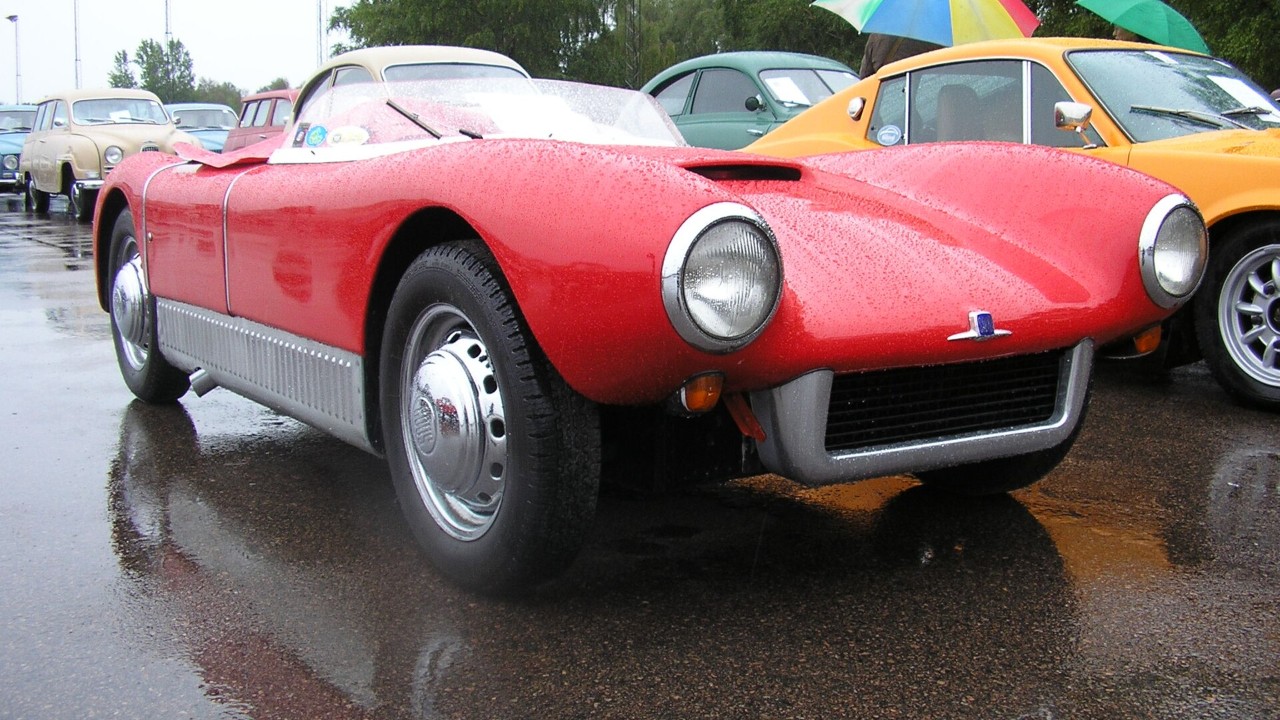
The first Saab Sonett, a fiberglass roadster from 1956, ran to just six cars. Even so, that tiny run showed that a company with roots in aircraft could think about cars in a completely different way. Many of Saab’s most important cars followed the same pattern, built in small numbers and remembered far longer.
For most people, the brand meant sensible two-strokes, then turbocharged hatchbacks and safe family wagons. However, the cars that shifted that image were often the odd ones. They included a race-bred roadster, a rally-winning saloon, a targa prototype and a turbo that beat Ford on snow.
These are our picks: nine rare or unusual Saabs that, in our view, changed how people saw the brand. The dates, engines and production facts come from Saab’s own museum, period magazines and marque histories. Every choice and verdict is our own.
1. Saab 94 Sonett I

The Sonett began in 1954, when engine developer Rolf Mellde started sketching a two-seat racer. According to the Saab Museum, the first car was ready at 2 a.m. on 14 October 1955. Its three-cylinder, 748 cc two-stroke was tuned to 57.5 horsepower, and the car weighed just 500 kg in road trim. Even the gearbox was clever. Saab reversed the engine’s rotation so that its three-speed box gave three forward gears and a reverse.
Saab borrowed ideas from its aircraft side, too. The stressed-skin aluminum chassis weighed less than 70 kg, and a Gothenburg plastics firm made the fiberglass body. At one point, Saab planned to build 2,000 Sonetts a year. Then competition rules changed and let modified production cars into the classes Saab had targeted. The project lost its purpose, and only six cars were built.
By autumn 1956, the first Saab Sonett had covered more than 5,000 km of testing. Hagerty’s UK writers note that five of the six cars survive. In our view, the Sonett I is the car that first told the world Saab could build something exciting. If you ever see one at a show, look at the cutaway aluminum structure underneath, because that is where its real story lives.
2. 1957 Saab 93 saloon

Saab presented the 93 on December 1, 1955. Sixten Sason styled it, and it carried a 748 cc three-cylinder two-stroke rated at 33 horsepower. Sason’s smooth shape made it look like nothing else on Swedish roads.
The 93 quickly proved itself in competition. In 1956, Rolf Mellde finished sixth in the Great American Mountain Rallye, with another 93 in seventh. In 1957, Erik Carlsson won the Finnish rally in a 93. Later, in 1959, two Saab 93s even started the 24 Hours of Le Mans. Saab built 52,731 of them in all. Along the way, the 93B of September 1957 swapped the original two-piece windshield for a one-piece glass.
Our take: the 93 is the car that made Saab a rally name. A small saloon beating bigger cars on loose roads changed what people expected from a Swedish economy car. If you buy one today, budget for a two-stroke specialist, because the engine needs owners who know its habits.
3. 1959 Saab 93B GT750

Saab aimed the GT750 squarely at America. It made its debut at the New York Automobile Show in April 1958, dressed up with extra driving lamps, twin taillights and large chrome hubcaps. Inside, the front seats adjusted to fourteen positions, and the driver got a wooden steering wheel with three aluminum spokes plus a Halda Speedpilot rally instrument.
The engine got serious attention. With twin carburetors, the standard GT750 made 50 horsepower, and an optional tuning kit raised that to 55 for the GT750 Super. According to the Saab Museum’s GT750 page, the Super did little below 3,400 rpm and worked best when shifted around 5,000 rpm. Its doors later moved over to the 93F from late 1959. However, the museum is honest about one flaw, describing the rear seat as hard and cramped.
In our view, the GT750 is where Saab stopped selling only thrift and started selling fun. It took the 93 body and turned it into a small rally car you could buy from a dealer. If you find one, check for the original instruments and seats, because those details separate a real GT750 from a dressed-up 93.
4. Saab Catherina

Saab started the Catherina project in January 1963. Sixten Sason, working freelance, drew the car, and the prototype was assembled at the ASJ workshops in Katrineholm. The town gave the car its name. It used many Saab 96 parts and the 96’s wheelbase, which kept the idea close to production.
The Catherina’s big idea was its roof. A removable panel could be stowed in the luggage compartment, so the coupe could become an open two-seater. That was a targa-style roof before the Porsche 911 Targa made the concept famous. Saab showed the red prototype on 24 April 1965, then chose a different car, the MFI13, as the basis for the Sonett II.
Our take: the Catherina lost the internal contest but won the long game. Sason reused some of its design cues on the Saab 99. Today, the prototype sits in the Saab Museum in Trollhättan, where its original name badge was refitted in 2008. Later, Saab built the MFI13-based Sonett II, so the Catherina’s loss fed directly into a Saab Sonett revival. If you visit, compare its nose with a 99 parked nearby.
5. 1979 Saab 99 EMS

Saab introduced the 99 EMS in 1972 as a sportier two-door. The letters stood for Electronic-Manual-Special. It used a 1,985 cc engine with Bosch D-Jetronic fuel injection, then switched to K-Jetronic from 1975. That made the 1979 car pictured here part of the later, mechanically injected batch.
The EMS also carried Saab’s rally hopes in the late 1970s. According to the Saab Museum’s rally history, Stig Blomqvist won the 1977 Swedish Rally in a 99 EMS. That win came two years before the turbo car took over. Meanwhile, the road car offered a top speed of about 106 mph. By comparison, the 99 had been unveiled in November 1967 as a sensible family car, with production starting in autumn 1968.
In our view, the EMS is the car that turned the sensible 99 into a driver’s Saab. It also pointed the way toward the Turbo. Fuel injection and rally success gave the brand a sporting image without any loss of its practicality. Find one with service records for the injection system, because a well-sorted K-Jetronic setup makes all the difference.
6. Saab 99 Turbo Rally

The road-going 99 Turbo arrived in 1978 with a turbocharged 2.0-liter engine rated at 145 PS in Europe. It was one of the first family cars sold with a turbo. Then Saab took it rallying, and the results changed how people saw turbocharging itself.
At the 1979 Swedish Rally, Stig Blomqvist drove a factory three-door Saab Turbo to victory ahead of Björn Waldegård’s works Ford Escort. Motor Sport magazine’s April 1979 rally review called it “a win for the first time by a turbocharged car.” The Saab Museum likewise records it as the first turbocharged win in a World Championship rally. Meanwhile, Per Eklund’s sister turbo car retired early when a pressure pipe fractured, so Blomqvist carried the team alone.
Saab shut down its competition department the next year, in 1980. Our take: the 99 Turbo Rally made “Saab” and “turbo” mean the same thing for a whole generation. Every turbo Saab that followed owes something to that snowy weekend. If you want a road 99 Turbo, buy the best-documented car you can find, since parts for the early turbo cars are getting scarce.
7. Saab 900 Turbo Cabriolet
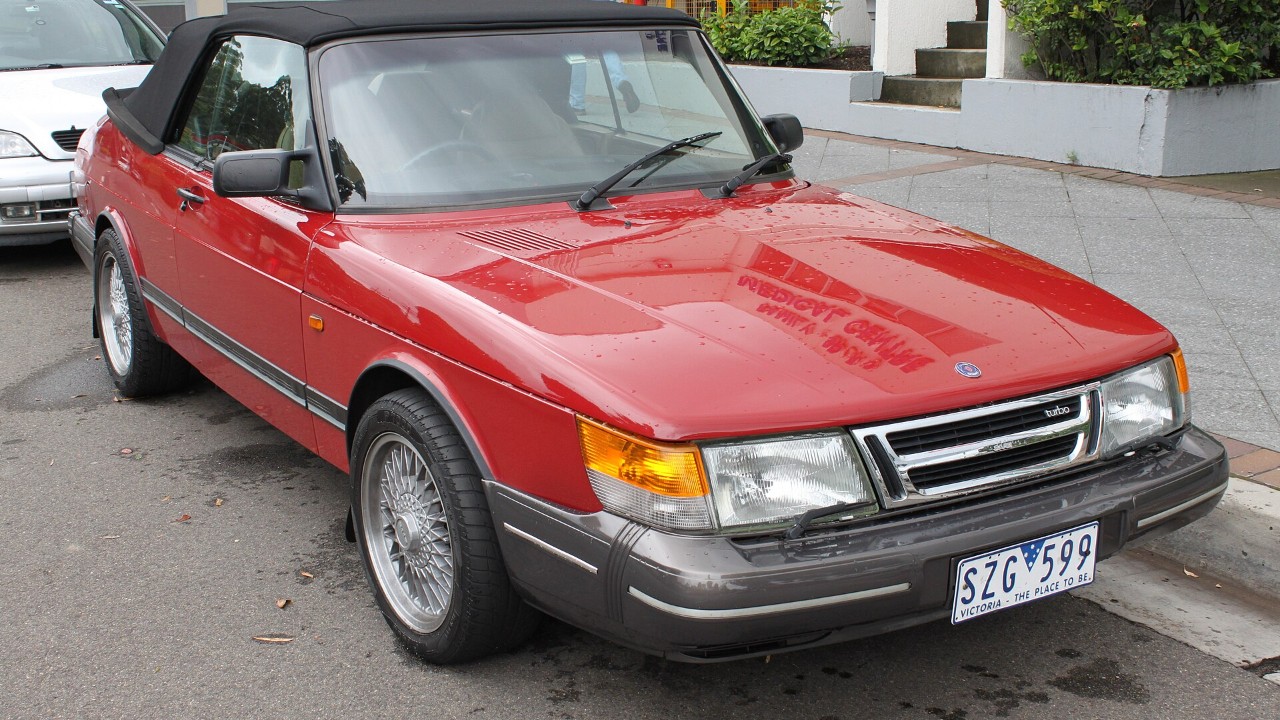
The 900 convertible started with a request from America. Robert J. Sinclair, president of Saab-Scania of America, suggested it in the mid-1980s to boost sales. ASC built the first prototype, and Lynx Motors produced two cars just before the launch. At first, Saab’s Trollhättan design team based its version on the hatchback. In the end, though, the two-door sedan from the Finnish plant won out.
Saab decided in April 1984 to build the car at Valmet Automotive in Finland. Production began in spring 1986, and North America got the convertible first. In all, Saab built 48,888 classic 900 convertibles, out of 908,817 classic 900s. That makes the cabriolet a small slice of the car’s run, and the turbo versions like the one pictured are a smaller slice still.
Our take: the 900 Turbo Cabriolet changed the brand from a professor’s car into a lifestyle car. It brought Saab into a new crowd of buyers who wanted an open car with real performance. If you shop for one, check the top mechanism and the body seals carefully, because a leaky roof spoils the whole experience.
8. Saab 9-5 Aero wagon
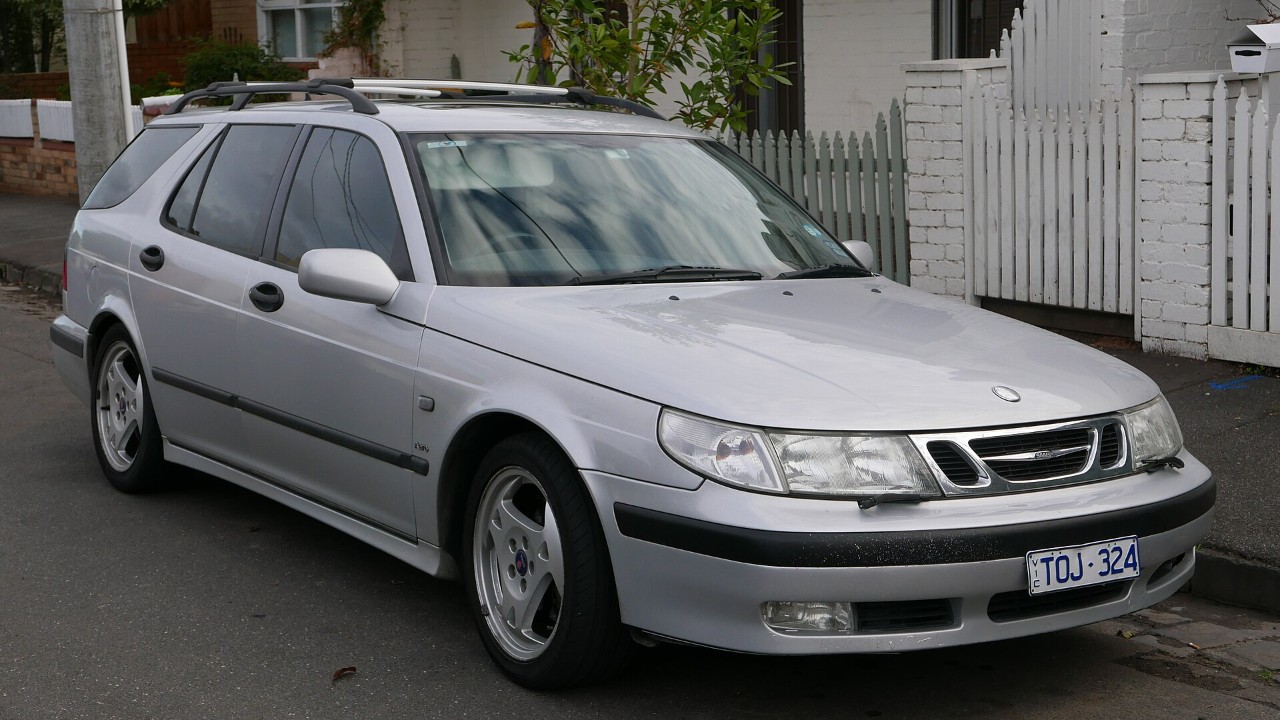
The 9-5 replaced the Saab 9000, and the wagon reached America for the 1999 model year. Saab gave it a slippery shape, with a drag coefficient of 0.31 in most markets. The US version measured 0.33.
The Aero arrived in 2000 with a 2.3-liter turbo engine rated at 230 PS. Later, Saab raised the Aero to 250 PS, and that upgrade landed in 2002. The early-2000s wagon pictured here belongs to that fast family-hauler era. Over the whole run, Saab built 231,357 wagons and 483,593 first-generation 9-5s in all. By comparison, the 9000 it replaced reached about 503,000 cars. In 2002, stability control also became standard.
In our view, the 9-5 Aero wagon is the sleeper of the modern Saab lineup. It carries a family’s luggage and can then embarrass sports sedans on a highway on-ramp. Our advice: check its service history for oil changes and the turbo, because a well-maintained one is far easier to live with.
9. Saab 9-2X Aero

In our view, the 9-2X was the strangest Saab of its decade. It was a rebadged version of the second-generation Subaru Impreza hatchback, sold in North America for just the 2005 and 2006 model years. Fans soon nicknamed it the “Saabaru.”
Underneath, the Aero was a WRX in a Swedish suit. For 2005, it used the turbocharged 2.0-liter engine from the Impreza WRX, rated at 227 horsepower. For 2006, it switched to a 2.5-liter turbo rated at 230. Saab sold only 10,346 9-2Xs in total, with 8,514 for 2005 and just 1,832 for 2006. Meanwhile, the cheaper Linear model used a non-turbo 2.5-liter rated at 165 horsepower for 2005, so the Aero is the version to hunt.
Our take: the 9-2X changed how people saw Saab, though not in the way its planners would have wanted. Purists saw a badge job, yet the Aero is a fast hatchback with real rarity. If you want one, buy the best Aero you can find and treat it as a WRX for maintenance, because the drivetrain is pure Subaru.
More from Fast Lane Only