Ford built 92,843 Thunderbirds for 1960, yet only 2,530 of them left the factory with a sliding sunroof. That gap between the big totals and the tiny option counts is where the rare Thunderbirds hide, from the supercharged 1957 cars to the Thunderbird Sports Roadster of 1962 and 1963.
Below are seven factory configurations, each with its own production figure. Some of them overlap, because an M-code engine could go into a Sports Roadster. So we treat each one as its own build and give the count that applies to it.
1. 1957 Ford Thunderbird F-Code
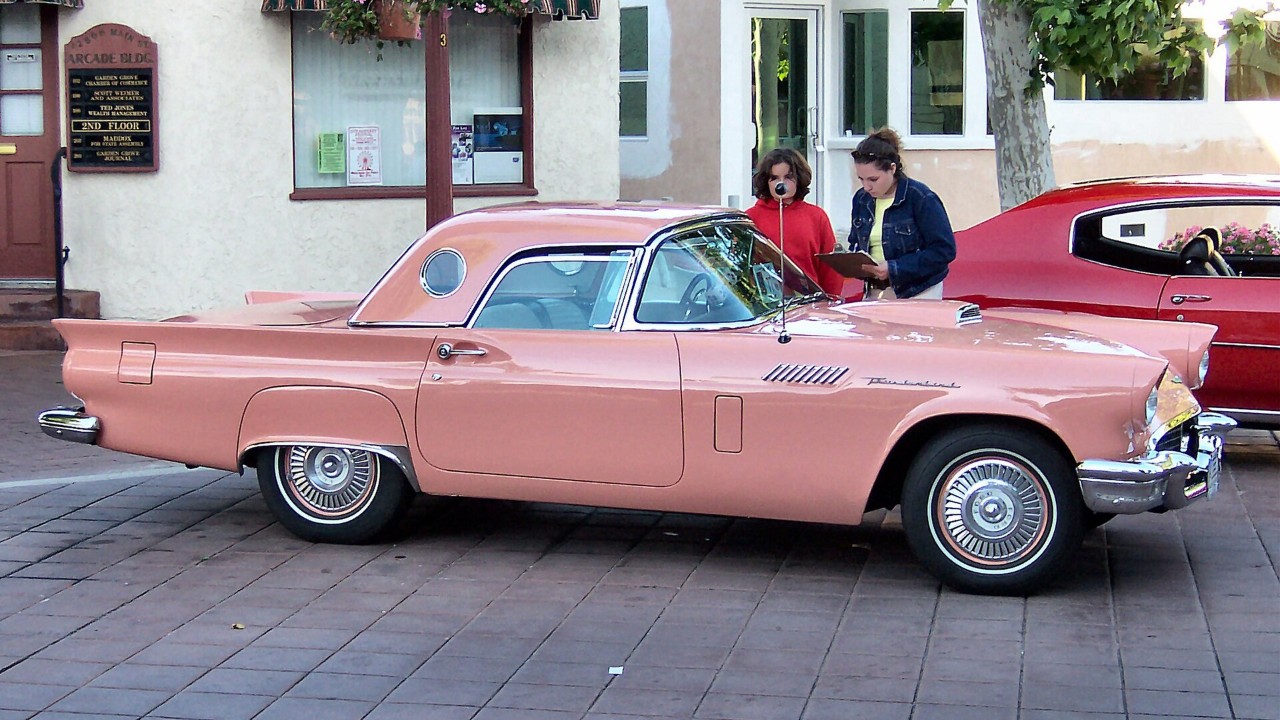
The F-code began as a racing problem. Ford needed a supercharged engine approved for NASCAR, so it reportedly built its first 15 blown Thunderbirds in January 1957. At first, those early D-type cars wore Paxton-McCulloch superchargers.
Then the F-code engine followed in the spring. According to Old Cars Weekly, it paired the 312-cubic-inch V-8 and a four-barrel carburetor with a Paxton McCulloch VR57 supercharger. A special head cut compression to 8.5:1, and ratings ran from 325 to 340 horsepower with fine-tuning. Even the total is fuzzy, though. The magazine calls the “official” figure of about 211 supercharged D- and F-series cars an approximation.
2. 1960 Ford Thunderbird Golde Edition sunroof
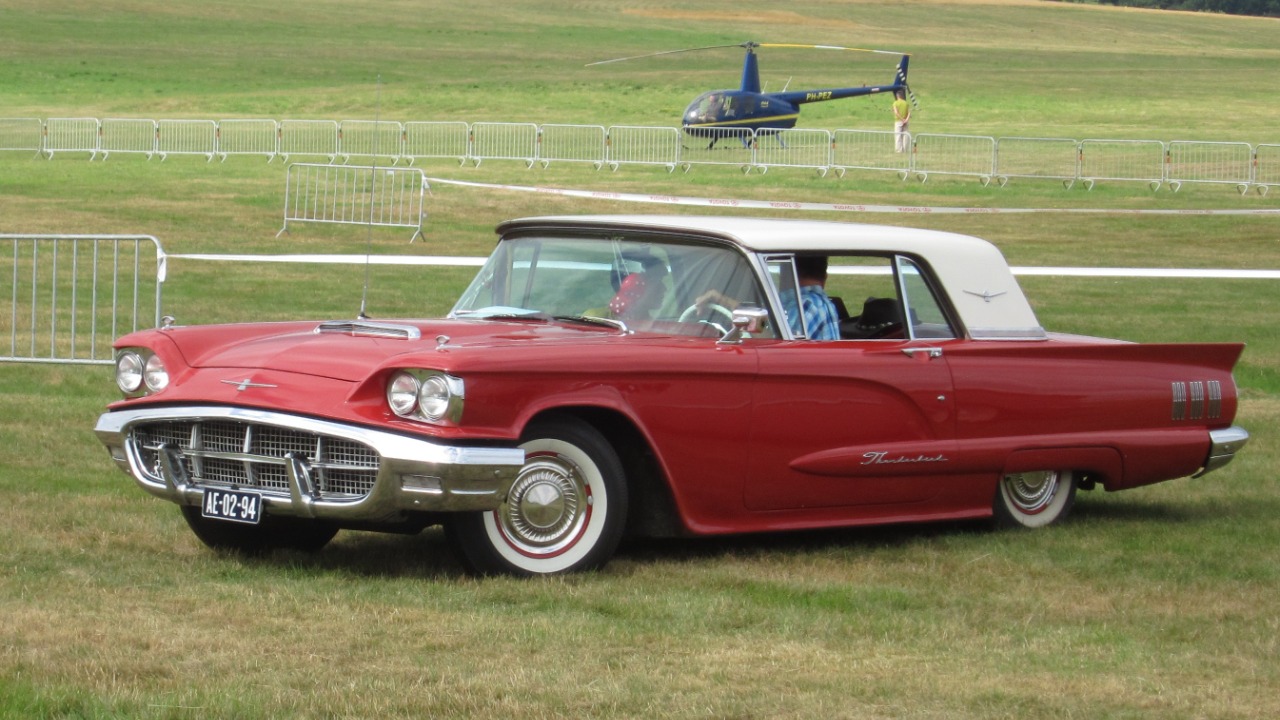
The 1960 sunroof option carried a German name. Its Golde Edition name came from the company that held the patent on the sliding roof, as Conceptcarz notes.
However, few buyers paid for it. Hagerty’s 1960 Thunderbird guide counts 2,530 sunroof cars out of 92,843 built that model year. That works out to fewer than three in every hundred. The same guide lists the big 430-cubic-inch V-8 at 345 horsepower as the top engine for 1960, the final year of the square-lined “Squarebird.”
3. 1962 Ford Thunderbird Sports Roadster
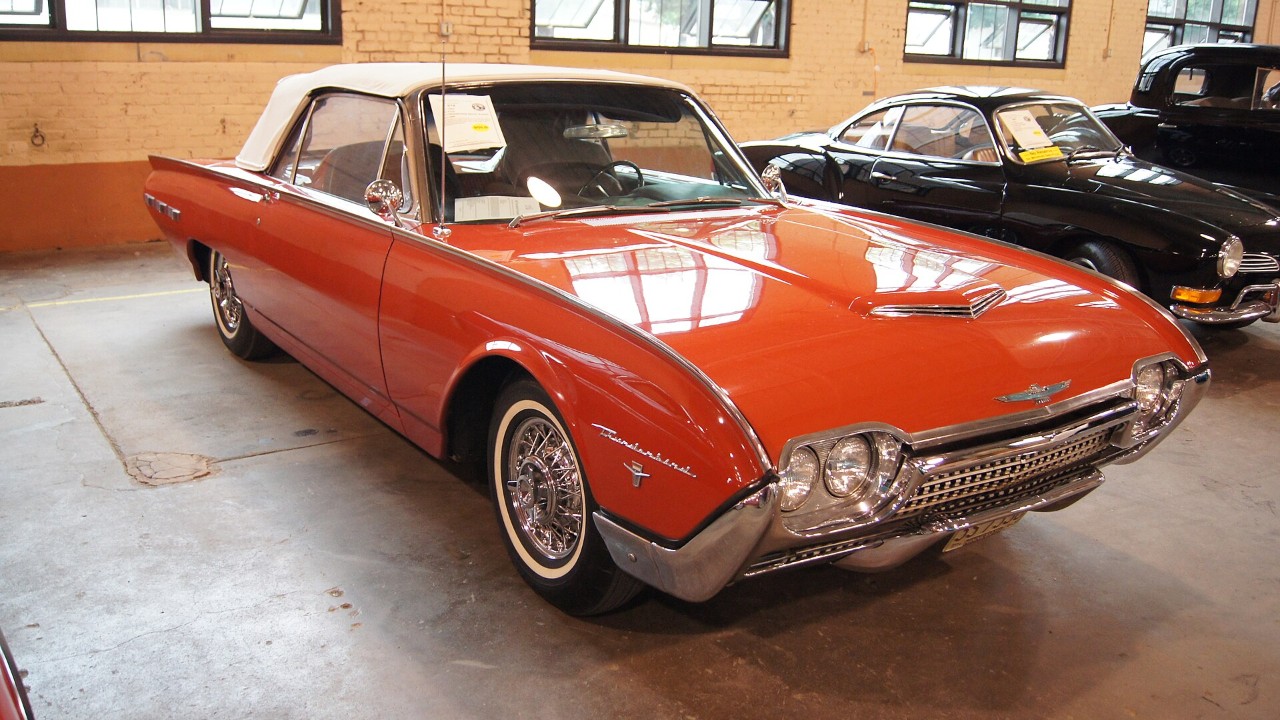
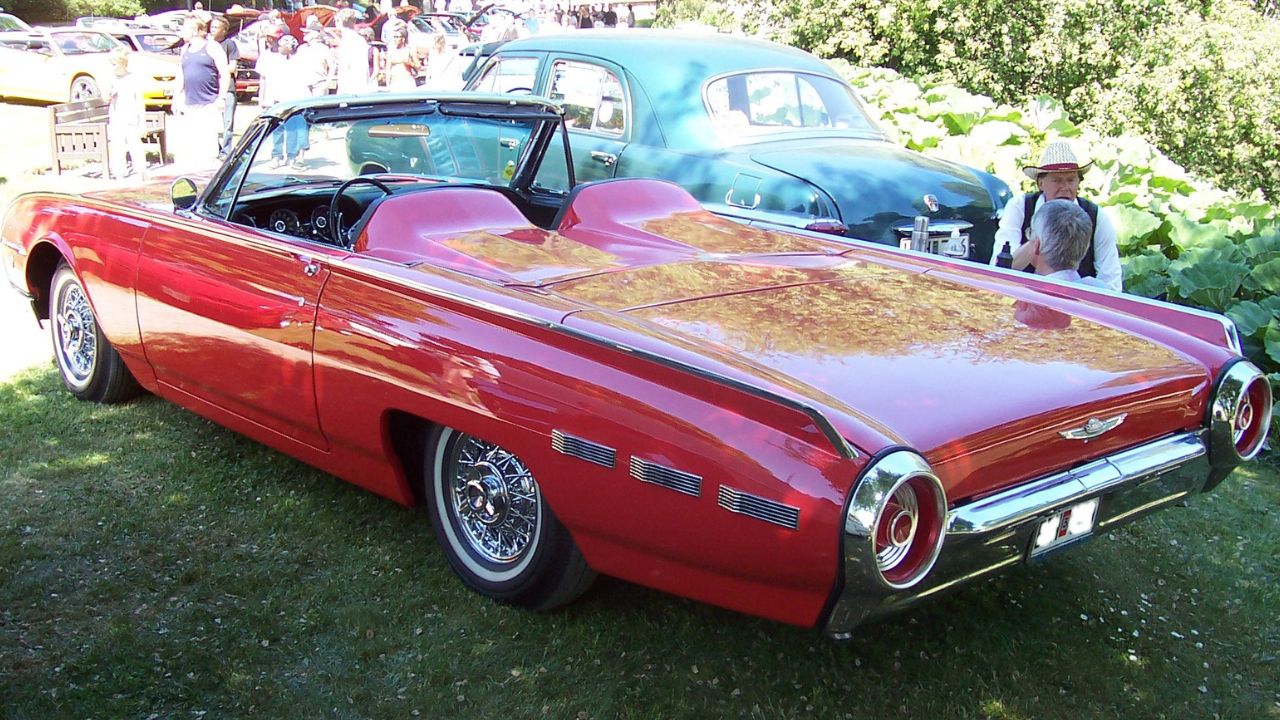
Ford turned its four-seat convertible into a two-seater for 1962, at least in looks. A streamlined tonneau cover sat over the back seat, and the package also included Kelsey-Hayes wire wheels.
In its first year the Thunderbird Sports Roadster found 1,427 buyers, according to Hagerty. Conceptcarz gives the same count for the convertible package. That made it a rare option on the “Bullet Bird,” the rounded body Ford sold from 1961 to 1963.
4. 1962 Ford Thunderbird M-Code

The M-code was the engine option, not a body style. Ford had enlarged its FE V-8 to 390 cubic inches for 1961, and Hagerty lists the regular four-barrel version at 300 horsepower. Then, for 1962, Ford added a hotter version.
The M-code 390 wore three Holley two-barrel carburetors and made 340 horsepower. Hagerty says Ford sold only 145 Thunderbirds with it in 1962. In other words, an M-code car was about ten times scarcer than the Sports Roadster that year. Conceptcarz gives the same 145 total.
5. 1963 Ford Thunderbird Sports Roadster
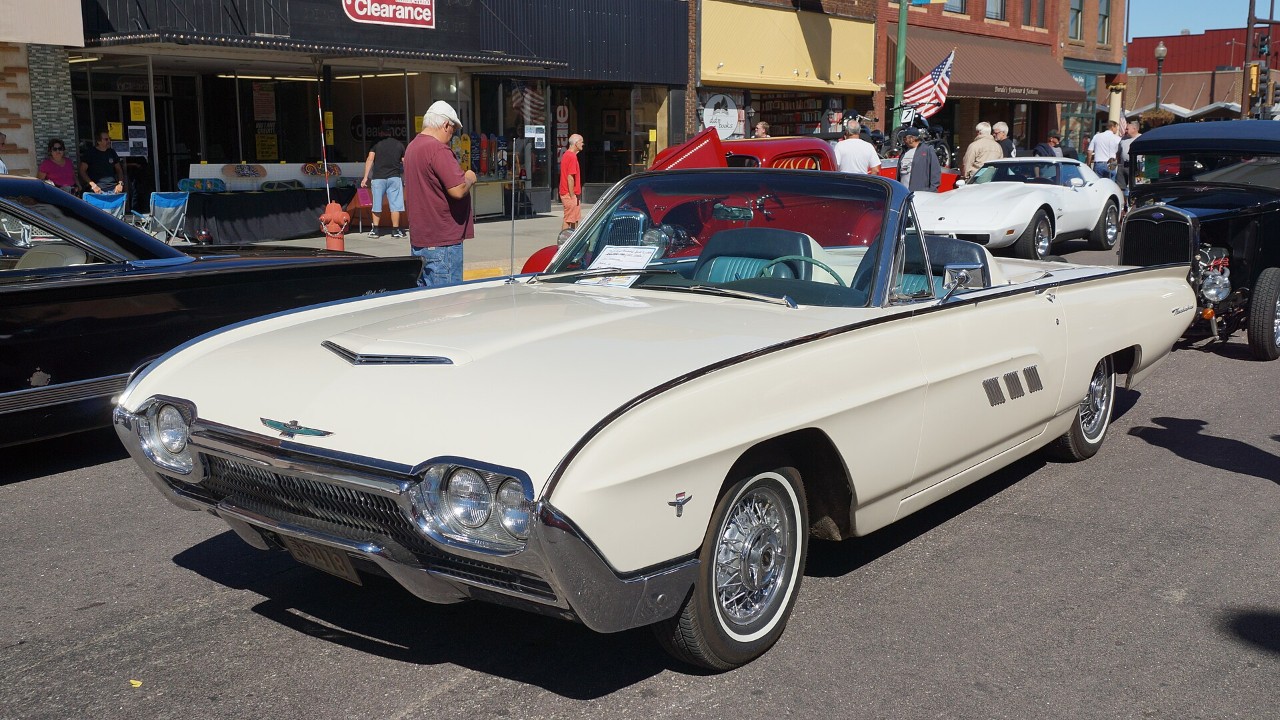
Demand for the tonneau-covered convertible fell hard in its second year. Hagerty puts 1963 production at 455, down from 1,427 in 1962. That is a drop of more than two-thirds in a single model year.
By then the Sports Roadster was the slowest seller in the range. Conceptcarz calls it the least popular Thunderbird of 1963. It was also the last chance to buy one new, because Ford launched the all-new fourth-generation Thunderbird for 1964, as Old Cars Weekly notes.
6. 1963 Ford Thunderbird M-Code Sports Roadster
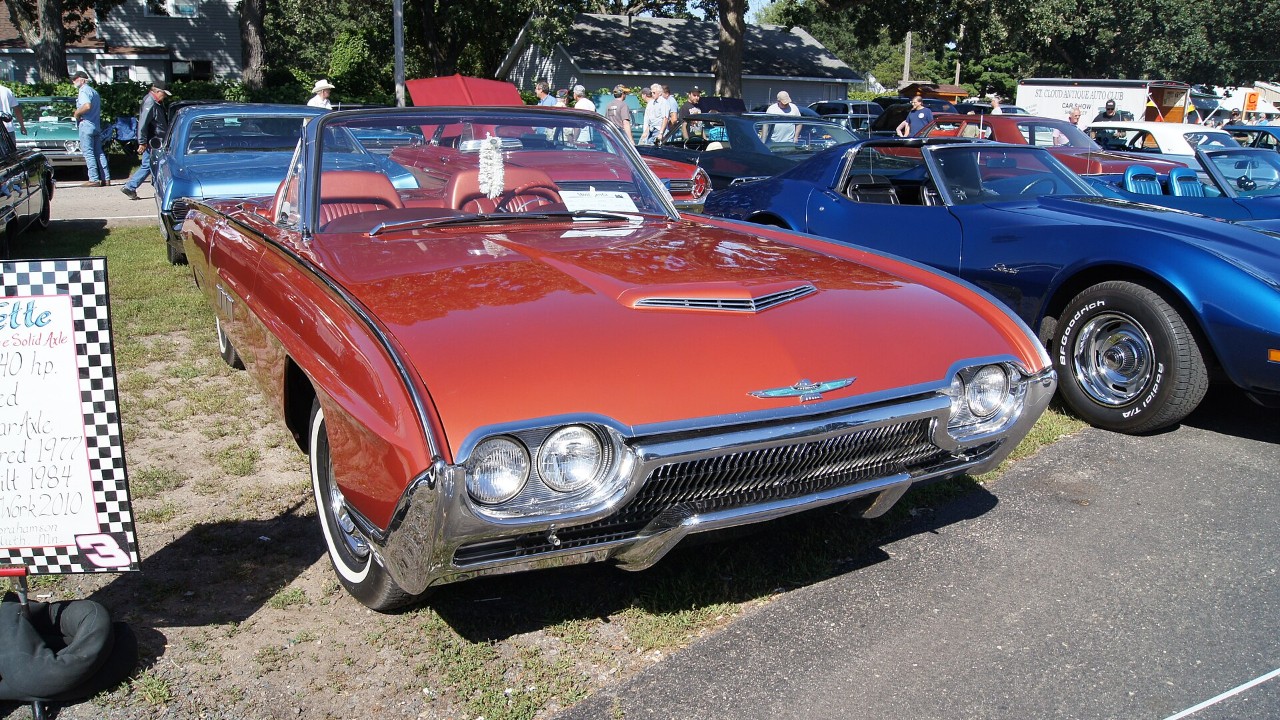
Here the two rare options meet. A buyer in 1963 could order the three-carburetor M-code 390 in any Thunderbird, but very few did. Hagerty counts just 55 M-code cars for the whole year.
Even so, most of those went into the roadster. According to Conceptcarz, 37 of the 55 M-code Thunderbirds built in 1963 were Sports Roadsters. That leaves only 18 M-code cars in every other body style combined. As a result, a 1963 M-code Sports Roadster is a 37-car configuration.
7. 1963 Ford Thunderbird Limited Edition Landau
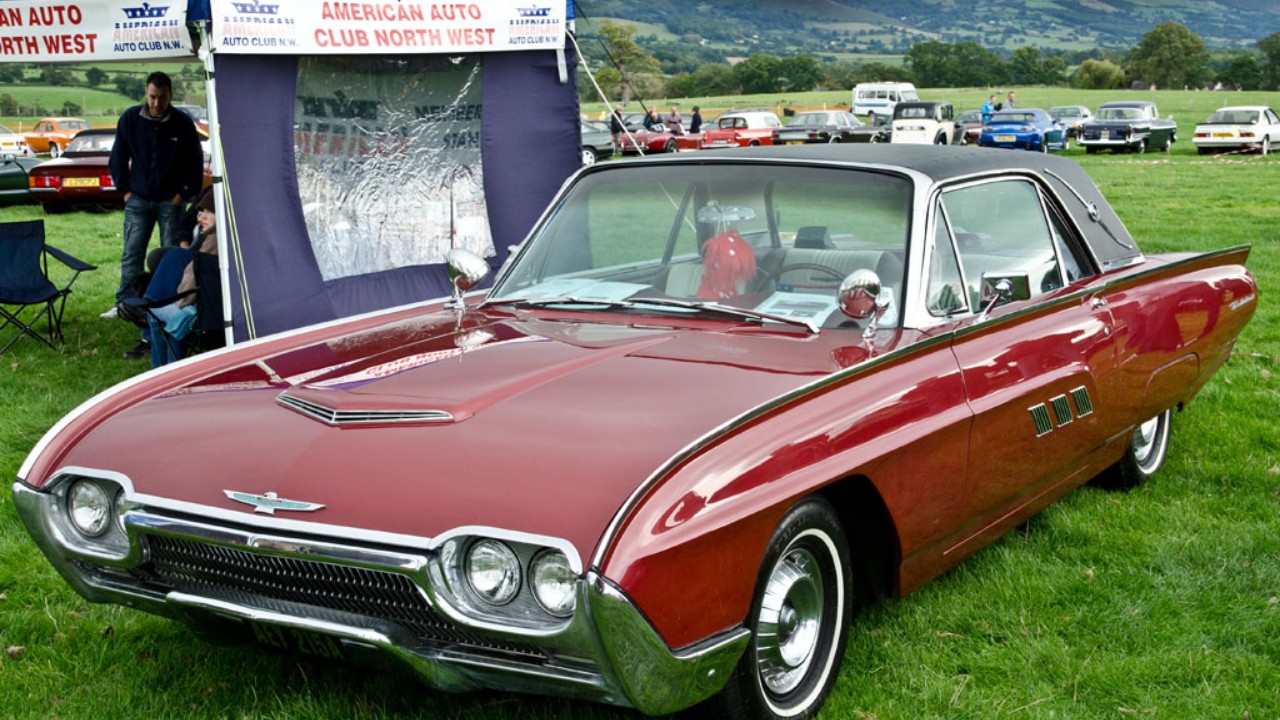
This Thunderbird made its debut in Monaco on February 7, 1963. Princess Grace, the former Grace Kelly, received car number one. Ford salesmen soon called it the “Princess Grace” model.
According to Old Cars Weekly, Ford built 2,000, all painted white with white leather and a white steering wheel. The vinyl top came in a maroon shade called Rose Beige, and simulated rosewood replaced the usual walnut trim. Each dash carried a gold-toned plate with its number, from 1 to 2,000, and the price was $4,748. Meanwhile, Ford built 12,139 regular Landaus that year, so the numbered cars made up roughly one Landau in seven.
More from Fast Lane Only