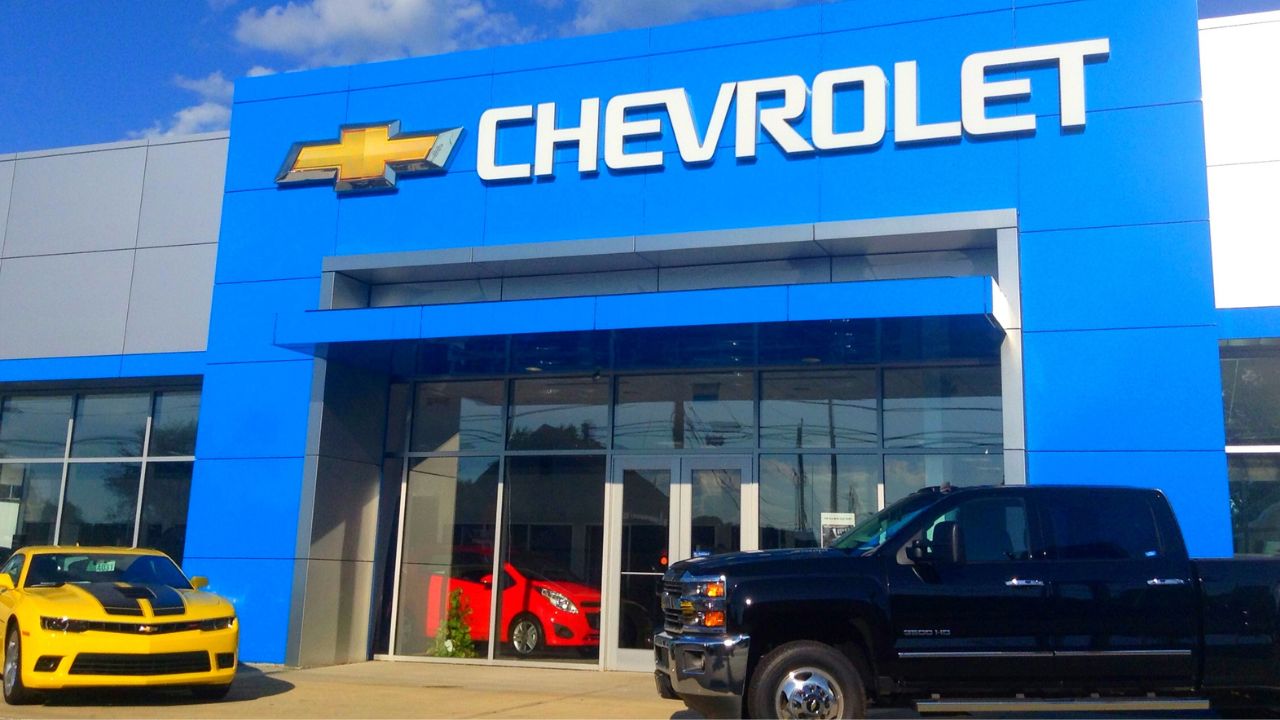
General Motors is recalling more than 270,000 Chevrolet Malibu vehicles in the United States after discovering that a software glitch can disable the rearview camera image. The defect affects some of the company’s most popular models and has drawn fresh attention to how quickly a small coding error can become a safety issue when it reaches hundreds of thousands of vehicles on the road.
Rear visibility is classified by regulators as a core safety function, not an optional convenience, so any failure that leaves drivers without a reliable backup image draws scrutiny. The campaign now unfolding around GM’s latest recall underscores how central software has become to modern auto safety and how manufacturers are being forced to treat code with the same rigor as brakes and airbags.
What happened
According to GM’s filings with federal regulators, the company identified a defect in the software that controls the rearview camera display on a group of recent-model vehicles. Under certain conditions, the image can fail to appear when the driver shifts into reverse, or it can cut out unexpectedly while the vehicle is backing up. The recall covers more than 270,000 vehicles that share the same electronic architecture and camera control logic, including multiple crossover and SUV nameplates that are central to GM’s lineup.
The company told regulators that the problem traces back to the interaction between the camera module and the central infotainment system. When the system encounters a specific fault state, it can stop sending the video feed to the dashboard screen. The vehicle still shifts into reverse and the parking sensors continue to operate, but the driver is left without the live image that federal rules require. GM’s internal investigation found that this behavior violates the rear visibility performance standards that have been in place for new vehicles for several years.
GM’s engineers first became aware of the issue after field reports from drivers who said their camera screens intermittently went black when backing up. Warranty claims and dealer feedback pointed to a pattern that cut across models, prompting the company to open a formal product investigation. Once engineers replicated the failure and tied it to a software condition, GM moved to classify it as a safety defect and prepared a recall campaign so that every affected vehicle can receive updated code.
The recall fix relies on a software update rather than a hardware replacement. GM plans to notify owners and instruct them to bring their vehicles to a dealer, where technicians will reflash the camera and infotainment modules with revised software that prevents the image from dropping out. For vehicles equipped with over-the-air update capability, GM can also push the fix remotely, shortening the time some owners will have to wait for a remedy and reducing the number of service appointments that dealers need to schedule.
Regulators have treated rear visibility failures as serious defects since backup cameras became mandatory equipment. Federal rules require automakers to guarantee that the image appears within a short window after the driver selects reverse and that the view covers a defined zone behind the vehicle. When the system fails to meet those criteria, as GM has now acknowledged, a recall is the expected outcome. The current campaign fits a broader pattern in which automakers increasingly recall vehicles for software-related issues that would have been unimaginable in an earlier mechanical era.
GM is not alone in facing visibility and camera-related problems. Other manufacturers have recently recalled vehicles for rear camera failures, including cases where the display freezes, shows a distorted image, or fails to activate at all. In parallel, recalls have targeted separate safety systems such as airbags and steering components, as seen in campaigns that have affected popular pickup models like the Ram 1500 Classic. In that case, owners were alerted to a defect involving the truck’s airbag wiring, which prompted a recall of certain Ram 1500 Classic trucks and highlighted how quickly a wiring or software issue can escalate into a formal safety action.
Why it matters
Rearview cameras are no longer a luxury feature. For many drivers, especially in dense urban areas or crowded parking lots, the live video feed is the primary tool for checking blind zones directly behind the vehicle. When that image disappears, the driver must instantly revert to mirrors and neck craning, often in tight spaces where pedestrians, cyclists, or small children may be moving unpredictably. The safety case for reliable rear visibility has been built on years of crash data that show how often low-speed backing incidents cause serious injuries.
Regulators adopted the rear visibility standard after a long campaign by safety advocates and families affected by backover crashes. The rule requires that all light vehicles sold in the United States provide a clear view of a specific area behind the vehicle and that the system activates quickly when reverse is selected. A glitch that disables the image, even if it happens intermittently, undercuts the protection the rule is designed to provide. That is why GM’s software problem is treated as more than a minor annoyance and why the recall spans every vehicle that shares the defective code.
The episode also illustrates how software has become a central risk vector for modern vehicles. A decade ago, most recalls involved mechanical failures such as faulty ignition switches, brake components, or fuel system parts. Today, a growing share of campaigns involve code that controls everything from steering assistance to airbag deployment timing. A single coding mistake can propagate across hundreds of thousands of vehicles when manufacturers reuse software platforms across multiple models and brands.
For GM, the recall carries financial and reputational costs. Each vehicle that returns to a dealer for a software update consumes technician time, service bay capacity, and administrative overhead. Even when the repair itself is quick, the logistics of contacting owners, scheduling appointments, and confirming that vehicles have been updated add up. At the same time, GM must reassure customers that the defect has not contributed to crashes or injuries and that the updated software has been thoroughly validated.
The company’s handling of this recall will be watched closely because it speaks to how automakers manage software quality at scale. As vehicles become more connected and more functions rely on code, manufacturers need processes that can catch subtle failures before they reach the field. That means rigorous testing, simulation, and validation, along with the ability to monitor vehicles in service for unusual behavior. GM’s ability to trace the rearview camera problem back to a specific software condition and deploy a targeted fix will be seen as a test of those capabilities.
There is also a broader consumer trust dimension. Drivers have grown accustomed to digital features that feel like smartphone apps, from large touchscreens to voice assistants and advanced driver assistance systems. Yet unlike a phone glitch, a malfunction in a safety-critical automotive system can have life-or-death consequences. Each high-profile recall tied to software feeds public skepticism about how reliable these systems really are and whether manufacturers are moving too fast in layering complex technology into everyday vehicles.
At the same time, the recall highlights the advantages of connected vehicles and over-the-air updates. In earlier eras, a defect like this would have required every owner to visit a dealership in person, sometimes waiting weeks or months for parts or updated modules. Now, for models equipped with the right connectivity, GM can correct the issue while the vehicle sits in a driveway, with the owner receiving a notification once the update is complete. That capability does not eliminate the underlying defect, but it shortens the window during which drivers are exposed to the risk and reduces the burden on both customers and dealers.
The regulatory environment is also evolving in response to these kinds of software-driven recalls. Safety agencies are paying closer attention to how automakers test and validate code, particularly in systems that affect steering, braking, and visibility. There is growing interest in requiring more detailed documentation of software development processes and in ensuring that companies have mechanisms to quickly identify and address defects that emerge only after vehicles are in use. GM’s rearview camera recall fits into that conversation as a concrete example of how a software oversight can undermine compliance with a clear safety standard.
For owners, the recall is a reminder that safety technology is only effective when it works every time. Drivers who have grown reliant on backup cameras may not always remember to double check with mirrors or a shoulder glance, especially when they are distracted or in a hurry. A blank or frozen screen at the wrong moment can create confusion and delay, which is exactly what safety rules around rear visibility are meant to prevent. The recall aims to restore that reliability by ensuring that the camera image appears consistently whenever reverse is engaged.
What to watch next
The immediate question is how quickly GM can reach all affected owners and complete the software updates. The company will send notifications and coordinate with its dealer network, but the pace of repairs will depend on owner responsiveness and the availability of over-the-air updates for specific models. Observers will be looking for data on completion rates, which indicate how many vehicles have actually received the fix compared with the total population covered by the recall.
Regulators may also seek additional information about how GM’s internal processes allowed the rearview camera glitch to slip through initial testing. Safety agencies often request detailed timelines that show when the company first became aware of a potential issue, how it investigated the problem, and when it decided to initiate a recall. Those timelines help determine whether the manufacturer met its obligations to promptly report safety defects and whether any changes are needed in how it monitors field data.
Another area to watch is whether this recall triggers similar reviews by other automakers that use comparable camera or infotainment architectures. When one manufacturer discovers a software failure in a particular type of module or integration, others sometimes conduct internal audits to confirm that their own systems are not vulnerable to the same kind of problem. That dynamic has played out before in areas such as airbag control units and electronic stability control, where one company’s recall prompted broader scrutiny across the industry.
For GM, the rearview camera issue may intersect with its broader technology strategy. The company has been investing heavily in software platforms, connected services, and advanced driver assistance features. Each recall tied to software will shape how regulators, investors, and customers view those efforts. If GM can show that it is able to detect, diagnose, and correct defects quickly, it strengthens the case that software-centric vehicles can be managed safely. If problems linger or recur, pressure will grow for more conservative deployment of new features.
There is also the possibility of follow-on litigation if drivers allege that the camera failure contributed to crashes or near misses. Even if GM’s data show no confirmed injuries linked to the defect, plaintiffs may argue that the company should have discovered and corrected the problem earlier. Courts will look at the same evidence that regulators review, including internal emails, test reports, and field data, to determine whether GM acted reasonably once it learned of the issue.
More from Fast Lane Only