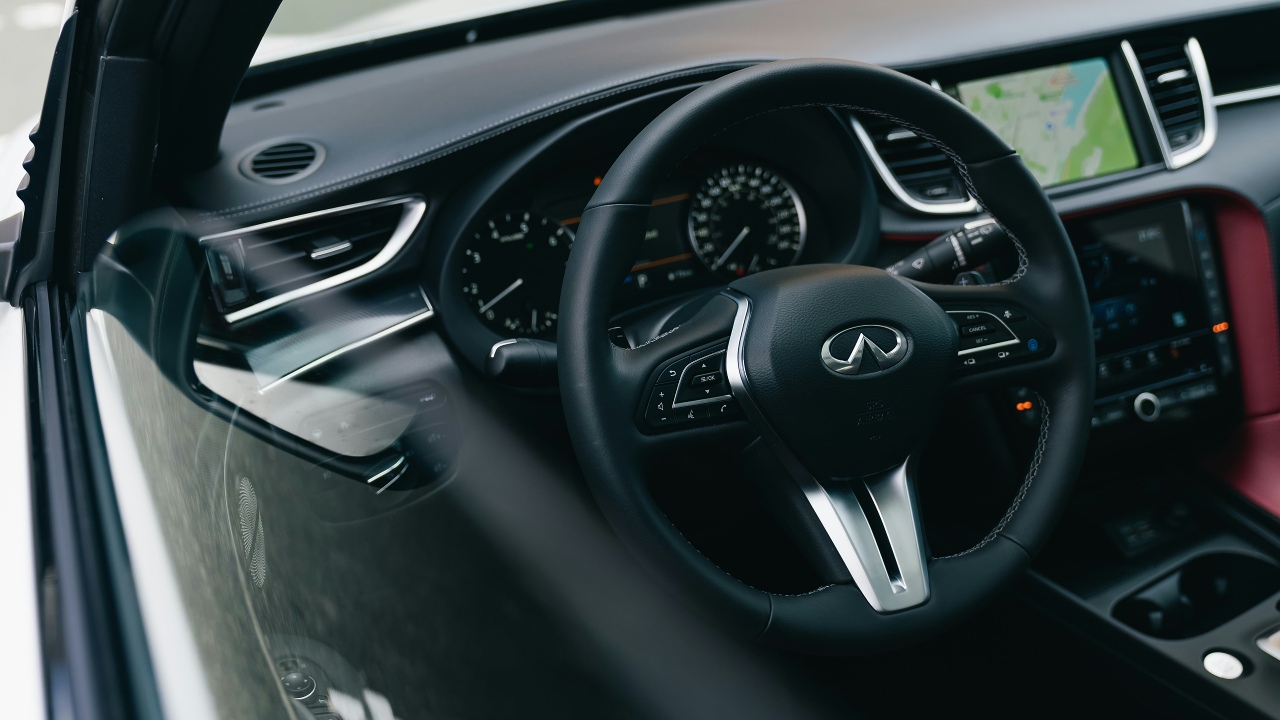
For a generation of drivers, the ideal dashboard was not a glowing tablet but a cockpit that wrapped around the person behind the wheel. Knobs, rocker switches, and clearly labeled buttons could be found by feel, so eyes stayed on the road and not on a menu tree. As touchscreens spread across the industry, that driver-first philosophy was pushed aside, and only now is the safety cost of that experiment coming fully into view.
Automakers are beginning to admit that the all-screen era went too far, and regulators and researchers are quantifying how much attention those glossy panels steal from the task of driving. The quiet return of physical controls is less a nostalgic flourish than a course correction, shaped by data that shows how modern interfaces can undermine basic control of a moving car.
From driver’s cockpit to rolling smartphone
In the 1990s and early 2000s, performance icons such as the Toyota Supra Mark IV treated the driver as the unquestioned center of the cabin. Enthusiasts still praise that layout as “One of” the best examples of a driver-oriented dashboard, with the center stack canted toward the seat like a fighter jet console. The logic was simple: critical functions should be reachable without stretching, and their shapes and detents should be distinct enough to recognize by touch. That design language extended across brands, from family sedans with chunky climate knobs to luxury models with rows of mechanical switches.
As consumer electronics reshaped expectations, that cockpit ethos gave way to a different ideal, the car as a rolling smartphone. Large touch panels promised endless flexibility, over-the-air updates, and a clean aesthetic that marketing departments could photograph easily. According to one industry snapshot shared on Instagram, by 2025 roughly 40 percent of new vehicles were built around expansive central displays, a moment that post described as the height of the “Screen Era.” The same commentary noted that this phase is now “hitting the brakes,” with the initial excitement about putting “everything on the screen” colliding with concerns about distraction and usability.
The safety bill for the touchscreen experiment
What began as a styling and packaging trend has turned into a measurable safety problem. Human factors researchers who study how drivers divide their attention have found that interactive displays demand more cognitive effort than a simple button press. In one controlled experiment, a team that wanted “to understand that interaction so we can design interfaces specifically for drivers” asked 16 participants to operate dashboard touch controls while also repeating specific digits from a memory task. As the secondary task grew more demanding, the drivers’ performance on the touchscreen deteriorated significantly, a sign that the interface was competing directly with the mental bandwidth needed to steer and scan the road.
Other work has translated that cognitive load into physical vehicle behavior. New research on modern dashboards has shown that using a touchscreen while driving increases lane deviation by more than 0.5 meters, a margin wide enough to push a car uncomfortably close to lane markings or adjacent traffic. The same study concluded that these interfaces “undermine driving accuracy” because they require visual confirmation and fine finger movements that are difficult to do on the move. When drivers must navigate nested menus just to adjust temperature or audio, the car effectively asks them to look away from the road for longer than traditional controls ever did.
Regulators and engineers rediscover the humble button
The growing body of evidence has not stayed in academic journals. Safety organizations are now using their leverage to push the industry back toward tactile controls for core functions. Euro NCAP, the influential European crash testing and rating body, has announced that from 2026, any car seeking top marks will need to let drivers perform five essential tasks using physical controls rather than touch-only interfaces. Those tasks include operations such as activating hazard lights and adjusting wipers, functions that must be available instantly and reliably even in poor weather or under stress.
Automakers are also acknowledging, sometimes bluntly, that the data no longer supports a screen-only approach. In a detailed discussion of dashboard design, Mercedes Benz software lead Magnus Östberg stated, “The data shows us the physical buttons are better, and that’s why we put them back in.” That admission reflects a broader shift described in coverage of how carmakers are bringing back buttons, with companies around the world quietly changing what drivers touch every day. Analysts who track these moves note that the transition will take time, because reintroducing hardware controls affects everything from wiring harnesses to interior tooling, but the direction of travel is clear.
Automakers quietly retreat from the all-screen dashboard
Inside design studios, the pivot away from pure touch is already visible. Commentators who once chronicled the race for “bigger sleeker touchscreens” now describe how automakers are killing touchscreens in their most aggressive form and restoring rows of buttons for climate, audio, and driver assistance features. A video analysis from Sep captured this reversal, noting that the same brands that once boasted about tablet-like displays are now “quietly walking that back” in response to customer complaints and safety findings. The change is not always dramatic, but it is deliberate, with new models adding rotary dials, volume knobs, and dedicated defrost keys where capacitive strips once sat.
Industry observers who track technology adoption cycles argue that the touchscreen wave has peaked. One Canadian dealer association framed it as a return to “classic, tactile options,” pointing out that the period when “Gone were the days of knobs and buttons” has given way to a more balanced approach. Their analysis highlights how drivers value the ability to rest a hand on a control and adjust it without hunting through icons, especially in winter conditions or on rough roads. The same perspective appears in consumer technology coverage that notes how Modern cars, packed with apps and notifications, may have unintentionally made distracted driving worse by mirroring the logic of smartphones instead of respecting the constraints of driving.
Drivers, experts, and the slow restoration of common sense
For safety advocates and everyday motorists, the shift feels overdue. Commentators have spent years warning that replacing simple buttons with layered touch menus was a mistake, particularly for tasks that must be performed quickly, such as demisting a windshield. One widely shared analysis described touchscreens in cars as “still a stupid idea” and welcomed the prospect of “drum roll… buttons” returning to prominence. That piece pointed to Euro NCAP’s 2026 requirements as a turning point, arguing that external pressure was necessary because market forces alone had rewarded flashy screens over functional ergonomics.
Drivers themselves have been just as vocal. Online communities that celebrate driver-focused machines routinely cite the Toyota Supra Mark IV and similar cars as benchmarks for how a dashboard should feel, with controls angled toward the seat and clustered logically. In contrast, owners of newer vehicles often complain that simple actions now require swiping through pages of icons, a frustration echoed in reports that modern dashboards “may be sabotaging drivers” by making basic tasks harder to do on the move. When a lane-keeping system or navigation prompt shares space with streaming apps and complex settings, the line between helpful information and hazardous distraction becomes thin.
Even as the industry course-corrects, the transition will not be instantaneous. Analysts who have spoken with engineers caution that reintroducing physical controls across entire lineups will take multiple product cycles, and some brands will continue to experiment with hybrid solutions that combine touch, voice, and limited buttons. Yet the direction is unmistakable. Research that shows drivers struggle to multitask on touchscreens, regulatory moves that tie top safety ratings to tactile controls, and candid admissions from figures like Magnus Östberg have all converged on the same conclusion. The dashboards that once favored drivers over screens are no longer a relic of the past, but a template for the next generation of cars, one where technology serves the person at the wheel instead of competing for attention.
More from Fast Lane Only