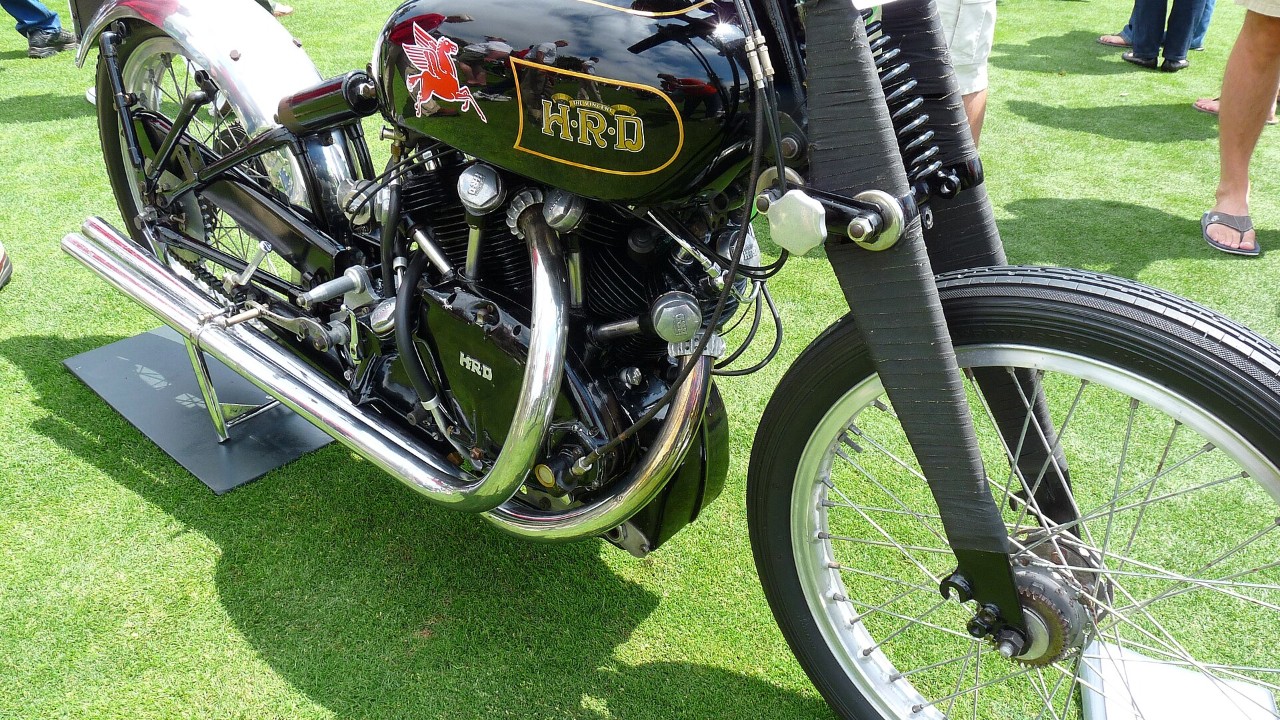
In September 1948, Rollie Free peeled off his riding leathers on the Bonneville Salt Flats and went back out in a bathing suit. He stretched out flat along a Vincent, legs trailing behind the rear wheel, and averaged 150.313 mph over the measured mile. That run erased a speed record that had stood for 11 years, and it produced one of the most famous photos in the sport.
The picture looks like a stunt. In fact, it was a careful piece of tuning by a man who had spent more than 20 years chasing speed. His body was the biggest thing slowing the bike down, so he made it as small and smooth as he could.
Here is how a Kansas City motorcycle salesman ended up face-down on the salt, and where the machine went afterward.
Who Rollie Free was
Free started young. According to the AMA Motorcycle Hall of Fame, his father gave him a secondhand NSU when he was 12. Later, he sold motorcycles in Kansas City, first at an Ace agency and then at an Indian dealership. He made record attempts on Ace four-cylinder machines during those years.
His racing résumé ran wide. The Hall of Fame lists his first national in 1923, a 100-mile race on the Kansas City board track. He opened his own Indian dealership in Indianapolis in 1927. He also rode in the first Daytona 200 in 1937, and he even tried cars, starting the 1930 Indianapolis 500 before his engine quit after 172 miles.
Speed records came next. On March 17, 1938, at Daytona Beach, Free set two national Class C records on Indians, according to The Vintagent’s history of his career. He ran 111.55 mph on a Scout and 109.65 mph on a Chief. Then World War II moved him west, and the Air Force posted him to Hill Field in Utah. That’s where, the Hall of Fame says, he first saw the Bonneville Salt Flats.
The Vincent behind the record
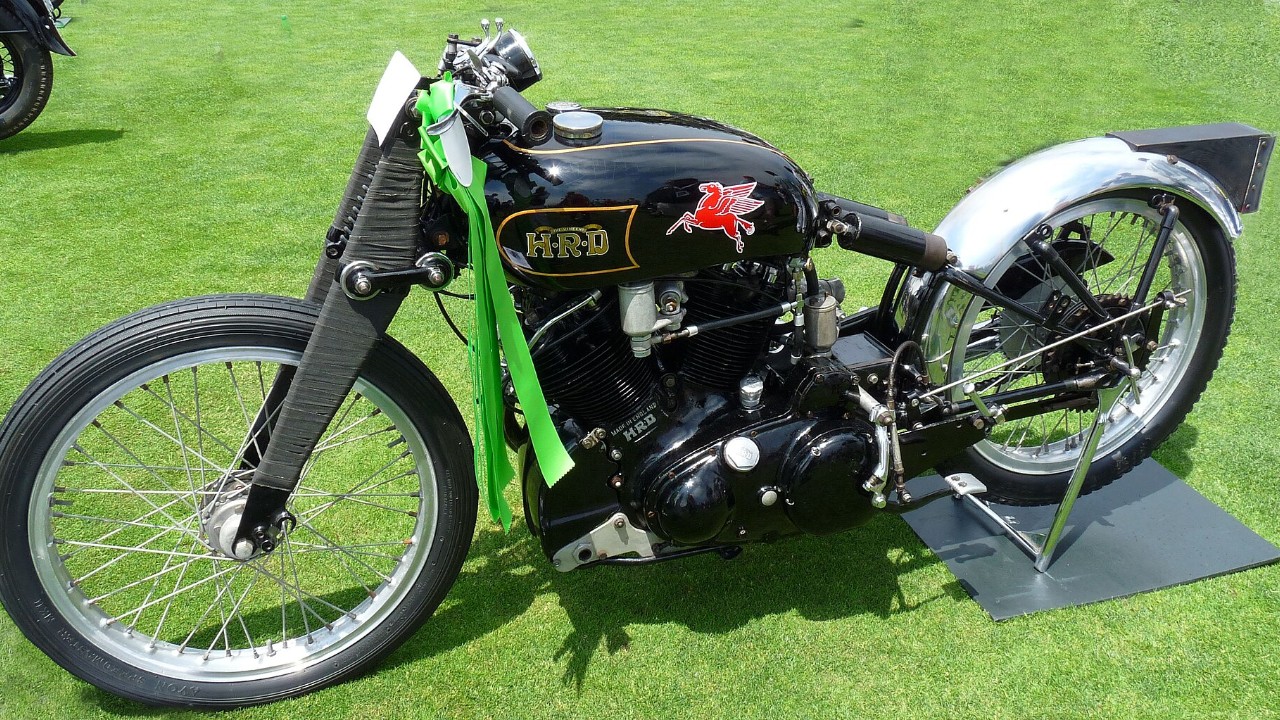
The bike belonged to John Edgar, a Hollywood sportsman and car-racing sponsor. Edgar invited Free to make the attempt, and Mobil Oil backed the team, the Hall of Fame says. Hagerty reports that Edgar commissioned the machine specifically to set records at Bonneville.
On paper, it was a Vincent HRD Black Shadow, the British factory’s fast road model. However, this one went well beyond a showroom Shadow. The Vintagent says the Vincent factory helped tune it, and it describes the bike as essentially the prototype of the Black Lightning racer. Hagerty calls it “the one and only factory Black Lightning prototype,” with a highly tuned engine and big open exhausts.
For scale, Hagerty puts a stock Black Shadow’s top speed at about 125 mph. By comparison, Vincent built 1,727 Black Shadow road bikes and only 33 race-spec Black Lightnings, by Hagerty’s count.
How Rollie Free beat the wind
The record that Free wanted belonged to Joe Petrali. Petrali’s mark stood at 136.18 mph, the Hall of Fame says, and it had held for 11 years. Free aimed to beat it by a wide margin.
First, he rode in his leathers. During those early trials, he averaged 148.6 mph, according to the Hall of Fame. That beat Petrali, but it fell just short of the 150 mph Free was after. So Free stripped down to swimming shorts for the final runs. Hagerty adds that he wore canvas shoes and a shower cap, and nothing else.
Next came the riding position. Free lay flat on the bike with his legs stretched out behind it and his head down low. Because he could barely see ahead, he steered by following a black stripe painted on the salt, the Hall of Fame says. The Vintagent notes that he had developed the stretched-out style back in the 1920s while racing Indians.
The trick worked. Free claimed the striptease was worth 2.3 mph, The Vintagent reports, which was just enough. One pass covered the mile in 23.9 seconds, and the return run went faster still. Together, the two directions averaged 150.313 mph.
Swim trunks, salt and risk
The outfit made the photo famous, but it also left Free with no protection at all. Hagerty points out that a fall onto the salt at that speed could have hurt him badly. In other words, the bathing suit was a calculated gamble, not a joke.
Free did enjoy the joke later, though. He credited Ed Kretz, who had ridden the same way on the Southern California dry lakes. According to the Hall of Fame, Free also quipped that Kretz looked better in a swimsuit.
The Vincent and its rider after 1948
Free went back to Bonneville in 1950 and raised his own mark on the Vincent, averaging 156.58 mph, the Hall of Fame says. Meanwhile, Edgar had the 1948 bike lightly detuned so he could ride it on the street. The Vintagent says he wanted to own “the world’s fastest standard motorcycle.”
The machine then drifted out of the spotlight. Hagerty reports that it spent decades with an automotive engineer in Michigan, largely unchanged. Later, Texas collector Herb Harris bought it in the 1990s and researched its history. In 2011, he sold it to another collector for what Hagerty describes as an undisclosed record amount.
Free himself moved to California, ran a service station and became an authority on racing history. He died in 1984. Finally, in 1998, the AMA inducted Rollie Free into its Motorcycle Hall of Fame, 50 years after his bathing-suit run at 150.313 mph.
More from Fast Lane Only
- Unboxing the WWII Jeep in a Crate
- 15 rare Chevys collectors are quietly buying
- 10 underrated V8s still worth hunting down
- Police notice this before you even roll window down
This article was created with the help of AI and was reviewed and edited by Fast Lane Only editors before publication.