It’s one of those moments that feels like the car is messing with you. You just paid for new brake pads, you pull out of the shop feeling responsible and grown-up, and then—boom—the brake warning light is still glowing like it didn’t get the memo. Now you’re wondering whether the shop missed something, whether the car’s about to do something dramatic, or whether the dashboard is simply being a little too honest.
This situation is surprisingly common, and it doesn’t automatically mean your brakes are unsafe. But it does mean the car thinks something still needs attention, and that’s worth taking seriously. Here’s what typically causes it, what you can check without turning into a full-time mechanic, and what a good shop should do next.
First, which “brake light” are we talking about?
Dash warnings love to be vague. The red “BRAKE” light usually points to the parking brake being on, low brake fluid, or a hydraulic issue. The amber “ABS” light is a different system entirely, and it can stay on even when the pads are brand new.
If you’ve got both lights on at the same time, that’s a bigger clue than people realize. Many cars will light up the red brake warning along with ABS when there’s a fault that affects stability control or brake pressure monitoring. Before anyone argues about parts, it helps to note exactly which icon is lit, what color it is, and whether it changes when you release the parking brake.
The simplest culprit: the parking brake switch
The most boring explanation is often the right one. Sometimes the parking brake handle or pedal doesn’t fully return, or the switch that senses it sticks. It can feel “down” to you but still be “on” to the car.
If it’s a hand brake, lift it slightly, press the release button, and push it down firmly a couple times. If it’s a pedal parking brake, pull up on the release and make sure the pedal snaps all the way back. If the light flickers or changes, the switch or linkage may need adjustment—annoying, but usually not expensive.
Low brake fluid after pad replacement (yes, really)
This one confuses people because new pads usually make brake fluid look “higher,” not lower. When pads wear down, caliper pistons extend and the fluid level in the reservoir often drops; when new pads go in, the pistons get pushed back and the reservoir level rises. So why would the light stay on?
Because the brake warning light may have been triggered before the pad job even started, and the underlying issue might still be there. If the fluid was low due to a slow leak, it can come back again pretty quickly. Or the shop may have set the fluid level incorrectly, or spilled a bit during service, leaving the sensor right at the threshold where it keeps complaining.
If you’re comfortable checking it, look at the reservoir level on a flat surface. If it’s below “MIN,” don’t just top it off and forget it—find out why it’s low. Fluid doesn’t get “used up” like fuel; when it drops, it usually went somewhere.
Wear sensors: replaced pads don’t always mean replaced sensors
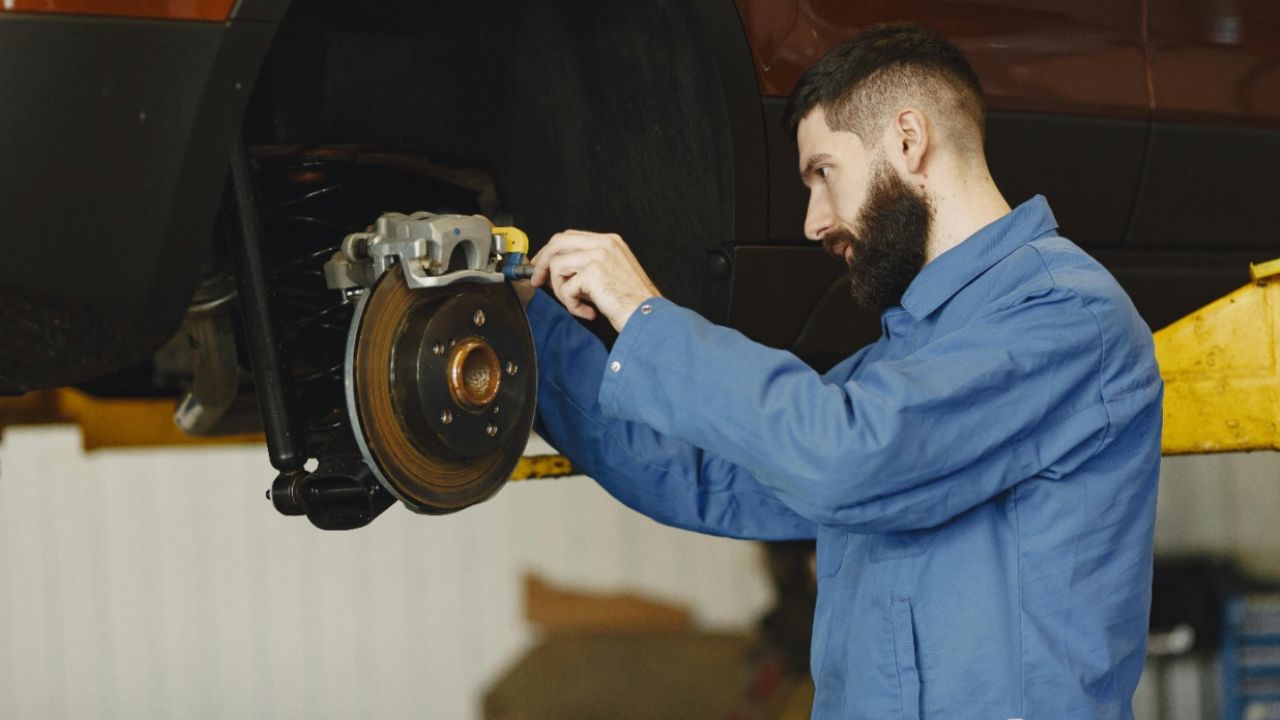
Many vehicles have brake pad wear sensors, and they’re not always included with pad sets. Some are separate clips with wires, some are built into the pads, and some systems calculate “pad life” electronically. If the old sensor was worn through or the wire was damaged, the light can stay on even with fresh friction material.
There’s also the fun scenario where the new pads are installed, but the sensor wasn’t swapped over, wasn’t plugged in fully, or got pinched during assembly. A pinched sensor wire can rub the wheel and break later, which explains why the light might appear after a short drive instead of immediately. If the shop didn’t mention sensors at all, it’s a good question to ask.
Electronic service resets aren’t automatic
Some cars don’t just “notice” new pads. They store a brake service reminder or pad life value that has to be reset with a scan tool, a specific dashboard button sequence, or a parking brake recalibration routine. If that reset didn’t happen, the warning can hang around like an unopened email.
Vehicles with electronic parking brakes are especially picky. Rear pad replacement on these often requires putting the system into service mode, then taking it out of service mode and performing a basic setting afterward. If the car thinks the parking brake actuator position is wrong, it may throw a warning even if the pads are installed correctly.
ABS and brake warnings: sometimes it’s unrelated to the pad job
Brake pads are mechanical. ABS is electronic and sensor-driven. It’s completely possible to have perfect new pads and still have an ABS issue—like a failing wheel speed sensor, a damaged tone ring, or corroded wiring near the wheel hubs.
And here’s the twist: brake work can accidentally reveal a weak sensor. Moving components, stretching an old harness, or disturbing a connector can be enough to make an already-cranky wheel sensor finally complain. That doesn’t automatically mean the shop did anything wrong, but it does mean a quick scan for ABS codes should be the next step.
Brake fluid level sensors and float issues can lie
The reservoir has a sensor that’s basically a float switch. If the float sticks, or if the sensor connector is loose, the car can think the fluid is low even when it’s fine. It’s not the most common failure, but it happens—especially on older vehicles or ones that have had fluid contamination.
A shop can usually verify this quickly: check actual fluid level, inspect the connector, and test the sensor signal. If the warning light changes when the connector is unplugged (on some cars), that’s a strong clue. It’s a small part, but it can cause a big amount of dashboard drama.
What you should do right now (without guessing)
Start with the basics: confirm the parking brake is fully released and the light behavior changes when you set and release it. Then check whether the pedal feel is normal—firm and consistent, not spongy, not sinking. If the brake pedal feels wrong, or the red brake light is on, treat it as urgent and don’t keep driving.
If the pedal feels normal and it’s an ABS or service warning, your next move is simple: get the codes read. Most shops can scan ABS and brake modules in minutes, and many parts stores can scan basic codes (though ABS access varies). Codes prevent the classic “replace parts until it stops” strategy, which is expensive and somehow always replaces the wrong thing first.
What a good shop will check (and what you can ask)
When you call back, keep it calm and specific: “New pads were installed, but the brake warning light is still on—can you scan it and verify fluid level and wear sensor connections?” That frames it as troubleshooting, not blame. A solid shop will want to see it again, because warning lights are part of the job being truly finished.
They’ll typically verify brake fluid level, inspect for leaks at the calipers and hoses, confirm pad wear sensors are intact and connected, and scan for ABS/brake module fault codes. If it’s an electronic parking brake, they’ll also check that it was calibrated correctly after the rear brakes were serviced. And if they find something unrelated—like a wheel speed sensor that chose today to retire—they should explain it clearly and show you the code.
The bottom line: new pads don’t silence every brake warning
It’s totally reasonable to expect a brake-related light to go off after brake service, so your confusion is justified. But the light isn’t grading the quality of the pads—it’s reporting what the car’s sensors and modules are seeing. Sometimes that’s a simple reset, sometimes it’s a sensor wire, and sometimes it’s a real hydraulic issue that needs attention.
If you’re lucky, it’s a sticky parking brake switch or a quick service reset and you’ll be back to a quiet dashboard in no time. If you’re less lucky, the light is doing you a favor by catching a leak or an ABS fault early. Either way, a quick scan and a careful check beat hoping it’ll “just go away,” because warning lights almost never take hints.
More from Fast Lane Only
- Unboxing the WWII Jeep in a Crate
- 15 rare Chevys collectors are quietly buying
- 10 underrated V8s still worth hunting down
- Police notice this before you even roll window down
*Research for this article included AI assistance, with all final content reviewed by human editors.