Stellantis plans to stop building cars at its historic Poissy plant outside Paris by 2029, drawing a line under more than eight decades of vehicle production at the site. The group intends to keep the factory open by converting it to new activities, but the shift raises difficult questions for thousands of workers and for France’s strategy in the electric and digital transition.
The decision is part of a broader restructuring of Stellantis’s industrial footprint in Europe as the company chases higher margins, more software-driven vehicles, and new defense and technology contracts.
What happened
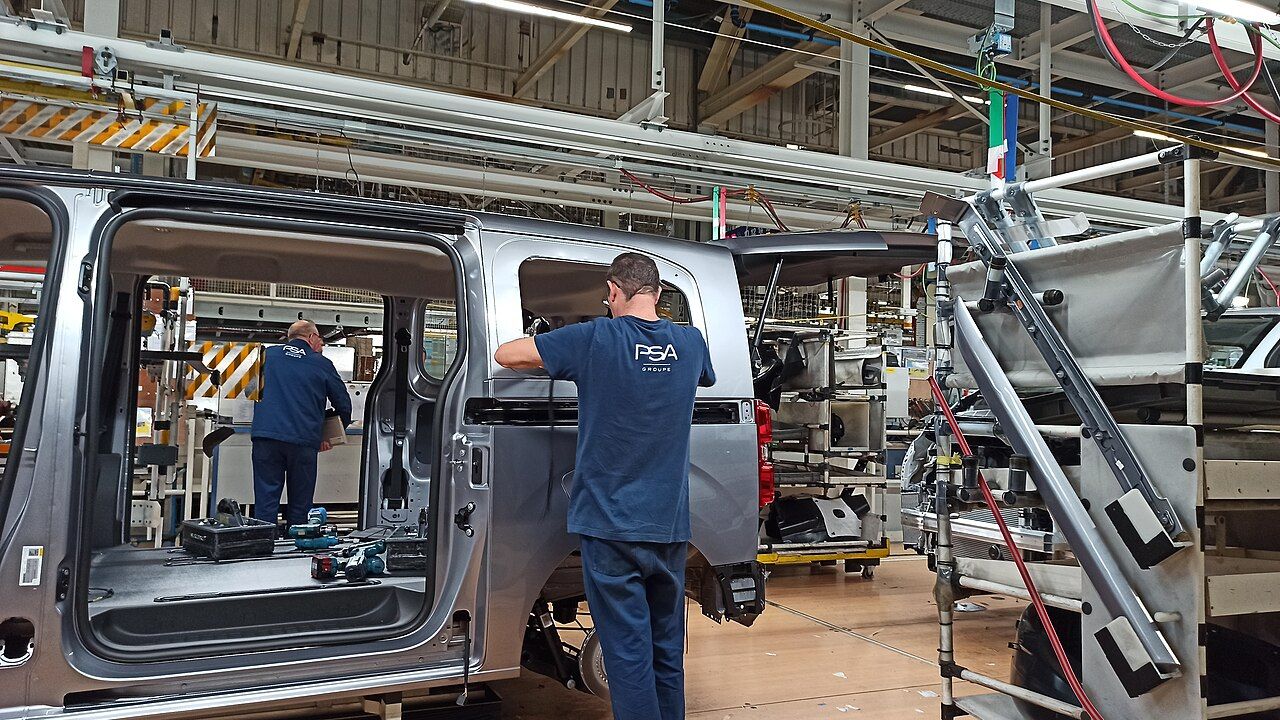
Stellantis has informed unions that final car assembly at Poissy will be phased out over the next few years, with a full halt planned by 2029. According to the company, the move is part of a reorganization of its French plants as it adapts to changing demand, tighter emissions rules, and the capital-intensive shift to electric and connected vehicles. The Poissy site currently builds small vehicles and compact SUVs for brands inside the Stellantis portfolio, but these lines will be progressively reassigned or wound down as the plan advances.
The group has framed the decision as a reconversion rather than a closure. Management has outlined a plan to maintain industrial activity at Poissy by bringing in new functions, including logistics, parts distribution, and potentially new technology-focused operations. One report on the plan highlights that Stellantis wants to transform Poissy into a site focused on “new activities” instead of traditional assembly, underlining that the company is trying to avoid a complete withdrawal from the town’s industrial base. This approach is detailed in coverage of the halt to car.
French outlets have reported that the group has committed to no forced layoffs as part of the transition, relying instead on retirements, redeployments to other Stellantis sites, and internal retraining. The details of these guarantees are central to ongoing talks with labor representatives, who are pressing for clear numbers on how many jobs will remain in Poissy once assembly lines stop. A French-language account of the plan stresses that the company has presented the reconversion as a way to protect employment by bringing in new industrial and service activities, even as car production ends at the site in 2029, a point emphasized in coverage of the Poissy reconversion.
The Poissy decision comes alongside broader strategic moves by Stellantis, including an agreement with Microsoft on software and data services. Reporting on that deal notes that Stellantis is deepening its collaboration with the US technology group on cloud and artificial intelligence tools for connected vehicles and industrial operations, which could influence the kind of activities that eventually replace assembly work at Poissy. The partnership is described in coverage of the agreement with Microsoft.
Why it matters
For Poissy and the wider Île-de-France region, the end of car production is a major industrial and social shock. The plant has been a cornerstone of local employment since the mid-20th century, and thousands of direct and indirect jobs depend on its activity. While Stellantis insists that the site will remain open, workers face uncertainty over the number and quality of future roles, especially if new activities are more automated or require different skills than traditional assembly.
The decision also illustrates the pressure on European automakers as they pivot to electric vehicles and digital services. Stellantis has been pushing aggressive cost-cutting targets and higher profitability, and has already announced restructuring measures in other countries. Moving away from labor-intensive assembly in a high-cost location like the Paris region fits that logic. At the same time, the company is investing in software platforms, data monetization, and partnerships with technology firms, including the expanded work with Microsoft on cloud infrastructure and AI-driven vehicle features. That shift in focus helps explain why the group is willing to reconfigure long-standing plants while maintaining a presence in France through higher value-added roles.
French policymakers are watching the situation closely because it tests national industrial policy. Paris has poured public money and political capital into attracting battery gigafactories and securing the future of domestic carmaking. The Poissy reconversion raises the question of whether France can keep not just engineering and headquarters jobs, but also large-scale manufacturing, as global groups restructure. The government is expected to press Stellantis to anchor new strategic activities at Poissy, potentially in areas such as software development, electric powertrain components, or defense-related work.
The plant’s future also touches on European debates about industrial sovereignty and defense. Reporting on Stellantis’s strategy highlights that the group is exploring opportunities in the defense sector, including vehicles and related technologies. Analysts see a potential link between those ambitions and the company’s industrial footprint in France, a country with a large defense budget and established contractors. The mention of “defense in the background” in coverage of the Microsoft partnership suggests that Stellantis is positioning itself not only as a carmaker but as a broader mobility and technology supplier, which could shape the type of projects brought to reconverted sites like Poissy.
For workers, the key issue is whether retraining and redeployment promises translate into stable, well-paid jobs. Past industrial reconversions in Europe have produced mixed results. In some cases, former car plants have successfully shifted to logistics hubs or component manufacturing, preserving a large share of employment. In others, new activities have been smaller and more precarious, leaving communities with fewer jobs and lower wages. The Poissy plan will be judged against that history, and unions are likely to demand detailed headcount and investment commitments from Stellantis.
Investors and suppliers are also paying attention. The Poissy decision signals that Stellantis will continue to rationalize its European manufacturing base, potentially concentrating assembly in fewer, more specialized plants while using other sites for logistics, software, or engineering. Suppliers that depend on Poissy’s production volumes may need to adjust their own capacity or seek new contracts within the Stellantis network. At the same time, the reconversion could create opportunities for companies involved in industrial automation, logistics, and digital services if the site becomes a testbed for new processes.
What to watch next
The next phase will be shaped by negotiations between Stellantis, unions, and the French state. Labor representatives want concrete figures on how many positions will remain in Poissy after 2029, what kinds of roles they will be, and how workers will be selected for redeployment or retraining. The government, for its part, will seek guarantees that the site will host activities aligned with national priorities on electric mobility, digital technology, and defense.
One key indicator will be the detailed industrial plan Stellantis presents for Poissy. Observers will look for specific commitments on investment amounts, new product lines, and timelines for bringing in replacement activities. The company’s broader strategy in France, including its battery plant projects and its allocation of new electric models to domestic factories, will also influence how credible the Poissy reconversion appears. If other French sites receive major new vehicle programs while Poissy shifts to logistics or services, unions may argue that the town is being downgraded within the group’s footprint.
Another element to track is how the Microsoft partnership and other digital initiatives translate into concrete jobs in France. Should Stellantis choose to locate software development, data centers, or connected services operations at Poissy, that could soften the blow of losing assembly work and signal that the company sees the site as part of its long-term technology strategy. If, instead, most of that activity sits elsewhere, the reconversion may offer fewer high-skilled positions than workers hope.
Regional dynamics will matter as well. The Poissy plant sits in a densely populated area with competing uses for land, from housing to logistics and commercial development. Local authorities will weigh the benefits of keeping the site industrial against alternative redevelopment options. The outcome of those discussions could influence how much Stellantis invests in modernizing the existing factory versus repurposing parts of the land for other uses in partnership with public or private actors.
More from Fast Lane Only