Traffic rules are supposed to be predictable, yet some of the world’s regulations read more like punchlines than public policy. From bans on driving shirtless to rules about how clean your car must be, these laws can feel too odd to be anything but urban legend, even when they are written into real codes.
When I look closely at these stranger rules, a pattern emerges: behind each quirky statute sits a very practical concern, whether it is safety, public order, or local politics. The result is a global patchwork of traffic laws that can surprise even seasoned drivers and turn a routine road trip into a crash course in legal trivia.
When your outfit becomes a traffic offense
Some jurisdictions do not stop at regulating speed and signaling, they also police what drivers wear behind the wheel. In parts of Spain, for example, local rules have treated driving in flip-flops, barefoot, or without a shirt as an offense on the theory that loose or missing clothing can interfere with vehicle control. Similar logic has appeared in scattered municipal codes in the United States, where ordinances have targeted drivers who operate a vehicle while wearing swimwear or no shirt at all, particularly near beach communities that worry about distractions and decorum on busy roads, as reflected in several summaries of unusual traffic laws.
These dress-code rules often sound like moral policing, but they are usually justified as safety measures that give officers broad discretion. A driver whose flip-flop wedges under a pedal or whose costume blocks peripheral vision can quickly become a hazard, and regulators have leaned on that risk to defend what might otherwise look like lifestyle micromanagement. In practice, enforcement tends to be sporadic, surfacing most often when a crash or reckless driving stop gives police a reason to stack on additional violations, a pattern that shows up repeatedly in compilations of odd driving rules that still carry real fines.
Animals, honking, and other noisy throwbacks
Other strange traffic laws are relics from an era when cars shared the road with horses and livestock, and they linger in modern codes long after the original problem faded. Several U.S. states have kept provisions that require drivers to stop, pull over, and even dismantle their vehicle if a horse appears frightened, a scenario that made sense when early automobiles startled animals on rural roads. These rules, cataloged in discussions of historic driving laws, now read like period pieces, yet they technically remain enforceable unless legislatures explicitly repeal them.
Noise-related rules can be just as anachronistic. Some local ordinances still require drivers to honk before passing another car on a rural road or at a blind curve, a habit that modern drivers would likely interpret as aggression rather than courtesy. In parts of Europe and Asia, cities have gone in the opposite direction, imposing strict bans on unnecessary horn use in designated “no honking” zones to combat chronic noise pollution. These conflicting approaches, documented in global roundups of unusual motoring regulations, show how a tool once treated as essential for safety has become a nuisance in dense urban environments, even as older honk-first rules quietly remain on the books elsewhere.
Food, drinks, and the war on distracted driving
As lawmakers scramble to keep up with smartphones and in-car screens, some have taken a surprisingly broad view of what counts as distracted driving. In parts of the United States, police have cited drivers for eating a burger, sipping coffee, or even biting into a breakfast sandwich while moving, arguing that one-handed driving and diverted attention violate general safe-operation statutes. These cases, highlighted in analyses of unusual enforcement, rarely stem from explicit “no eating” laws and instead rely on catchall language that prohibits operating a vehicle in a careless or inattentive manner.
Elsewhere, lawmakers have been more explicit. Some Australian states have warned that holding food or drink can fall under the same distracted-driving umbrella as handling a phone, and police guidance has treated elaborate meals behind the wheel as inherently unsafe. The underlying concern is not the snack itself but the split-second delay when a driver looks down, wipes a spill, or fumbles with packaging, a risk that road-safety researchers have linked to higher crash rates in studies cited by compilations of odd insurance-related traffic rules. The result is a gray zone where a quick sip at a red light is tolerated, but a full fast-food meal at highway speeds can invite a ticket.
Parking rules that feel like puzzles
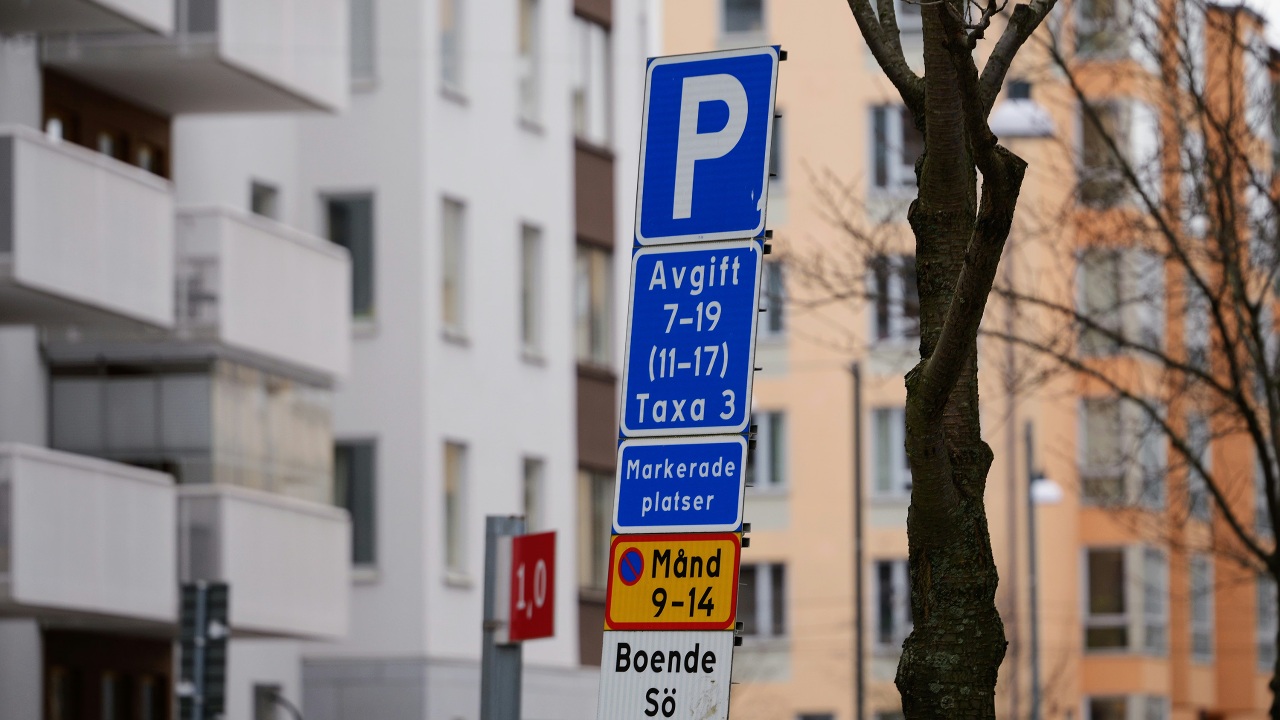
Parking regulations are fertile ground for rules that seem arbitrary until you dig into local history. In some U.S. cities, it is illegal to park a truck on a residential street overnight, a rule that grew out of fights over noise, blocked sightlines, and property values. Other municipalities have banned backing into parking spaces in public lots, citing the need to see license plates for enforcement and toll collection, a rationale that appears in several explanations of counterintuitive parking bans. To drivers used to reversing into spots for easier exits, these rules can feel like needless obstacles rather than administrative conveniences.
Internationally, the quirks multiply. In parts of France and Italy, local codes have restricted parking on certain sides of the street depending on the day of the month, a rotating system meant to give street sweepers access to curbs. Some Japanese cities have required proof of an off-street parking space before allowing residents to register a car, effectively turning parking availability into a gatekeeper for vehicle ownership. These policies, described in global surveys of unusual driving rules, may look eccentric to outsiders, but they reflect dense urban environments where curb space is scarce and double-parking can paralyze entire neighborhoods.
Headlights, cleanliness, and other car-condition quirks
Even the condition of the vehicle itself can trigger some of the strangest traffic rules. Several European countries require drivers to keep headlights on at all times outside of well-lit urban areas, regardless of weather, a policy that treats constant visibility as a baseline safety feature rather than a response to darkness. In Scandinavia, daytime running lights have been mandatory for years, and similar requirements have spread across parts of Eastern Europe, as noted in compilations of global traffic oddities. For visitors from regions where lights are reserved for night or storms, being pulled over on a sunny afternoon for driving “dark” can feel surreal.
Cleanliness rules push that logic even further. In Russia, drivers have faced fines for operating vehicles that are excessively dirty, particularly when grime obscures license plates or key lights. Some local interpretations have gone beyond identification and treated a filthy car as a general offense against public order, a stance that shows up in discussions of strange car-maintenance laws. While enforcement often focuses on plate visibility, the broader message is clear: the state reserves the right to judge not only how you drive but also how presentable your vehicle appears on the road.
Why these bizarre rules survive
What ties these disparate laws together is not just their oddity but their staying power. Once a rule is written into a traffic code, it can persist for decades with little scrutiny, especially if it is rarely enforced and does not spark public backlash. Legislatures tend to prioritize high-profile reforms, such as drunk-driving thresholds or speed-limit changes, while low-visibility quirks about honking at horses or banning certain footwear remain buried in the fine print. Legal analysts who track strange but real statutes often find that these provisions survive simply because no one has invested the time and political capital to repeal them.
At the same time, some of these rules offer authorities flexible tools to address behavior that feels unsafe or antisocial but is hard to capture with broader statutes. A vague ban on “improper attire” or “unnecessary noise” gives officers discretion to intervene in edge cases, for better or worse. Civil-liberties advocates have warned that such open-ended laws can invite selective enforcement, particularly against younger drivers or marginalized communities, a concern echoed in critiques of overbroad traffic regulations. For travelers, the lesson is simple: the road may look familiar, but the rulebook can change dramatically at the border, and some of the most surprising laws are not myths at all but enforceable, if rarely used, tools of local traffic control.