Performance drivers tend to be ruthless about what stays on their cars, and brake brands that cannot deliver repeatable stopping power do not last long in that world. The names that keep showing up at track days, time-attack grids, and endurance paddocks have earned that place through measurable results, not marketing slogans.
When I look at which brake systems and pad compounds serious enthusiasts keep buying again, a pattern emerges: the most trusted brands combine consistent pedal feel, thermal stability, and real-world durability, then back it up with motorsport data and transparent testing. The following sections break down how those leaders win that trust, and why their hardware keeps ending up behind the wheels of everything from daily-driven hot hatches to GT3-spec race cars.
Why performance drivers obsess over braking consistency
For anyone driving at the limit, braking is less about raw stopping distance and more about repeatability. A system that bites hard on the first lap but fades by the third forces the driver to change reference points, which costs confidence and lap time. That is why track-focused drivers talk about “consistency over a session” as often as they talk about peak friction, and why they gravitate toward brands that publish detailed data on temperature ranges, pad wear, and fluid boiling points rather than just quoting a single stopping figure.
On modern performance cars, that consistency has to coexist with complex electronics, from anti-lock braking systems to stability control and torque vectoring. Calipers, rotors, pads, and fluid all have to work within those systems’ parameters, which is one reason established motorsport suppliers have an edge: their components are engineered to maintain linear response as temperatures climb, so the ABS and stability algorithms see predictable inputs. When a brand can show that its hardware has survived long-distance racing or repeated high-speed stops in controlled testing, performance drivers treat that as proof that the same parts will stay stable during a 20-minute track session or a mountain descent.
Brembo: from factory fitment to track-day benchmark
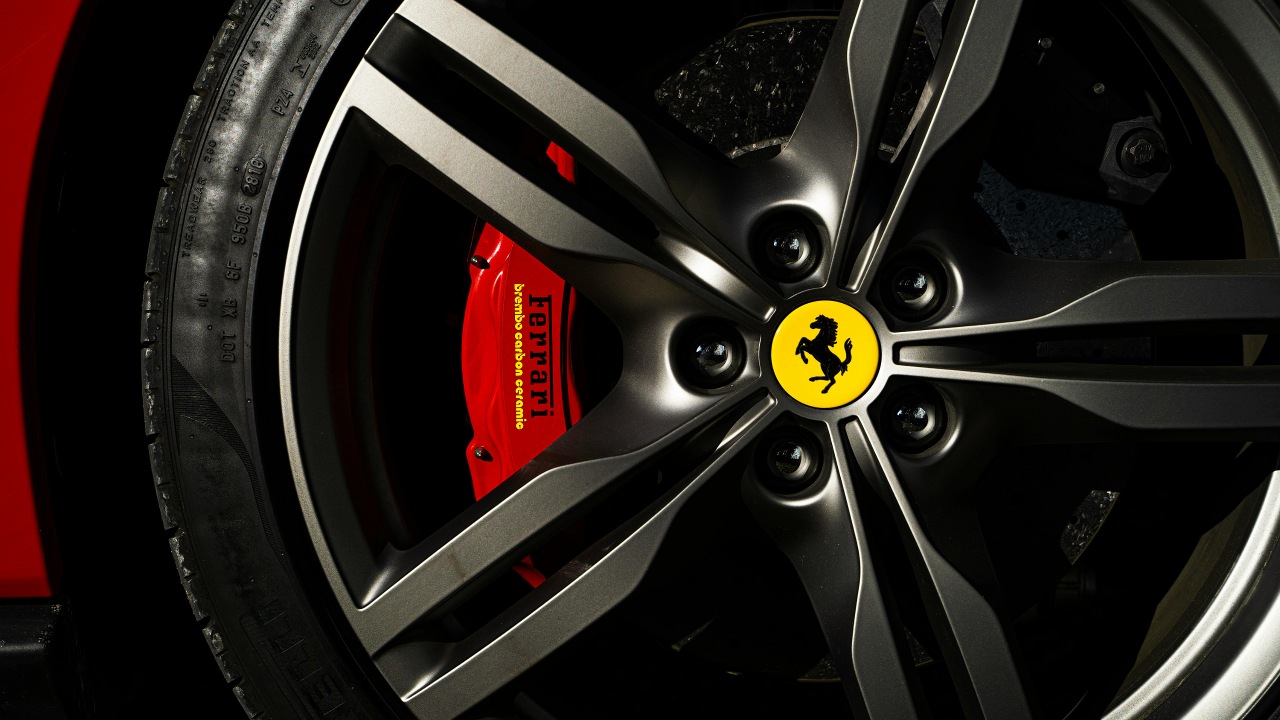
Among performance drivers, Brembo has become almost shorthand for serious braking, largely because its hardware shows up both on showroom floors and in top-level racing. When a manufacturer fits Brembo calipers and rotors to cars like the Chevrolet Corvette Z06, the Ford Mustang Dark Horse, or the Subaru WRX STI, it signals that the braking system has been designed around repeated high-energy stops rather than just a single panic-brake test. That factory presence matters to enthusiasts, who see it as evidence that the same engineering philosophy carries into Brembo’s aftermarket big brake kits and replacement components.
On track, Brembo’s multi-piston aluminum calipers and two-piece floating rotors are prized for their ability to manage heat without warping or causing a long, mushy pedal. Drivers who upgrade from smaller sliding calipers often report a more linear response and better modulation at the threshold of ABS intervention, which makes it easier to trail-brake into a corner and adjust the car’s balance mid-entry. The brand’s involvement in series that run sprint races and endurance events reinforces that reputation, since the same core designs are adapted for road cars that have to survive repeated lapping days without constant rebuilds.
AP Racing and Alcon: endurance-proven hardware for serious track use
While Brembo dominates the OEM conversation, AP Racing and Alcon have carved out a strong following among drivers who prioritize outright track performance and endurance racing pedigree. AP Racing’s Pro 5000 R and Radi-CAL calipers, for example, are common on time-attack builds and club-level GT cars because they combine stiff, lightweight housings with pad shapes that accept a wide range of compounds. That flexibility lets drivers tune bite and release characteristics for different circuits while keeping the same core hardware, which is a major advantage for anyone who runs multiple events each season.
Alcon occupies a similar niche, particularly among owners of heavier, high-power cars that generate extreme brake temperatures. Its calipers and rotors are frequently chosen for track-prepped Nissan GT-Rs, Porsche 911 Turbos, and fast SUVs because they are designed to shed heat quickly and resist distortion under sustained load. Performance drivers notice that these systems maintain a firm pedal and even pad wear over long sessions, which reduces the need for mid-season rebuilds and helps justify the higher upfront cost. The fact that both AP Racing and Alcon supply components to professional endurance programs gives enthusiasts additional confidence that the same designs can handle repeated high-speed stops without unpredictable fade.
Pagid, Ferodo, and Hawk: pad compounds that define pedal feel
Calipers and rotors set the stage, but brake pads largely determine how the system feels underfoot, and here a handful of brands dominate track-day conversations. Pagid has earned a loyal following with compounds like the RS29 and RSL1, which are known for combining strong initial bite with excellent modulation and long life in endurance settings. Drivers who run long sessions or multi-hour events value how these pads maintain friction as temperatures climb, so they can keep using the same braking markers deep into a stint without compensating for fade.
Ferodo and Hawk fill out the short list of pad brands that performance drivers trust enough to run hard without a backup set in the paddock. Ferodo’s DS1.11 and DS2500 compounds are popular on dual-purpose cars because they offer track-capable temperature ranges while remaining manageable on the street, which is crucial for owners who drive to the circuit on the same pads they use for lapping. Hawk’s HP+ and DTC series, meanwhile, are staples in autocross and club racing thanks to their aggressive bite and predictable release characteristics. Across all three brands, what keeps drivers coming back is not just friction level, but the way each compound communicates grip through the pedal, allowing precise threshold braking and smooth trail-brake transitions.
StopTech, EBC, and Wilwood: accessible upgrades that still earn trust
Not every performance driver is building a full race car, and that is where brands like StopTech, EBC, and Wilwood have built strong reputations by offering credible upgrades at more approachable price points. StopTech’s balanced big brake kits, which pair larger rotors with matched calipers and stainless lines, are a common first step for owners of cars like the Subaru BRZ, Volkswagen Golf GTI, and BMW 3 Series who want better heat capacity without compromising daily drivability. The brand’s focus on maintaining proper front-to-rear bias helps ensure that ABS and stability systems continue to function as intended, which is a key concern for drivers who still commute in their track toys.
EBC and Wilwood, meanwhile, give enthusiasts modular options to tailor their setups. EBC’s Yellowstuff and Bluestuff pads are widely used on street-driven track cars because they offer higher temperature tolerance than typical OEM pads while remaining compatible with stock calipers and rotors, making them a relatively low-cost way to gain confidence in repeated hard stops. Wilwood’s lightweight calipers and rotor packages are especially popular in grassroots motorsport and custom builds, where owners value the ability to mix and match piston sizes, rotor diameters, and pad compounds to suit specific chassis and tire combinations. In each case, the trust these brands enjoy comes from thousands of track days and club events where their parts have been pushed hard, inspected, and then chosen again for the next season.
How performance drivers choose: data, feedback, and real-world abuse
When I talk to experienced track drivers about why they keep returning to certain brake brands, the same decision pattern comes up repeatedly. They start with objective data, such as rotor temperatures, pad wear rates, and fluid boiling points, then cross-check that against driver feedback on pedal feel and modulation. Brands that publish clear technical information and back it up with motorsport results tend to rise to the top of the shortlist, because they give drivers a way to predict how the system will behave before committing to an expensive upgrade.
Real-world abuse then becomes the final filter. Components that survive repeated track days without cracked rotors, crumbling pads, or spongy pedals earn a reputation that spreads quickly through forums, social media groups, and paddock conversations. Over time, that word-of-mouth builds a hierarchy: Brembo, AP Racing, Alcon, Pagid, Ferodo, Hawk, StopTech, EBC, and Wilwood are the names that keep resurfacing when drivers compare notes about what actually works. In a world where a single brake failure can end a weekend or worse, that accumulated trust is why these brands continue to dominate the shopping lists of people who drive their cars at the limit.