Studebaker showed its 1947 models at New York’s Waldorf Astoria on April 30, 1946, the first new postwar cars from a major American automaker. The most daring body was the five-passenger coupe that became the Studebaker Starlight, with a rear window that wrapped around the back of the roof. Period wits joked you couldn’t tell whether it was coming or going.
These six are our picks for Starlight coupes most car fans have never seen up close. The verdict is our take, and the facts come from the record.
1. 1947 Studebaker Commander Starlight coupe
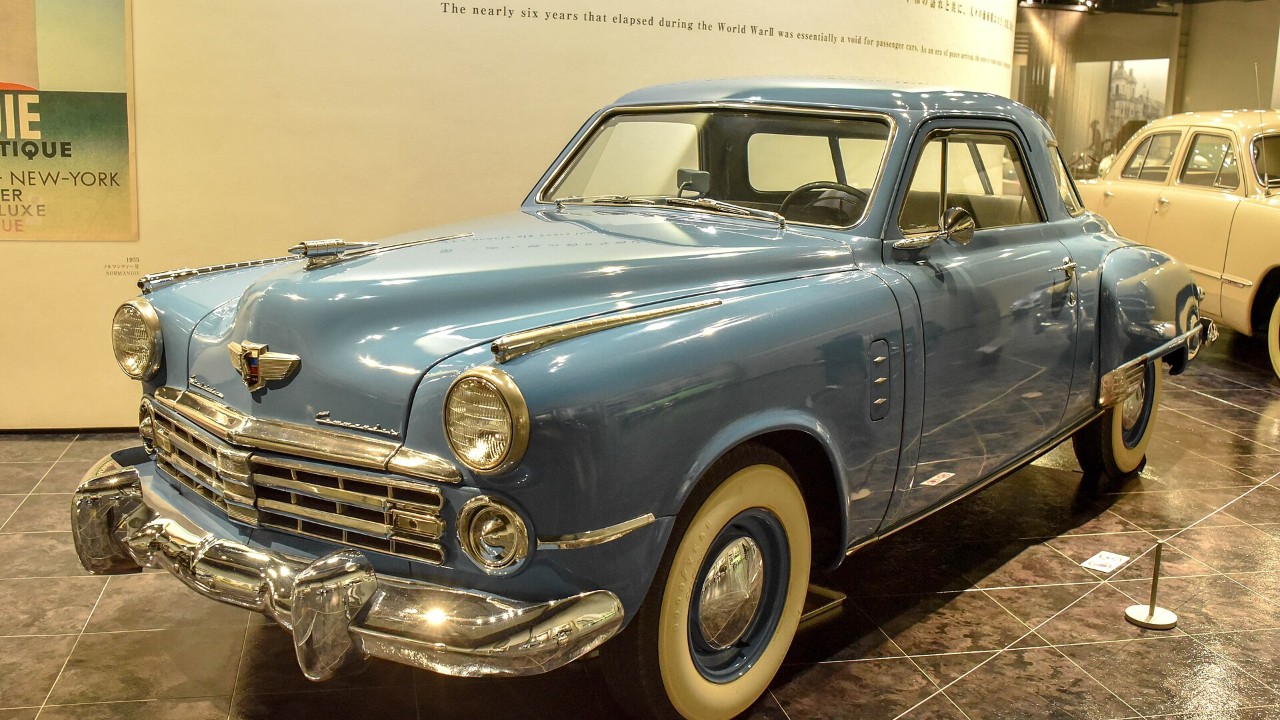
Studebaker’s slogan for 1947 was “First by far with a postwar car,” and the coupe proved it. Virgil Exner and Raymond Loewy’s team shaped the body, while the Budd Company in Philadelphia pressed the major stampings. Meanwhile, the Commander version rode a 119-inch wheelbase and used a 226.2 cubic-inch six with 94 hp. Strictly speaking, it was not yet called a Starlight. According to Mac’s Motor City Garage, enthusiasts later applied the name to the 1947 and 1948 coupes. A future president drove a 1947 Studebaker, too, as we told in the story of George H.W. Bush’s trip to Odessa.
2. 1949 Studebaker Starlight coupe

Studebaker put the Starlight name on the coupe for 1949, according to Mac’s Motor City Garage. By then, the shape had already become a punchline. Comedian Fred Allen joked that Studebaker’s next model would leave people wondering whether a car was going sideways. Still, the four curved glass panels gave rear passengers a panoramic view. In our view, that greenhouse is the reason a parked Starlight still draws a crowd.
3. 1950 Studebaker Champion Starlight coupe

For 1950, every Studebaker got the bullet nose that Bob Bourke first sketched around 1940 and 1941. Loewy said the aim was “the light, fast impression of an airplane.” Underneath, the Champion Starlight kept its 169.6 cubic-inch six, now rated at 85 hp. Sales boomed, too, and the 14-month 1950 model year produced 343,164 cars, the most in Studebaker history. A Custom Starlight started at $1,514.
4. 1950 Studebaker Commander Starlight coupe

The Commander Starlight carried the bigger 245.6 cubic-inch six, rated at 102 hp for 1950. More important, Studebaker added Automatic Drive that year, developed with Borg-Warner’s Detroit Gear Division. It reached the Land Cruiser in late April 1950 and then spread to other models. In fact, Ford wanted to buy the transmission for its 1951 cars, and Studebaker turned it down. In our view, a Commander coupe with that gearbox is the one to find.
5. 1951 Studebaker Champion Starlight coupe
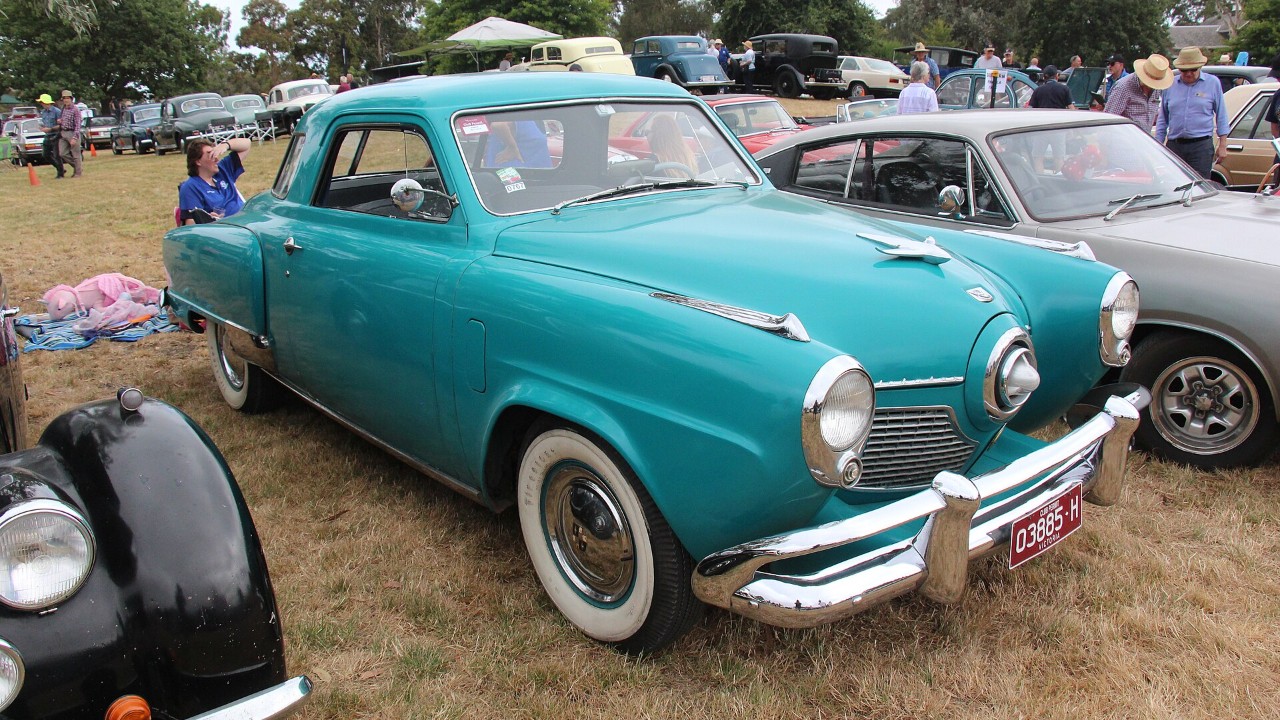
The Henry Ford museum keeps a blue 1951 Champion Starlight in its Driving America exhibit, which praises its airplane-inspired styling. Under the hood, that car pairs the 170 cubic-inch six with an automatic. For comparison, the Commander got a new V8 for 1951, a 232 cubic-inch engine with 120 hp, covered in our look at Studebaker V8s from the 1951 232 on. A Champion Regal Starlight listed at $1,723. Production slipped to 268,565 for the 1951 model year.
6. 1952 Studebaker Champion Starlight coupe

The bullet nose was gone for 1952, replaced by a more conventional front end. That same year, the pillarless Starliner hardtop arrived beside the Starlight. It was also the last year for the original 1947 body. Then, for 1953, Bourke’s team lowered the coupe roof to 56.3 inches and started fresh. In our view, that makes the 1952 Starlight the most overlooked version of the wraparound coupe.
More from Fast Lane Only