Tesla is shifting its electric Semi program from a long-running experiment into a commercial push, pairing factory expansion with a quiet hiring spree aimed at rivals. The company is not only preparing to sell more battery-powered trucks, it is also pulling in experienced sales and operations talent from established players in heavy transport to accelerate that effort.
That combination of new production capacity, a refreshed vehicle design, and targeted recruitment signals that Tesla sees a real opening in freight, even as the broader trucking industry wrestles with cost, charging, and reliability concerns. The Semi is moving from pilot projects into a product Tesla expects to sell at scale, and the way it is staffing up hints at how aggressively it plans to compete.
Tesla’s Semi shifts from pilots to a real sales business
For several years, the Semi program sat on the margins of Tesla’s lineup, with a small fleet focused on pilot runs for large customers rather than a full commercial rollout. Reporting on the program notes that it centered on limited deployments with partners such as PepsiCo, with sales activity constrained by the truck’s early status and production limits. That approach allowed Tesla to gather real-world data on routes, charging, and maintenance without committing to a full-scale launch.
The tone around the program has now changed, with Tesla described as “gearing up” to sell its electric semi truck as a proper product line rather than a niche pilot. Coverage of the shift highlights that the company is preparing to address a broader slice of the heavy trucking industry, not just a handful of marquee customers, and that it is building out the commercial infrastructure needed to support that ambition. In that context, the Semi is evolving from a proof of concept into a truck Tesla expects to market and deliver in meaningful volumes, a pivot that underpins the rest of its recent moves.
Factory build-out and production timeline signal higher volumes
Any serious push into freight requires more than a few dozen trucks, and Tesla’s manufacturing plans suggest it is preparing for that reality. Reporting on the dedicated Semi facility describes the “Factory Building Finished, Equipment Installation Ongoing,” with Tesla indicating that serial production of its Class 8 tractor remains on schedule. Completing the building and moving into tooling is a critical inflection point, because it marks the transition from prototype assembly to a line designed for repeatable, higher volume output.
The company’s hiring patterns around that plant reinforce the sense of a ramp. Earlier this year, Tesla brought on “over 1,000 factory workers” for its Semi program in Nevada, a scale of recruitment that would be unnecessary if the truck were destined to remain a boutique product. A separate report on the same expansion again cites “over 1,000” new hires tied directly to the Semi, underscoring that this is not a marginal side project. Taken together, the completed building, ongoing equipment installation, and workforce ramp point to a company that expects to build and ship a significant number of trucks once production formally starts.
Redesigned Semi aims at a 2026 launch and global reach
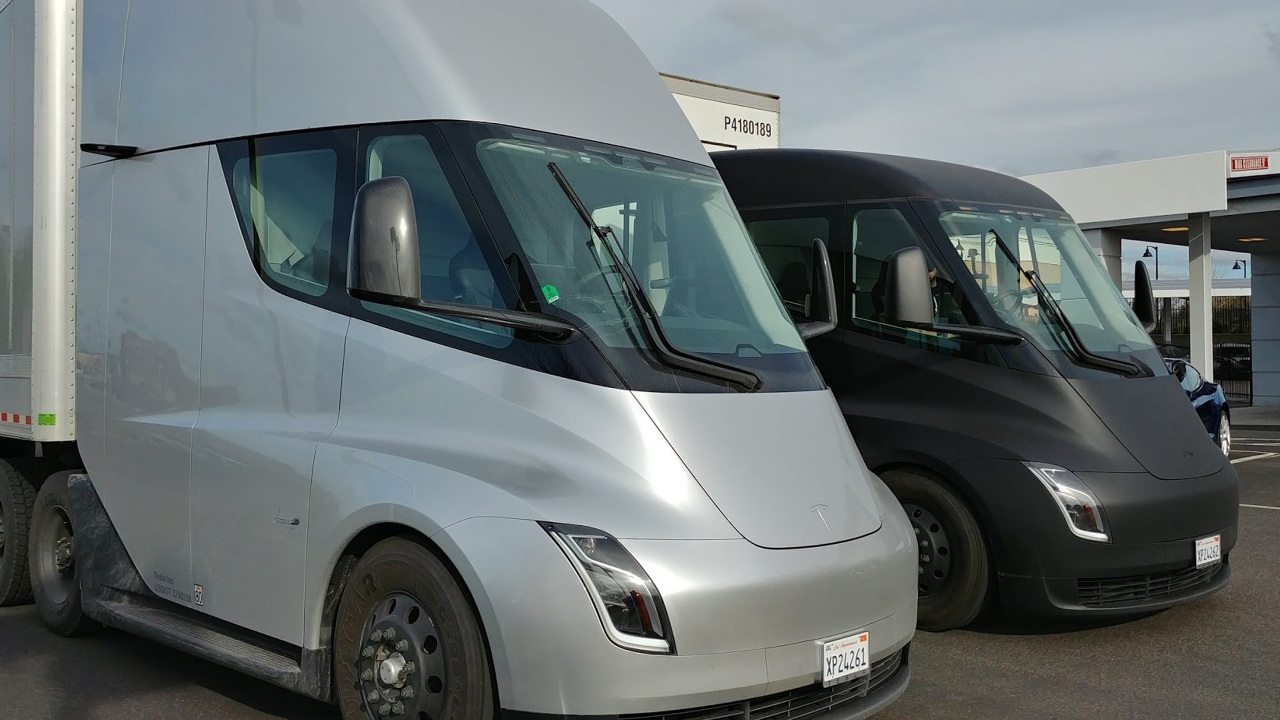
While the factory comes online, Tesla is also updating the product itself, positioning the Semi for a broader launch window around 2026. A detailed look at the latest iteration describes a “Tesla Semi redesign” ahead of that target, with visible changes to the cab, lighting, and other exterior elements that bring the truck closer to Tesla’s current design language. The refreshed Tesla Semi is also reported to include “several performance improvements,” a sign that the company is using the long gestation period to refine efficiency, range, and drivability before committing to mass deliveries.
That redesign sits alongside a strategy that looks beyond North America. Reporting on the program notes that Tesla stopped accepting new Semi reservations in August 2022, a move that helped it focus on existing orders and engineering work, while “Testing of the” truck has continued in “Califor” as part of its validation process. The same coverage points out that the updated Semi is intended “to be a global vehicle,” which implies compliance with multiple regulatory regimes and operating conditions. That global framing matters, because it helps explain why Tesla is investing in a redesign and extended testing cycle rather than rushing the original prototype into full-scale production.
Poaching sales talent to crack the trucking establishment
Hardware and factories alone do not win freight customers, and Tesla appears to recognize that by aggressively recruiting experienced sales leaders from established truck makers. Coverage of its latest hiring push notes that the company is “poaches key sales executives from rivals” as it prepares to sell its electric semi truck into a conservative, relationship-driven market. The report frames this as a deliberate strategy by Tesla to bring in people who already understand fleet procurement cycles, total cost of ownership calculations, and the operational realities of long-haul trucking.
The same reporting emphasizes that the Semi effort is now oriented toward the “heavy trucking industry,” not just early adopters, and that the company is building a team capable of speaking that language. One article even flags that “there’s one thing that you should notice” about the Semi push, namely that “Tesla is hiring from the competition,” a detail that underscores how central this talent strategy has become to its plans. In that context, the poaching is not a side note but a core part of the go-to-market playbook, signaling that Tesla wants insiders who can translate its technology pitch into contracts with large carriers and shippers.
Software, ecosystem, and the broader Tesla play
Tesla’s Semi push also sits inside a larger ecosystem strategy that leans heavily on software and shared technology across its lineup. One report on the company’s software roadmap references “Autopilot (FSD) Tesla update 2025.38.9 goes wide release on HW3 cars and the Cybertruck,” highlighting how driver-assistance features are being rolled out across multiple vehicles. While the Semi’s exact autonomy feature set is not detailed in the available reporting, the shared Autopilot and FSD stack, along with common hardware like the “Cybertruck” platform components, gives Tesla a base of software and electronics it can adapt for freight.
That same software-centric approach is visible in other corners of the lineup, where debates over variants like “Model Y L or Juniper” show how quickly Tesla iterates on design and features. A comparative look at those vehicles notes that “Nothing is etched in stone” and that “Some specs (like Juniper’s exact interior options or global Model Y L availability)” can shift, with buyers advised to check “Model” details on Tesla’s site for the latest information. The Semi program appears to follow a similar pattern, with early “generation of Tesla Semi prototypes” giving way to a refreshed design and updated capabilities as the company moves toward production. For fleet customers, that means the truck they eventually receive will be shaped not just by hardware decisions made years ago, but by the same rapid software and design cycles that define Tesla’s consumer vehicles.
All of these threads point to a clear inflection point for the Semi: a finished factory with equipment going in, a redesigned truck aimed at a 2026 launch and global markets, a workforce expanded by over 1,000 people in Nevada, and a sales bench stocked with veterans poached from incumbent truck makers. The specifics, from the “Factory Building Finished, Equipment Installation Ongoing” status to the focus on the “heavy trucking industry,” suggest that Tesla is no longer treating freight as a side bet. Instead, it is positioning the Semi as a core part of its next growth chapter, one that will test whether its mix of software, design, and aggressive hiring can translate from passenger cars to the unforgiving economics of long-haul trucking.