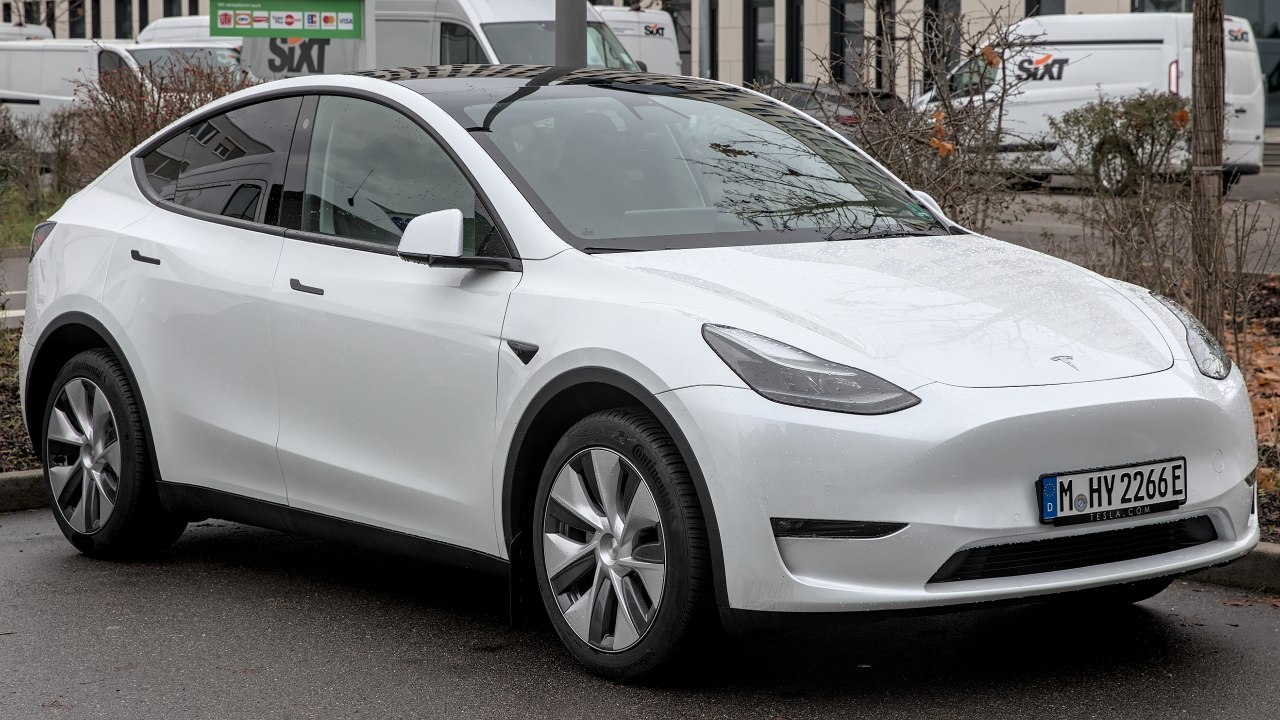
Germany’s influential TÜV inspection study has delivered a sharp verdict on one of the world’s best-selling electric SUVs, ranking the Tesla Model Y among the least reliable vehicles on the road. Instead of a marginally below average score, the compact crossover has landed at the very bottom of a crowded field, raising uncomfortable questions about how Tesla balances rapid growth with long term durability.
For drivers who have treated the Model Y as the default choice in the EV segment, the findings are a jolt. A car that dominates sales charts is now associated with the worst defect rate TÜV has seen in a decade, a gap that is too large to dismiss as teething problems or nitpicking inspectors.
How TÜV’s inspection regime exposed the Model Y’s weak spots
Germany’s TÜV Report is not a customer satisfaction poll or an online rating, it is built on mandatory technical inspections that every registered vehicle must pass. That gives it unusual weight in the market, because the data reflects real defects uncovered by trained inspectors rather than subjective impressions. In the latest Report, the Tesla Model Y did not simply underperform, it was identified as the absolute worst car for reliability in its age group, a result that cuts against its image as a high tech, low maintenance EV.
To understand the scale of the problem, it helps to look at the benchmark TÜV uses. For the relevant age bracket, the average failure rate at first inspection is roughly 6.5%. The Model Y, by contrast, recorded a serious defect rate of 17.3 % at its first TÜV inspection, a figure that places it Last rather than merely below average. That gap is not a rounding error, it is a sign that the car is triggering red flags at nearly three times the rate of its peers, which is why the Report describes it as the worst case TÜV has seen in ten years.
Bottom of a crowded field, and the worst result in ten years
What makes the TÜV verdict so stark is not only the percentage, but the competitive context. The latest New Report covers a broad cross section of the German market, with 110 different Vehicles evaluated across segments and powertrains. In that crowded field, the Tesla Model Y Finished Last, a symbolic and statistical low point for a vehicle that has often been promoted as the benchmark for modern electric crossovers.
Finishing at the bottom of a list of 110 rivals would be damaging enough on its own, but TÜV’s data goes further and identifies the Model Y as having With the Highest Defect Rate recorded in a decade of inspections. That means the car is not just trailing its current competitors, it is underperforming against a decade’s worth of models that have passed through the same standardized checks. When a single model stands out that sharply in a long running dataset, it suggests a systemic quality issue rather than a one off batch problem or a quirk of early production.
What TÜV’s findings say about Tesla’s build quality
The Tesla brand has long carried a reputation for cutting edge software and strong performance, paired with persistent questions about build quality. The new TÜV Report crystallizes those doubts into hard numbers. The Tesla Model Y’s serious defect rate of 17.3 % at first inspection, compared with an average of 6.5%, indicates that the car is not just slightly rough around the edges, it is an outlier in a market that already includes many complex hybrids and EVs. When a vehicle that is marketed as low maintenance triggers this level of inspection failure, it undermines the narrative that fewer moving parts automatically translate into fewer problems.
Germany’s assessment is particularly significant because the country is one of Tesla’s key manufacturing and sales hubs in Europe. The Report that ranks the Tesla Model Y as the absolute worst car for reliability is described as highly respected and thoroughly performed, and it feeds directly into how German buyers and fleet operators view long term ownership risk. When Germany effectively declares that the Model Y is the least reliable vehicle on sale, it is not just a blow to marketing, it is a challenge to the company’s claim that its rapid innovation does not come at the expense of durability.
Implications for EV shoppers and Tesla’s strategy
For consumers weighing an electric SUV purchase, TÜV’s findings complicate what had seemed like a straightforward choice. The Tesla Model Y has often been treated as the default option because of its range, charging network access, and software features. Now, potential buyers have to factor in a documented pattern of defects that puts the car at the bottom of a list of 110 Vehicles and gives it With the Highest Defect Rate TÜV has seen in ten years. That does not automatically make the Model Y a bad purchase for every driver, but it does mean that reliability can no longer be assumed simply because the car is electric or because it carries the Tesla name.
From Tesla’s perspective, the TÜV Report exposes a strategic tension. The company has prioritized rapid scaling, aggressive cost cutting, and frequent hardware changes, all while relying on over the air updates to refine the product after delivery. That approach has worked well in software, but TÜV’s data suggests that physical build quality and component durability have not kept pace. When a respected German inspection regime identifies the Tesla Model Y as the least reliable vehicle on sale, with a serious defect rate of 17.3 % against a 6.5% average, it signals that the company may need to shift focus from speed and novelty toward consistency and robustness if it wants to maintain its lead in a maturing EV market.
Germany’s verdict and the broader EV reliability debate
Germany’s stance carries weight far beyond its borders. The country is both a major car market and home to some of Tesla’s fiercest competitors, yet TÜV’s methodology is grounded in standardized inspections rather than brand rivalry. When Germany, through its TÜV Report, effectively labels the Tesla Model Y the least reliable vehicle on sale, it feeds into a broader debate about whether early generation EVs, and particularly The Tesla lineup, have sacrificed traditional quality metrics in the rush to electrify. That debate is no longer abstract when a single model sets a new low for defect rates in a decade of inspections.
For the wider EV sector, the Model Y’s performance in TÜV’s data is a cautionary tale. It shows that electric powertrains do not automatically guarantee better reliability, and that established inspection regimes will hold EVs to the same standards as combustion models. As more electric Vehicles enter the TÜV database, the contrast between the Tesla Model Y’s 17.3 % serious defect rate and the 6.5% average will serve as a reference point for regulators, insurers, and consumers. If rivals can deliver comparable range and technology with fewer inspection failures, Germany’s verdict on the Model Y could accelerate a shift in buyer loyalty and force Tesla to treat build quality as seriously as it treats software and speed.