Tesla’s European story has split in two. Across major markets on the continent, registrations of the company’s electric cars have fallen sharply, while in Norway the brand is setting new records and propping up its regional totals. The contrast highlights how policy, competition and public sentiment can push the same automaker in opposite directions inside a single region.
I see a company that still dominates one corner of Europe even as it loses ground in others, a pattern that raises questions about how long one small but influential market can offset broader weakness. The numbers now emerging from Germany, France, Sweden, the Netherlands and Norway show that the slump is real, the Norway boom is equally real, and the gap between them is widening.
Sales slide across core European markets
The clearest signal of Tesla’s European slowdown comes from its largest continental economies, where registrations have dropped from prior-year levels. In Germany, one of Tesla’s most important markets, data show that Tesla EV sales have “cratered by more than half,” with the company selling “just 750 electric” vehicles in a recent month, a figure that underlines how far demand has fallen in a country that once looked like a growth engine for the brand. That weakness has persisted even as the company has tried to stabilize volumes, and it has unfolded in a broader context where Tesla’s strong run in Europ is described as a thing of the past, with rivals now crowding into the same price bands and segments that Tesla once dominated.
The pattern is similar in other key markets. Reporting on Tesla’s performance across Europe notes that sales in the region have dropped, with Germany singled out as a major contributor to the decline and with France, Swed and the Netherlands also seeing lower registrations compared with earlier periods. One detailed breakdown of November registrations describes how Tesla’s numbers in France and Swed were down from the previous year, while the Netherlands also recorded a decline, reinforcing the picture of a company facing headwinds across much of the continent. Another analysis of Tesla’s global performance points out that sales in Europe fell alongside a new low in the United States, where Tesla registered 39,800 vehicles in the United States in November, underscoring that the European slump is part of a wider cooling in demand rather than an isolated blip.
Germany’s sharp reversal and the limits of short-term rebounds
Germany deserves special attention because it combines a large auto market, a domestic EV push and a local Tesla factory, yet Tesla’s results there have still deteriorated. One report on Tesla Germany Sales Fall notes that Tesla Germany Sales Fall 20 percent year over year in November Despite a 135% Sequential Rebound, meaning that even a strong month-to-month bounce could not erase the damage compared with the same period a year earlier. That kind of pattern, a steep annual decline masked by a short-term uptick, suggests that Tesla is relying on bursts of deliveries and price moves to keep numbers afloat rather than enjoying steady organic growth.
Other coverage of Tesla’s position in Germany reinforces that view. A separate analysis of Tesla EV sales in Germany describes how volumes have dropped by more than half, with Tesla selling just 750 electric vehicles in a recent month, a figure that would have been unthinkably low when the brand was still gaining share rapidly. Another regional overview notes that Tesla sales drop in Germany, adding to declines across Europe, and ties that slump to a broader loss of momentum as new competitors enter the market and as EV adoption in some segments is not as strong as policymakers had hoped. Put together, these reports show that even in a country where Tesla has invested heavily, the company is struggling to maintain its earlier trajectory.
France, Sweden and the Netherlands deepen the regional slump
Beyond Germany, Tesla’s performance in France, Sweden and the Netherlands has turned into a drag on its European totals. One detailed breakdown of November registrations across the region highlights how Tesla’s numbers in France were Down 57.8% to 1,593 units, a steep fall that signals both softer demand and tougher competition from local and Chinese brands. The same analysis notes that Sweden saw Tesla registrations Down 59.3% to 588 units, another sharp contraction that undercuts the idea that the company’s challenges are confined to a single market or policy environment.
The Netherlands, once a showcase for early EV adoption, has also shifted from tailwind to headwind. The same regional overview that details the declines in France and Sweden points out that the Netherlands recorded a drop in Tesla registrations compared with the prior year, contributing to what it describes as Tesla sales keep crashing in Europe with a single market temporarily saving it. That phrase captures the core dynamic now playing out: multiple mid-sized markets that once helped Tesla scale up in Europe are now collectively pulling the regional numbers down, leaving the company more dependent on outliers like Norway to keep its European story from looking even worse.
Norway’s record-breaking boom stands apart
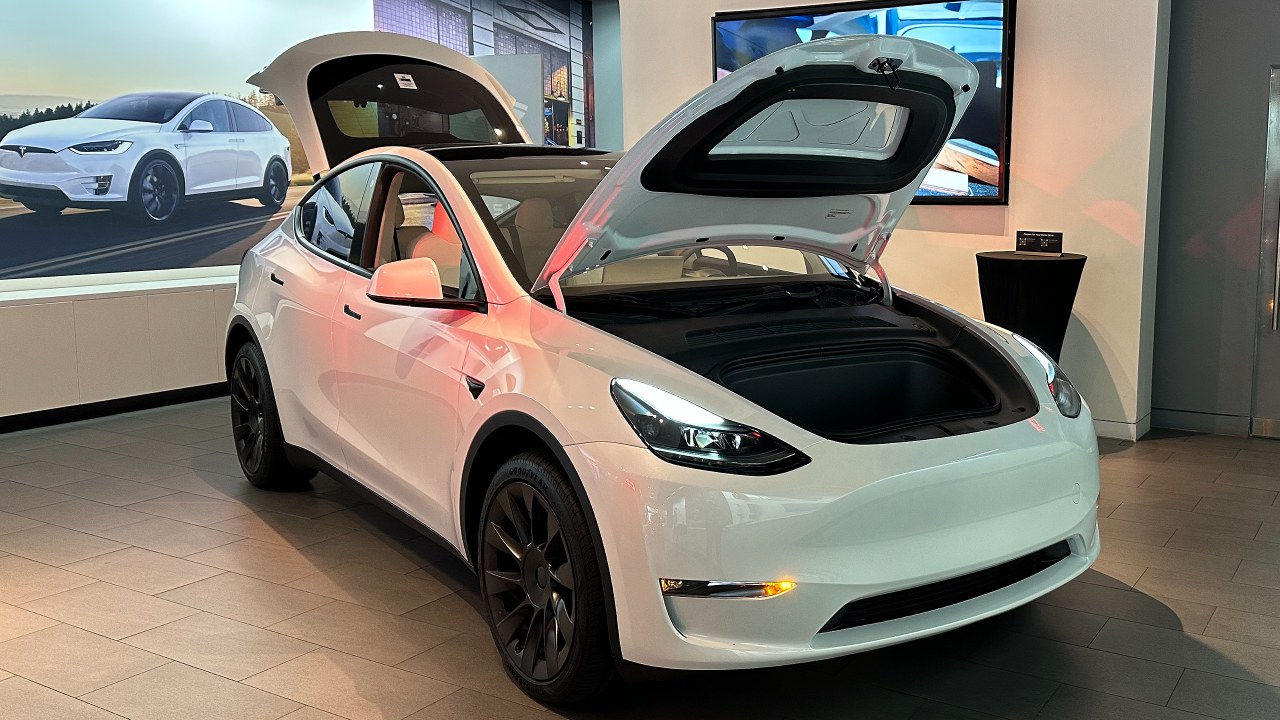
Against that backdrop of falling sales in much of Europe, Norway has become the striking exception. Several reports describe how Tesla Sets New All-Time Car Sales Record in Norway, with one account noting that In Norway Tesla has sold nearly 29,000 cars since January, surpassing the record of any brand for an entire year. That figure, 29,000, is remarkable in a country of just over 5 million people and underscores how deeply Tesla has penetrated the Norwegian market compared with its position elsewhere in Europe.
Additional reporting on Tesla Breaks Sales Records in Norway Amid Rising EV Adoption and Policy Changes explains why this small market has become so important. Norway Amid Rising EV Adoption and Policy Changes, the country has used tax incentives, toll exemptions and other benefits to push drivers toward electric cars, and Tesla has been a prime beneficiary of that strategy. Another analysis framed the situation as Tesla Faces Europe Slump Despite Norway Sales Record, describing a “split personality” in which the brand’s record-setting performance in Norway sits alongside a clear loss of momentum across the rest of Europe. A separate piece titled In Norway Tesla emphasizes that around 41 percent of electric vehicles sold in the country are tied to policies that have been central to its climate policy efforts, and that context helps explain why Norway has remained so receptive to Tesla even as other European consumers pull back.
Why Norwegians still buy while the rest of Europe cools
The divergence between Norway and the rest of Europe is not just about incentives, it is also about perception. One in-depth feature asks Why Don Norwegians Hate Tesla Like the Rest of Europe Does and notes that November’s Tesla registrations were down in France and Swed while Norway continued to embrace the brand. The piece points to a mix of factors, including Norway’s long-running familiarity with Tesla as one of its earliest international markets, the country’s aggressive climate goals and a charging infrastructure that makes EV ownership relatively painless. In that environment, Tesla is still seen as a default choice rather than a controversial one.
Elsewhere in Europe, the mood has shifted. Another report on how Tesla hit with stunning setback in key territory notes that Tesla no longer has the market to itself in Europ, with new EVs from established automakers and Chinese entrants eroding its once-dominant share. A broader regional analysis that describes Tesla Faces Europe Slump Despite Norway Sales Record ties the sales declines to rising competition, changing subsidies and a wave of boycotts and brand fatigue that have affected Tesla’s image in several countries. When combined with the hard numbers from Germany, France, Sweden and the Netherlands, and the contrasting surge to nearly 29,000 cars sold in Norway since January, the picture that emerges is of a company whose European fortunes now hinge on a single enthusiastic market while the rest of the continent grows more skeptical.