The second generation Buick Riviera, produced for 1966 and 1967, occupies a curious place in American car culture. It combined dramatic styling, serious performance and genuine luxury, yet it still trails its contemporaries in recognition and value. For enthusiasts willing to look beyond the usual muscle and pony cars, it remains one of the most quietly underrated American coupes of its era.
Personal luxury with a sharper edge
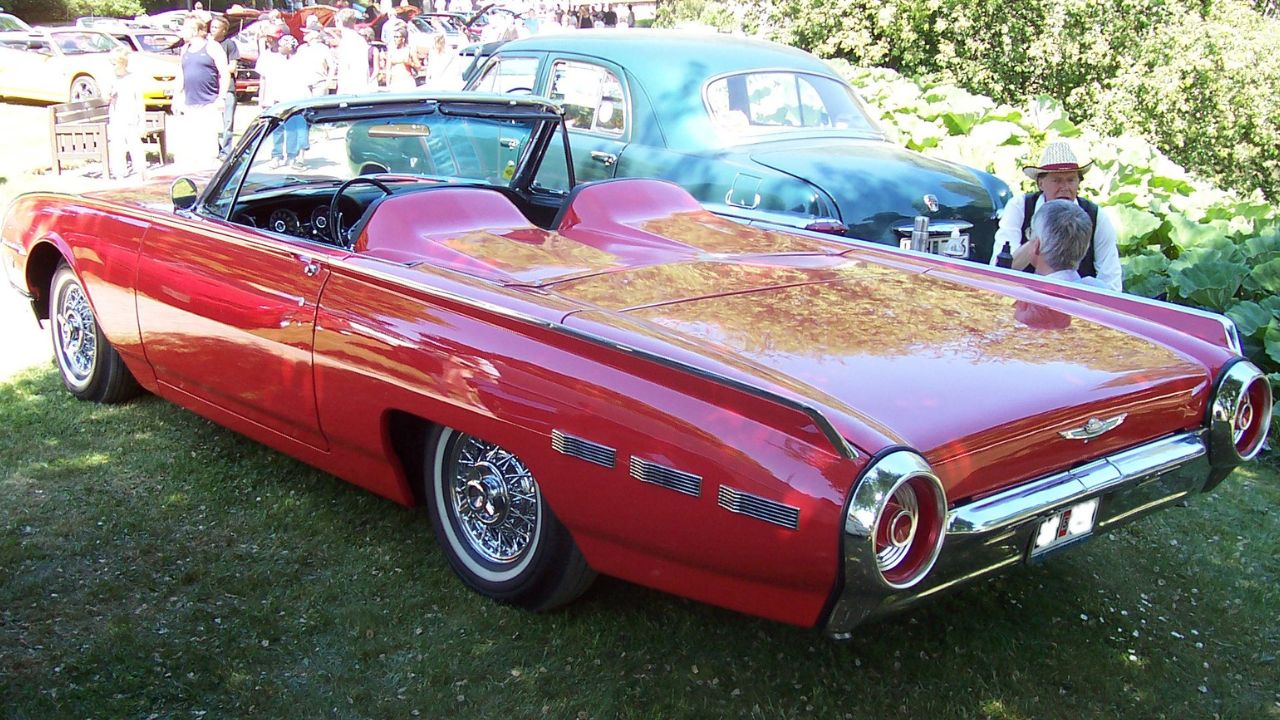
By the mid 1960s, General Motors had fully embraced the personal luxury segment, and the Riviera was Buick’s sophisticated answer to that brief. While built to compete directly with Fords Thunderbird in the fast-growing personal luxury market, the Riviera retained a more restrained, almost European sense of proportion and detailing. The totally redesigned 1966 and 1967 models sharpened that identity, presenting a long hood, short deck profile that signaled power without the overt flash of many muscle cars of the period.
The Riviera was redesigned for the 1966 model year, keeping its cruciform X-frame, powertrain and brakes, but adopting a new body that was longer, lower and wider. Contemporary commentary notes that Buick would redesign the Riviera going longer, lower and wider, with a sleeker Coke bottle design that emphasized its flowing flanks and tucked-in waist. Hidden headlamps, a broad grille and a clean rear treatment gave the car a presence that still looks modern, and video walkarounds of surviving cars underline how cohesive the design remains when viewed in motion.
Design details that reward a closer look
Part of what keeps the 1966–1967 Riviera slightly under the radar is that its design rewards careful observation rather than quick glances. Enthusiasts who study the car point out how the front end was deliberately differentiated from other Buick models, borrowing cues that had first appeared on the 1964 Electra but refining them into a more aggressive, personal-luxury statement. The result is a nose that looks lower and wider than it actually is, with the hidden headlamps and sculpted bumper creating a continuous horizontal line across the front.
Side-on, the Riviera’s Coke bottle profile is especially striking, with the body sides pinched in ahead of the rear wheels and then flared subtly over the arches. Commentators who walk viewers around these cars often linger on the way the roofline flows into the rear deck without the heavy C-pillars that burdened some rivals. The Riviera’s proportions were unique within General Motors, and even when parked next to other GM personal luxury offerings from the period, it reads as more tailored and less ornate, a quality that has aged well and helps explain why design-focused collectors are beginning to take a second look.
Gran Sport: luxury meets real muscle
If the standard Riviera projected quiet confidence, the Gran Sport package gave it the hardware to back up the image. Earlier in the decade, Buick Offered a lineup of Rivieras that already leaned into performance, starting in 1964 with the optional 425 Super Wildcat w/ST400 Posi-trac. That tradition carried into the second generation, where the Gran Sport option turned the 1966 and 1967 cars into serious high-speed machines while keeping their luxury appointments intact.
Owners and historians describe the 1966 Buick Riviera GS as a car that could stand alongside other high-end General Motors offerings, such as the 1966 Oldsmobile Ninety Eight, but with a very different mission. Where the Oldsmobile Ninety Eight leaned more toward pure comfort, the Buick Riviera GS and the related Gran Sport packages focused on combining strong acceleration with composed handling. Contemporary enthusiasts often summarize the 1967 Buick Riviera Gran Sport as Luxury Meets Muscle, a perfect blend of American luxury and muscle that delivered both straight-line pace and long-distance refinement. Chassis and Suspension upgrades, including Handling improvements through heavy-duty springs and a stiffer setup, meant that The Gran Sport could exploit its power without feeling crude or unruly.
Engines that deserve more respect
The Riviera’s performance credentials rest heavily on Buick’s big V8s, which remain less celebrated than some rival engines despite impressive specifications. Under the hood of earlier performance variants, the 1965 Riviera GS featured Buick’s 401 cubic-inch Nailhead V8, producing 345 horsepower, paired with either a 3 speed manual or automatic transmission. That engine, identified simply as the Nailhead, established a reputation for strong torque and durability that carried into later 425 cubic inch versions used in high-spec Rivieras.
Enthusiast discussions of the 1964 to 67 cars often highlight the 425 Super Wildcat, noting that Buick Offered this engine with dual carburetion and Posi rear gearing to create a formidable personal luxury coupe. Video coverage of a 1966 Buick Riviera GS Gran Sport Factory Dual Quad 425 Engin reinforces how serious these cars were, with the dual four barrel setup and deep exhaust note underscoring their muscle credentials. Later commentary on Gran Sport models in the broader Buick range points out that some versions would eventually use a 455 cubic inch V8 with up to 360 horsepower, illustrating how the brand consistently paired luxury with substantial power. For owners who are less concerned with strict originality, modern builders note that forged, lightweight pistons, performance intake manifolds and a range of carburetors are available, so there is practically no limit to how far a Riviera powertrain can be developed while still looking period correct.
Why collectors still overlook it
Despite its design and performance strengths, the 1966–1967 Riviera has not yet reached the value levels of some contemporaries, which is a key reason it remains underrated. Valuation guides for the 1966 Buick Riviera emphasize that the value of a 1966 Buick Riviera can vary greatly depending on its condition, mileage, options and history. Typically, buyers can expect a wide spread between driver-quality cars and top restorations, with even very strong examples often trading below the prices commanded by comparable Thunderbirds or more overt muscle cars from the same period.
Within enthusiast circles, some owners describe the Riviera GS as the next overlooked muscle car, arguing that The Riviera GS has a lot more to offer than its current market recognition suggests. They point to the combination of hidden headlights, distinctive styling and genuine performance hardware as evidence that the car has been undervalued for too long. Video tours of cars like a sinister black 1967 Buick Riviera GS, sometimes simply labeled Buick Riviera GS and SOLD in auction recaps, show how striking these coupes can be when properly presented. Yet, compared with the attention lavished on more obvious American muscle, the Riviera still feels like a connoisseur’s choice rather than a mainstream collectible.
More from Fast Lane Only