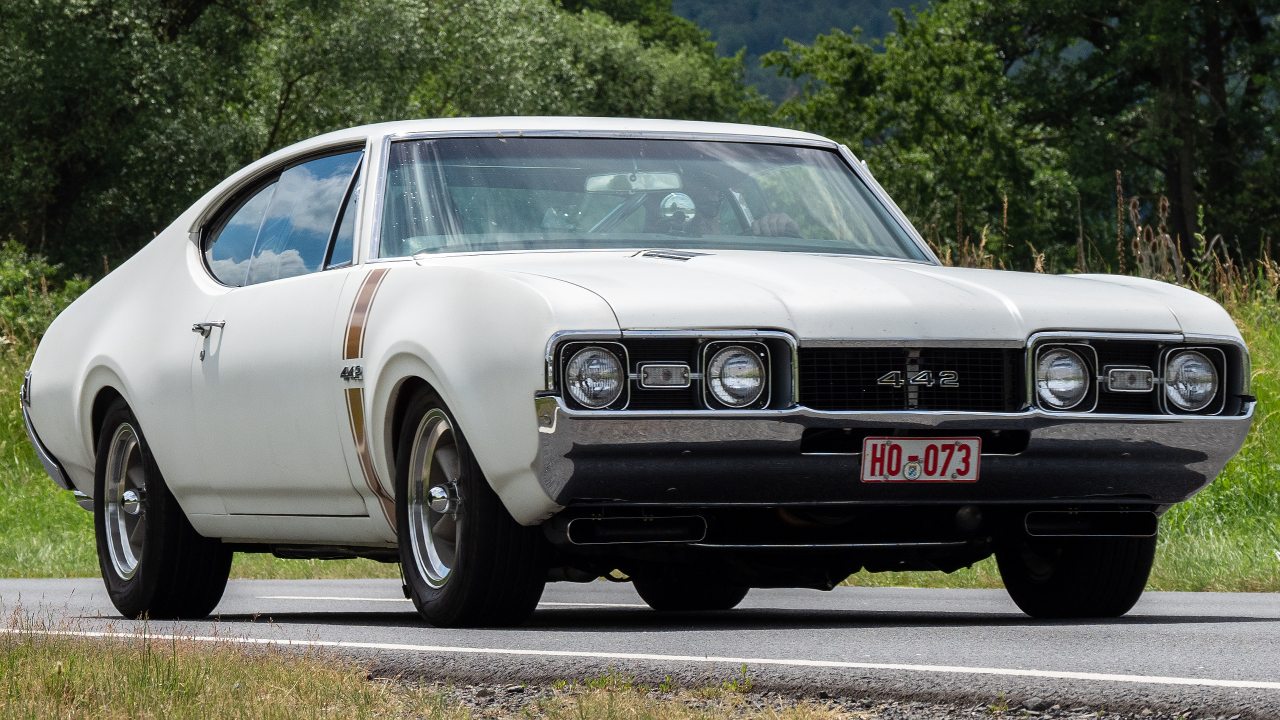
The Oldsmobile 442 has never lacked presence, yet some examples stand apart not because of exotic options or race history, but because of the paint sprayed on at the factory. Among collectors, a handful of hues have quietly transformed certain 442s from desirable muscle cars into near-mythical finds. One factory color in particular, applied in vanishingly small numbers, has made the already scarce 442 shockingly rare in today’s market.
Tracing how a single shade can reshape the car’s legacy requires looking beyond horsepower figures and option codes to the way Oldsmobile balanced bold marketing with conservative production. The result is a story in which color, not just cubic inches, now drives some of the fiercest competition among serious buyers.
How a paint code turned a muscle car into a needle in a haystack
Oldsmobile offered the 442 in a broad palette, but not every color was ordered in equal measure, and that imbalance is what fuels today’s obsession with rare factory finishes. Enthusiasts who track production patterns point to specific shades that almost never appear in period photos or at modern shows, even when the underlying model year is common. In the 1972 model range, for example, long-time owners and historians have singled out Masonry Gray as the least frequently seen factory color on a 442, a status that has elevated surviving cars into a category of their own among restorers and judges.
That assessment is echoed in enthusiast discussions where experienced voices, including Terry Divelbliss and Benjamin Virga, compare notes on obscure 72 paint codes and how seldom they surface in documentation or on surviving cars. Their consensus that Masonry Gray was the rarest option on a 1972 Oldsmobile 442 has effectively turned that shade into a benchmark for scarcity, much as certain low-volume hues have done for other muscle nameplates. The fact that these conversations often reference otherwise ordinary 72 and 350 powered Oldsmobile models underlines how a simple color choice can overshadow drivetrain specifications when collectors weigh what is truly hard to find.
Masonry Gray and the mystique of the 1972 442
By the early 1970s, insurance pressures and emissions rules were already reshaping the muscle market, yet Oldsmobile still treated the 442 as a halo car that could be tailored to individual tastes. Masonry Gray, a subdued and almost understated tone, ran counter to the bright oranges and high-impact reds that dominated showroom brochures, which likely explains why so few buyers selected it. That reluctance at the time is precisely what makes the color so coveted now, since a Masonry Gray 442 combines the model’s performance image with a visual restraint that feels almost custom ordered.
Enthusiast accounts that identify Masonry Gray as the rarest 1972 442 color often emerge in the same breath as memories of other unusual combinations, such as factory triple black 72 Supreme 350 cars that shared assembly lines and paint booths. When owners like Terry Divelbliss recall these configurations, they are not simply trading nostalgia, they are mapping the thin statistical edge that separates a merely uncommon 442 from one that is almost never seen. In that context, Masonry Gray has become shorthand for the upper tier of rarity, a status that helps explain why even rough survivors can command outsized attention when they surface.
Blue-chip blues and the hunt for original paint
While Masonry Gray anchors the conversation about the rarest 442 color, several shades of blue illustrate how scarcity and desirability can intersect in more extroverted ways. Period-correct examples finished in hues like Astro Blue or Twilight Blue show how Oldsmobile used color to emphasize the car’s lines and performance stance, especially when paired with contrasting interiors and stripes. A documented 1970 442 finished in Twilight Blue over white, for instance, combines a 455 cubic inch V8 rated at 365 horsepower with a 4 speed Transmission, creating a package where the Speed Exterior Color Twilight Blue Interior Color White is as central to its appeal as the mechanical specification.
Other blue cars, such as an Astro Blue 442 W30 described as a blue on blue example, highlight how a vivid factory shade can make an already rare performance configuration feel even more exclusive. In the marketplace, sellers emphasize when a car retains its original paint or has been refinished in the correct code, because buyers understand that repainting a 442 in a more fashionable color erases part of its historical identity. Listings that stress Numbers matching drivetrains and original hues, including references to 550 horsepower builds that still respect factory color choices, show how intertwined paint and provenance have become in determining value.
Viking Blue, Burgundy Mist, and the fine print of rarity
Beyond Masonry Gray and the high profile blues, a handful of lesser known colors have acquired almost cult status among 442 specialists. Viking Blue is one of the clearest examples, a shade that appears in sales descriptions with a kind of reverence. Sellers note that Finding an original Viking Blue car is unusually difficult, and that only 1,304 convertibles were produced in that configuration, a figure that instantly places such cars in a rarefied subset of the 442 population. When a listing highlights that a Viking Blue convertible is a head turner with Numbers matching components and a New top, it is really underscoring how fragile that combination of originality and low production has become over time.
Color code debates around other hues, such as a 442 W 30 finished in a dark tone that some observers initially read as Matador red, show how even experts can struggle to distinguish between similar shades when paint has aged or been resprayed. In one discussion, the firewall tag lists code 75, associated with Matador, while Another reference suggests code 73 Rally Red might be a closer match to what is seen in photos. That kind of fine grained scrutiny reflects how seriously collectors treat paint codes, since a single digit can mean the difference between a relatively common color and one that was ordered in tiny numbers, with corresponding implications for both authenticity and price.
Why color scarcity now rivals performance in collector value
The 442 badge itself carries built in cachet, as later models such as the 1985 Oldsmobile 442 demonstrate. That year, Only 3,000 units of the 442 were produced, a figure that makes even standard colors inherently scarce. Yet within that already limited run, cars that retain their original paint or wear less typical hues tend to stand out at auction previews and in private sales. The Saratoga Automobile Museum’s description of an 1985 example emphasizes how the Oldsmobile 442 delivers originality, performance, and presence, a trio of qualities in which factory correct color plays a central role.
Comparisons with other performance icons, such as the Shelby Cobra, reinforce how rarity functions as a shared currency across segments. In enthusiast debates that weigh a Cobra against an Oldsmobile 442, the 442 is described as Relatively rare and highly sought after, with Rarity tied not only to production totals but also to distinct badging and performance enhancements. When those traits are combined with a low volume color like Masonry Gray or Viking Blue, the result is a car that competes on exclusivity as much as on acceleration, a shift that has become more pronounced as surviving examples age and restoration costs climb.
For serious collectors, the lesson is clear. The Oldsmobile 442’s most elusive factory colors, led by Masonry Gray and supported by shades such as Viking Blue and carefully documented blues, have transformed certain cars into rolling case studies in how paint codes can outstrip even horsepower figures in determining long term significance. In a market where production numbers, documentation, and originality are scrutinized line by line, the right color on the right 442 is no longer a mere aesthetic choice. It is the factor that turns a desirable muscle car into one of the rarest Oldsmobiles on the road, a status that only grows more pronounced with each passing year.
More from Fast Lane Only