The Ford Torino earned its reputation not only through sleek sheet metal but through a remarkably broad engine catalog that stretched from thrifty sixes to some of Ford’s most serious big blocks. Across its production run, the intermediate Torino platform became a test bed for changing American ideas about performance, efficiency, and image. Understanding which engines powered the Torino, and how much power they produced, reveals why this model could serve as both a sensible family car and a genuine muscle machine.
From the late 1960s through the mid 1970s, Ford treated the Torino as a flexible canvas, pairing it with everything from basic inline six‑cylinder units to high compression V8s tuned for drag strip duty. Power ratings shifted with emissions rules and changing measurement standards, but the core story remains clear: the Torino’s appeal rested on the way its engines scaled from modest output to some of the most formidable factory horsepower Ford offered in that era.
From six‑cylinder economy to entry‑level V8 power
At the bottom of the Torino hierarchy sat the inline six engines that made the car viable as a practical family sedan. Reporting on the first generation notes that Ford equipped all models other than the Torino GT with a standard 200 cubic inch six, aimed squarely at buyers who valued fuel economy and low purchase price over acceleration. These six‑cylinder Torinos were not performance cars in any traditional sense, but they anchored the line in the mainstream intermediate segment and helped justify the more aggressive variants that shared the same basic platform.
Above the sixes, Ford offered small‑block V8s that provided a more balanced mix of everyday drivability and respectable power. Contemporary overviews of Ford Torino Engines describe how the range stepped up from these economy units into V8 territory, with engines such as the 302 cubic inch small block serving as a common entry point. Another key small block was the 351 Windsor V8, which period engine charts list in 1968 as a 351-2V rated at 250 hp, or 190 k W, with torque of 355 lb·ft, or 481 Nm, at 2,600 rpm. That Windsor specification illustrates how even mid‑range Torinos delivered strong low‑end pull suitable for daily use, towing, or spirited highway driving.
Big‑block muscle and the rise of Cobra Jet power
For enthusiasts, the Torino’s real character emerged with the big‑block V8 options that transformed the car into a credible muscle contender. Early in the run, Ford offered FE‑series engines such as the 390‑4V, which engine tables list at 390 cubic inches and 325 hp, or 242 k W. This engine, paired with performance‑oriented trims like the GT, gave the Torino the torque and top‑end power needed to compete with contemporary intermediates from rival brands. Above the 390 sat the 428‑4V Cobra Jet, described in period references as the most potent engine available for 1968 and widely regarded as underrated at 428 cubic inches and 335 hp, or 250 k W. The Cobra Jet specification, especially when installed in a Torino GT, signaled Ford’s intent to position the car as a serious straight‑line performer.
Even more exclusive was the 427‑4V FE V8, which appears in engine charts as a 427 cubic inch mid‑year option. Later reporting notes that Ford initially planned to offer this 427 in the Torino, but that very few, if any, production cars actually reached customers with the engine installed, despite sales literature that did not fully reflect the change. Retrospective performance analysis describes a 427 V8 as the most powerful Ford Torino engine option, with Maximum Power quoted at 390 hp. That figure, combined with the rarity of any Torino actually built with the engine, has helped elevate the 427‑equipped configuration into near‑mythical status among collectors, even as most real‑world big‑block Torinos relied on the more common 390 and 428 Cobra Jet units.
Small‑block evolution and the 302 to 351 era
While the big blocks captured headlines, the Torino’s long‑term identity depended heavily on its evolving small‑block V8 lineup. Enthusiast histories of the Ford Torino highlight how under the hood, options ranged from a solid 302 small block V8 up to the larger Cobra Jet engines, giving buyers a clear performance ladder. The 302 served as a dependable base V8, particularly in non‑GT trims, offering smoother acceleration and better highway manners than the sixes without the fuel appetite of the FE big blocks. In practice, many Torinos on the road combined this 302 with automatic transmissions and modest axle ratios, creating a car that felt more like a comfortable cruiser than a drag racer.
The 351 Windsor, already noted at 250 hp in 1968, became increasingly important as emissions regulations and insurance pressures began to squeeze the highest output big blocks. Later in the Torino’s life, especially by the mid 1970s, the 351 in various configurations effectively replaced the more exotic FE engines as the top choice for buyers who still wanted V8 torque. A period description of a 1976 Ford Gran Torino notes that the car was often powered by a 5.8‑liter, or 5.8-liter, 351 cubic inch V8, underscoring how this displacement became the de facto standard for later Gran Torino models. Although net horsepower ratings in that period were lower than the earlier gross figures, the 351 still delivered the kind of broad torque curve that suited the heavier, more comfort‑oriented Gran Torino body style.
Cobra, Cobr, and the high‑impact performance image
Beyond raw numbers, the Torino’s engine story is intertwined with the marketing language Ford used to sell performance. The Cobra and Cobra Jet labels, attached to engines like the 428‑4V Cobra Jet and later the 429 Cobra Jet, signaled to buyers that these were not ordinary V8s. Enthusiast accounts of classic American muscle note that under the hood, options ranged up to a legendary 429 Cobra Jet V8, which in period trim delivered up to roughly 370 hp in some applications. Within the Torino lineup, these engines were typically paired with aggressive styling cues, heavy‑duty suspensions, and performance gearing, turning the car into a credible threat on both street and strip. The combination of big‑block displacement, high‑flow cylinder heads, and performance carburetion made the Cobra Jet Torinos some of the most formidable intermediates of their day.
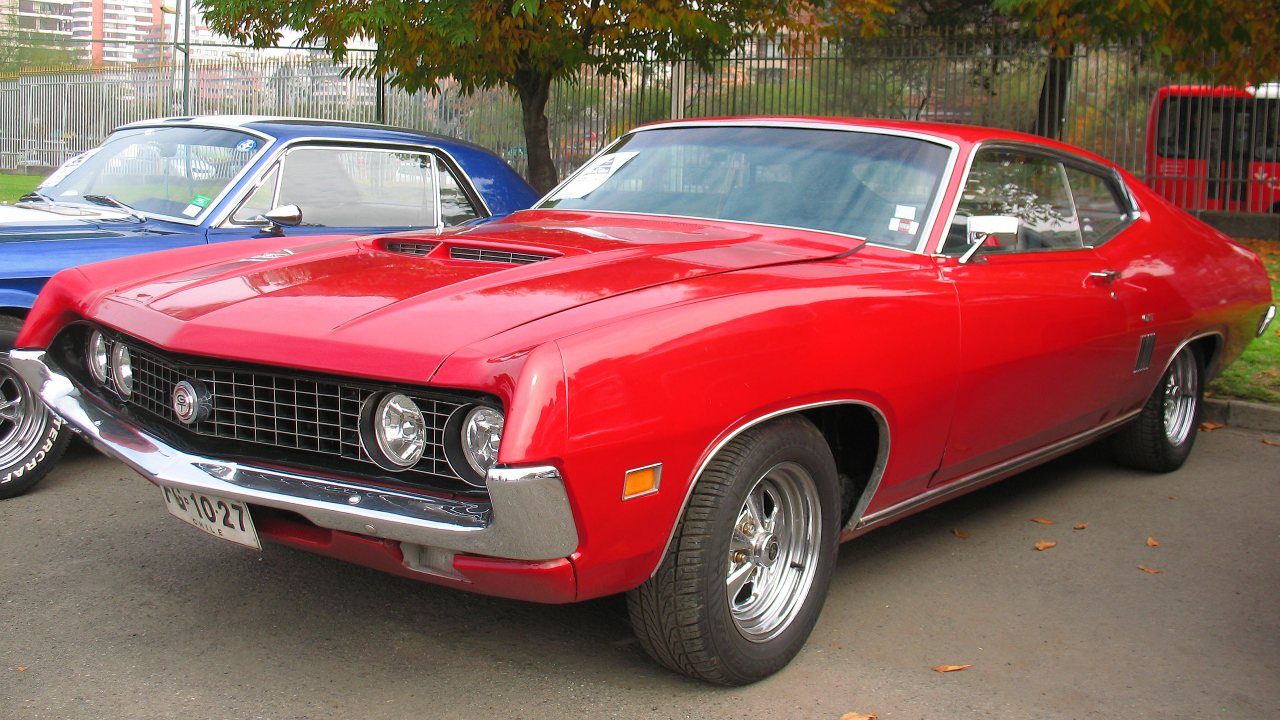
Ford also used the Torino platform to support specific performance sub‑brands, including the Cobra and related variants referenced in period discussions of the 1969 Ford Torino and its Cobr branded offshoots. These models could be ordered with engines ranging from the more basic inline sixes to the potent V8s already described, but the performance image centered on the high output big blocks. Visual cues such as hood scoops, bold striping, and unique badging reinforced the message that a Cobra Jet Torino was more than just a family car with a large engine. In practice, the combination of branding and power output helped the Torino carve out a distinct identity in a crowded muscle car field, even as it shared many mechanical components with other Ford products.
Gran Torino, pop culture, and the late‑era power picture
As the Torino evolved into the Gran Torino, its engines reflected a broader shift in the American car market from raw performance toward comfort and style, even while retaining V8 power. Historical overviews of Torino History describe how Ford Motor Company continued to offer a diverse mix of powertrains, pairing engines like the 351 with a variety of automatic and manual transmissions to suit different driving preferences. By the mid 1970s, the Gran Torino’s role had shifted toward that of a bold, comfortable cruiser, yet it still relied on V8 engines to deliver the torque necessary for its size and weight. The 5.8‑liter 351, already noted as common in 1976 Gran Torinos, exemplified this balance of presence and practicality.
More from Fast Lane Only