Few cars can claim to have changed an entire industry.
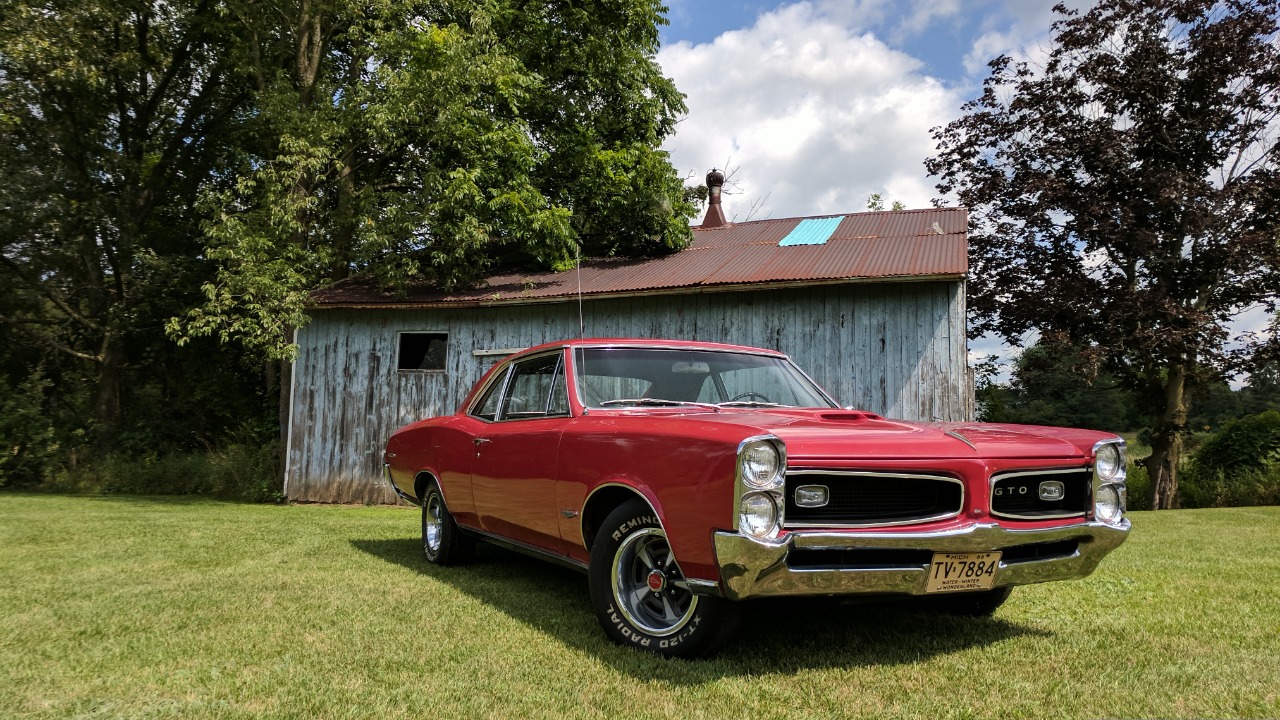
The 1966 Pontiac GTO is one of them.
By the mid-1960s, the GTO had already established itself as one of America’s most exciting performance cars. Its 1964 debut helped launch the muscle car movement, proving that buyers wanted powerful V8 engines in relatively affordable midsize cars. The formula was simple, effective, and enormously successful.
But the 1966 GTO accomplished something beyond horsepower and sales figures.
It changed how automakers marketed performance.
Before the GTO, performance cars were often presented as specialized vehicles aimed at a relatively narrow audience of enthusiasts. Advertisements focused heavily on technical specifications, engineering details, and racing credentials. Manufacturers assumed that buyers interested in performance primarily cared about horsepower numbers and mechanical features.
Pontiac saw things differently.
The company realized that performance could be marketed as a lifestyle rather than merely a collection of specifications. The 1966 GTO wasn’t sold simply as a fast car. It was sold as an expression of youth, excitement, individuality, and freedom.
That approach transformed automotive advertising.
The ripple effects can still be seen in how performance vehicles are marketed today.
The Original GTO Had Already Proven the Concept
When the first GTO arrived in 1964, it surprised much of the industry.
At the time, General Motors maintained internal policies that discouraged large engines in midsize cars. Pontiac engineers found a way around those restrictions by offering the GTO as an option package on the LeMans.
The result exceeded expectations.
Buyers flocked to dealerships.
The combination of a powerful V8, sporty styling, and accessible pricing resonated immediately with a growing generation of young consumers.
The success demonstrated that a substantial market existed for affordable performance.
However, Pontiac wasn’t content to stop there.
The division wanted to transform the GTO from a successful model into a cultural phenomenon.
The 1966 redesign would help achieve that goal.
The 1966 Model Became a Standalone Identity
One of the most significant changes for 1966 was the GTO’s evolution into a more distinct product.
Although still based on the Pontiac Tempest platform, the car developed a stronger identity of its own.
The styling became cleaner, more muscular, and more cohesive. Coke-bottle body contours, stacked headlights, and aggressive proportions gave the car a confident appearance that immediately attracted attention.
Pontiac understood that image mattered.
Performance buyers weren’t merely purchasing transportation.
They were purchasing an experience.
The new styling helped communicate that message before the engine was even started.
Pontiac Targeted Younger Buyers Aggressively
Perhaps the most important shift involved Pontiac’s understanding of its audience.
During the 1960s, the enormous postwar Baby Boom generation was reaching driving age. Millions of young Americans had growing disposable income and a strong interest in automobiles.
Pontiac recognized this opportunity earlier than many competitors.
Rather than focusing exclusively on established buyers, the company actively pursued younger consumers.
The GTO became one of the primary tools for accomplishing that goal.
Advertising campaigns emphasized excitement, individuality, and personal expression.
The car wasn’t positioned as a practical purchase.
It was positioned as something aspirational.
That distinction changed everything.
Performance Became an Emotion
Before the GTO, many automotive advertisements relied heavily on technical information.
Horsepower ratings, engine displacement, suspension details, and engineering features often dominated marketing materials.
Pontiac certainly mentioned those specifications.
But the company also understood that most buyers made decisions emotionally.
The GTO’s advertising focused on how driving the car would feel.
The message wasn’t simply that the vehicle was fast.
The message was that the vehicle was exciting.
This emotional approach expanded the market dramatically.
People who might not have understood every technical detail could still understand excitement.
Pontiac successfully translated performance into a feeling.
The Name Became a Brand
Another marketing breakthrough involved the GTO name itself.
Many performance cars of the era were marketed primarily as variants of existing models.
Pontiac treated the GTO differently.
The name became a brand.
Advertisements emphasized the GTO identity rather than simply presenting the car as another Pontiac.
This strategy created a stronger connection between consumers and the product.
Buyers weren’t merely purchasing a Tempest with a larger engine.
They were purchasing a GTO.
That distinction may seem subtle, but it was enormously important.
Strong branding helped transform the car into a cultural icon.
Advertising Focused on Lifestyle
Pontiac’s marketing increasingly connected the GTO to broader themes of freedom and youth.
Advertisements often depicted active, confident individuals enjoying the car as part of an exciting lifestyle.
The vehicle became a symbol.
Ownership suggested energy, independence, and success.
This approach differed significantly from traditional automotive marketing.
Instead of focusing solely on transportation, Pontiac sold an image.
The strategy anticipated techniques that would later become standard throughout the automotive industry.
Many modern performance-car campaigns continue using variations of the same formula.
The Music Connection Was Revolutionary
One of Pontiac’s most famous marketing achievements involved music.
The company embraced popular culture in ways few competitors had attempted.
The song “Little GTO” by Ronny & the Daytonas became a major hit and helped introduce the car to audiences far beyond traditional automotive circles.
While Pontiac did not create the song, the association proved invaluable.
The GTO became part of youth culture.
It appeared in conversations, on radio stations, and within the broader entertainment landscape.
This type of cultural integration was relatively unusual at the time.
The car transcended the automotive world.
That was a marketing victory of enormous significance.
Sales Reflected the Success
The effectiveness of Pontiac’s strategy became obvious in the sales numbers.
The 1966 GTO achieved one of the strongest sales performances in muscle car history.
More than 96,000 units were produced, making it one of the most successful years in the model’s history.
Those numbers validated Pontiac’s approach.
The company had successfully expanded the audience for performance cars.
The GTO appealed not only to dedicated enthusiasts but also to buyers attracted by its image and personality.
The market had grown substantially.
Competitors noticed.
Rivals Quickly Copied the Formula
The GTO’s success forced other manufacturers to rethink their marketing strategies.
Soon, competitors began emphasizing lifestyle and emotion alongside performance specifications.
Cars such as the Chevrolet Chevelle SS, Plymouth Road Runner, and Dodge Charger received increasingly sophisticated advertising campaigns.
Manufacturers realized that selling horsepower alone wasn’t enough.
They needed to sell identity.
The GTO had shown the way.
The entire industry followed.
The Car Became a Cultural Icon
By the late 1960s, the GTO had become far more than a successful automobile.
It represented an era.
The car appeared in magazines, television programs, songs, and everyday conversations. It became shorthand for youthful American performance.
That level of recognition didn’t happen accidentally.
It resulted from a deliberate marketing strategy that connected the vehicle to broader cultural trends.
Pontiac understood that cars could be symbols as well as machines.
The GTO demonstrated the power of that idea.
Modern Performance Marketing Still Uses the Formula
Many of the techniques pioneered by Pontiac remain visible today.
Modern performance-car advertisements rarely focus exclusively on specifications.
Instead, manufacturers emphasize lifestyle, emotion, identity, and experience.
Whether marketing a sports car, muscle car, or luxury performance vehicle, companies routinely highlight how ownership makes customers feel.
That philosophy can be traced directly to campaigns like those surrounding the 1966 GTO.
Pontiac helped redefine the relationship between cars and consumers.
The impact has lasted for decades.
More Than Just a Fast Pontiac
Looking back, it’s easy to focus on the GTO’s horsepower figures and performance achievements.
Those accomplishments certainly mattered.
The car was fast, attractive, and exciting.
Yet its greatest contribution may have involved marketing rather than engineering.
Pontiac transformed the way performance automobiles were presented to the public.
The company recognized that buyers wanted more than speed.
They wanted an identity.
The Car That Sold an Idea
The 1966 Pontiac GTO changed how performance cars were marketed because it shifted the conversation from mechanical specifications to emotional appeal.
Rather than simply advertising horsepower and engine size, Pontiac sold excitement, freedom, individuality, and youth.
The GTO became a brand, a lifestyle symbol, and a cultural icon.
Its success encouraged competitors to adopt similar strategies and helped reshape automotive advertising for generations.
More than half a century later, performance cars are still marketed using many of the same principles.
That lasting influence makes the 1966 GTO important for reasons that go far beyond quarter-mile times.
It didn’t just change performance cars.
It changed how America sold them.
More from Fast Lane Only