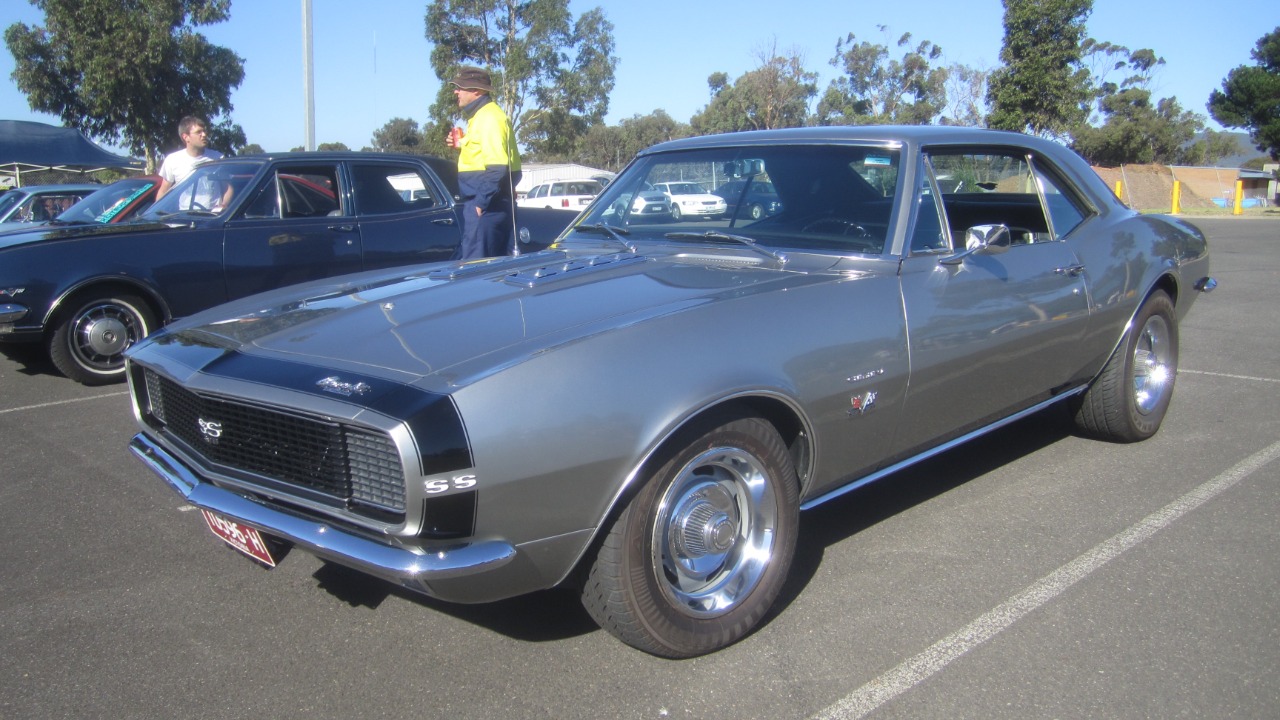
The 1967 Chevrolet Camaro arrived as a corporate emergency response to the Ford Mustang, a car rushed from sketchpad to showroom in barely more than two years. That compressed schedule delivered an icon, but it also baked in compromises that early buyers discovered in squeaks, rust, and awkward proportions. The first Camaro generation became a legend anyway, yet its debut year still reads like a case study in how speed to market can collide with long-term quality.
The underdog that had to be built fast
General Motors was not used to playing catch-up, but by the mid-1960s, the Mustang had forced America’s largest automaker into exactly that role. The company needed a direct rival, and it needed it quickly. The result was the F-body program that produced the first-generation Camaro, a car that enthusiasts later described as the one that picked a fight with its crosstown rival from Dearborn. The project carried the full weight of corporate pride and market pressure, which helps explain why the schedule left little room for leisurely refinement.
To meet that deadline, Chevrolet leaned heavily on existing components and flexible assembly strategies. The Camaro shared much of its mechanical DNA with the Chevy II and other contemporary platforms, which reduced engineering lead time but limited how far designers could push the structure. The car had to fit around available subframes and drivetrains, then be tooled and launched across multiple plants in time for the 1967 model year. That urgency created a car that looked right and drove well enough to win fans, yet it also meant that some of the fundamentals were locked in before anyone could fully work through the consequences.
Design on a stopwatch
The styling team that shaped the Camaro had clear marching orders: create something lower, sexier, and more aggressive than the basic sedans that shared its bones. According to designer insights collected on the F-car program, one of the key voices was Haga, who later reflected that the project delivered the right attitude but not perfect proportions. He explained that the F-Car design had one major flaw, and that was proportion, with the cowl too high and the front wheel location not quite right. That critique, preserved in a feature on how the first-generation shape came together, shows how even insiders saw the limits of what could be done within the compressed schedule and shared-architecture constraints. Those concerns are detailed in a look at the great Camaro designers.
The styling team also had to juggle multiple variants at once. Coupes, convertibles, and high-performance trims like the Z/28 and SS all needed their own visual signatures while sharing as many panels as possible. That kind of modular thinking helps a rushed program hit its timing, but it tends to produce compromises in areas such as cowl height, rear glass angle, and wheel opening shape. Haga’s comments about the front wheel location hint at how the basic hard points were dictated by existing subframe geometry, not pure design idealism, and that tension still shows when a 1967 car is parked next to later first-generation updates.
Built to fight, not to be flawless
From the start, the Camaro was meant to be driven harder than a basic compact sedan. Engineers stiffened the structure and revised suspension geometry to handle more power and more aggressive cornering. A later buyer’s guide points out that, as Camaros were meant to be driven harder than a normal Chevy Nova, Chevrolet even revised rear shock mounting points after the first model year to reduce axle hop and improve durability under load. That change, documented in a detailed Camaro buyers guide, highlights how the original 1967 setup left room for improvement once real owners started punishing the cars on the street and track.
The performance mission also shaped powertrain choices. Chevrolet leaned on a wide range of small-block and big-block V8s, giving the new model instant credibility with enthusiasts. That engine lineup, which included high-winding 302 cubic inch units for Trans Am racing and big-blocks paired with aluminum heads designated L89 for significant weight savings, helped the Camaro feel like a serious weapon right out of the gate. Yet the breadth of options also complicated manufacturing and quality control, particularly in a first-year launch where assembly plants were still learning the quirks of each configuration.
Early quality issues that told on the rush
Owners of 1967 cars quickly learned that some details had not fully matured before launch. Fit and finish varied from plant to plant, and panel alignment could be inconsistent, especially around doors and trunk lids. Weatherstripping sometimes struggled to keep water out, a problem that would haunt the cars decades later as rust took hold in hidden seams. The fact that engineers revised suspension mounts and other hardware within a year suggests that the initial validation cycle had been compressed, leaving real-world driving to expose weaknesses that a longer pre-production phase might have caught.
Rust became the defining long-term flaw. As with most cars from the 1960s, rust is the major caveat when buying a first-generation Camaro, according to Camaro specialist Joey Wigley, who has spent years restoring these cars. He points to trouble spots in the lower fenders, rear quarters, floor pans, and around the rear window, all areas where moisture and road salt can accumulate. That assessment appears in a detailed feature on the first-generation Camaro, and it aligns with what restorers see on early 1967 shells that may have suffered from slightly less effective corrosion protection than later revisions.
Interior quality also reflected the rush. The cabin shared many components with other Chevrolet models, which helped with cost and timing, but some plastics aged poorly, and trim fit could be hit or miss. Squeaks and rattles were common complaints, especially in convertibles where structural flex was more obvious. While none of these issues prevented owners from enjoying the cars, they reinforced the sense that the first-year Camaro prioritized performance image and market timing ahead of long-term refinement.
How the 1967 car compares with later first-gen updates
By 1968 and 1969, Chevrolet had already begun to smooth some of the rough edges that showed up in the launch year. Subtle styling tweaks improved the proportions that Haga had criticized, and incremental engineering changes addressed known weaknesses in suspension hardware and body sealing. A historical overview of the first-generation model notes that the car evolved quickly from 1967 through 1969, reflecting both competitive pressure and lessons learned from early customers who drove the cars hard and expected them to hold up. That evolution is described in a narrative on the first-gen Camaro.
Collectors often gravitate to 1969 cars for their refined styling and improved options, but that does not mean the 1967 models lack appeal. Instead, the earliest cars carry a certain rawness that some enthusiasts prize. The slightly awkward cowl height and wheel placement, the simpler interiors, and the less filtered driving experience all speak to a car that was still finding its footing. The rapid cadence of updates across the three years, however, underscores how much Chevrolet had to learn in a short time after pushing the original design into production so quickly.
Driving character: better than the build quality
For all the structural and cosmetic issues that surfaced, the way a first-generation Camaro drives has always been its strongest defense. Expert Jeff Walker of Chubb Collector Car Insurance has described these cars as pretty good running machines overall, with engines that tend to be durable when maintained and chassis tuning that suits spirited use. In a buyer-focused feature, he notes that overall, first-generation Camaros were pretty good running cars, a verdict that helps explain why so many survive despite hard use. Those comments appear in a detailed buyer’s guide that still treats the model as a practical classic rather than a fragile museum piece.
That driving character also reflects the engineering intent behind the car. Suspension geometry, steering ratios, and brake options were all chosen to keep pace with the power available from the V8 range. While body flex and noise levels might betray the car’s rushed gestation, the basic mechanical package has proven resilient. Many owners upgrade shocks, bushings, and tires with modern components, often sourced from suppliers cataloged through resources like Tire Rack, which can transform the way an early Camaro feels without sacrificing its period character.
What the rush means for today’s buyers
For anyone shopping for a 1967 example today, the hurried development cycle translates directly into a checklist of things to inspect. Rust is at the top of that list, and experienced buyers study the body and chassis with particular care. A practical CAMARO BUYER CHECKLIST compiled for enthusiasts stresses how many companies now supply Camaro body panels and structural components, which is both a blessing and a challenge. Replacement parts can rescue a car that would once have been scrapped, but they also make it easier to hide past damage or poor repairs. Those concerns are laid out in a detailed buyer’s guide that treats the 1967 to 1970 cars as a single family.
Mechanical wear is the next concern. As Camaros were meant to be driven harder than a normal Chevy Nova, many have lived hard lives with repeated drag strip launches, track days, or simply decades of enthusiastic street driving. Shoppers are advised to look for signs of stress around rear shock mounts, subframe bushings, and steering components, all areas that can suffer on a car that left the factory with only modest allowances for the abuse some owners would dish out. The abundance of aftermarket support helps, but it also means that originality can be hard to verify if previous owners have swapped engines, transmissions, or rear axles.
Values that reflect both flaws and fame
The market has largely forgiven the Camaro for its rushed birth, at least in financial terms. Prices for clean, well-specified cars have climbed steadily, and certain combinations command serious money. A contemporary guide to the 1967 to 1970 market notes that convertibles with 327 engines and in good condition can be found for around $80,000, a figure that underlines how far these once affordable pony cars have climbed. That valuation appears in a detailed set of Top Tips for, which treats the 1967 to 70 cars as a coherent group while still acknowledging the specific quirks of the earliest models.
Those same tips, echoed through related resources like specialist auction houses and enthusiast communities on platforms such as social media, consistently emphasize documentation and inspection. Because the first-year cars were not built with the same corrosion protection or dimensional consistency as later classics, the difference between a survivor-grade example and a restoration built from marginal bones can be dramatic. Buyers are urged to verify tags, check for signs of rebodying, and confirm that any claimed high-performance options match factory records.
More from Fast Lane Only