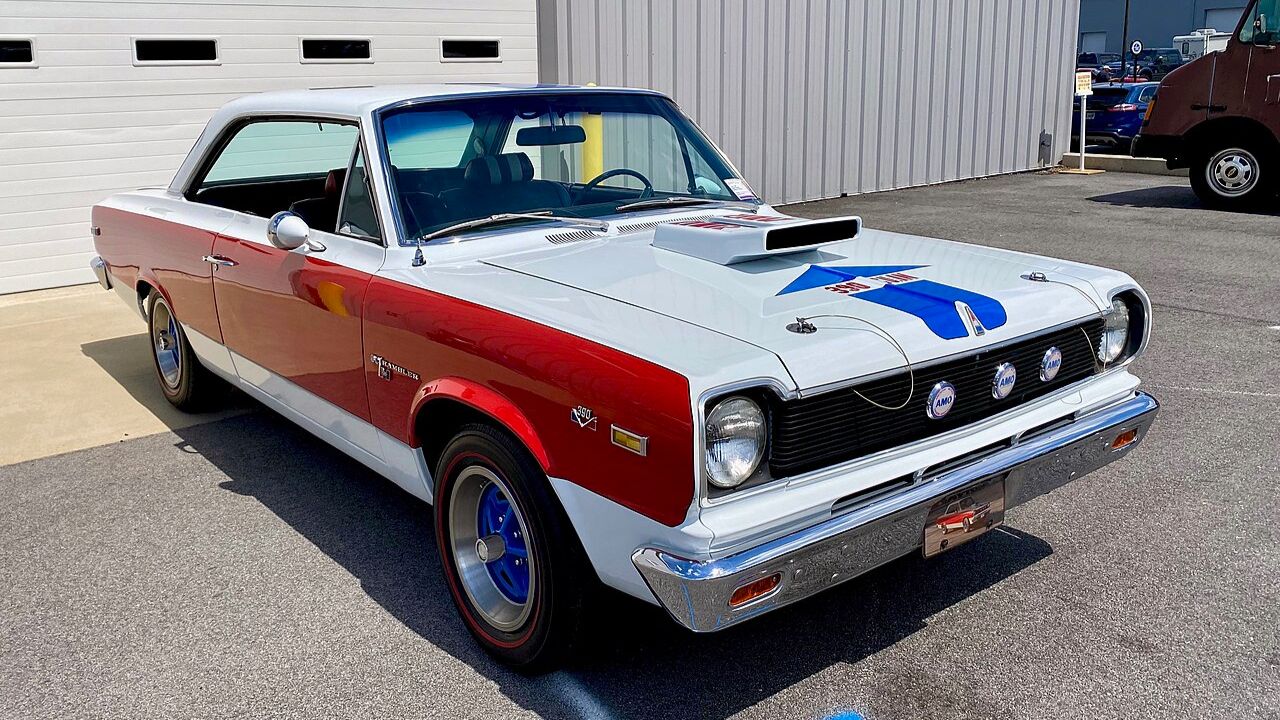
The 1969 AMC Hurst SC/Rambler stands as a testament to the idea that muscle cars need not conform to traditional expectations of size and shape. This compact powerhouse challenged the norms of the muscle car era, delivering impressive performance in a surprisingly small package.
The Birth of the SC/Rambler
The American Motors Corporation (AMC) recognized the burgeoning demand for muscle cars in the late 1960s and strategically decided to enter this competitive market with the SC/Rambler. The muscle car segment was largely dominated by the Big Three—Ford, GM, and Chrysler—each offering powerful vehicles with larger frames and engines. AMC, however, aimed to carve out a niche by providing a compact yet powerful option that appealed to a more diverse demographic, including younger buyers and those seeking a unique alternative to mainstream muscle cars.
Key figures in the development of the SC/Rambler included Hurst Performance, known for their expertise in enhancing automotive performance. The collaboration with Hurst was pivotal, as it brought a level of credibility and technical prowess to the SC/Rambler’s design and engineering. This partnership not only facilitated the incorporation of performance modifications but also provided a marketing edge, as Hurst was a well-respected name within the automotive community.
The SC/Rambler’s introduction was significant for AMC as it represented a bold step into the muscle car arena, showcasing the company’s willingness to innovate and challenge the status quo. This vehicle appealed to a different demographic, attracting buyers who were perhaps overlooked by larger manufacturers focusing solely on traditional muscle car profiles.
Design and Specifications
The design of the SC/Rambler set it apart from conventional muscle cars, emphasizing its compact nature while still exuding a sense of performance-oriented aesthetics. The vehicle featured a distinctive front end with a unique grille and hood scoops that hinted at the power lurking beneath its small exterior. The overall styling was characterized by bold lines and a sporty stance, which contributed to its appeal among automotive enthusiasts who appreciated innovative design.
At the heart of the SC/Rambler was a formidable 390 cubic inch (6.4 liters) V8 engine, capable of producing 315 horsepower and 425 lb-ft of torque. This power allowed the compact vehicle to achieve impressive acceleration and performance metrics that rivaled larger muscle cars of the era. With a curb weight of just over 3,000 pounds, the SC/Rambler was not only powerful but also agile, making it a joy to drive on both the street and the track.
The vehicle’s dimensions further emphasized its compact nature, measuring approximately 171 inches in length and 68 inches in width. This small footprint, combined with its potent engine, allowed the SC/Rambler to deliver an exhilarating driving experience that defied the expectations of a traditional muscle car.
Performance and Driving Experience
The performance of the SC/Rambler was nothing short of impressive, particularly for a vehicle of its size. With a 0 to 60 mph time of around 6.5 seconds, it demonstrated acceleration capabilities that could hold their own against larger contemporaries, such as the Ford Mustang and Chevrolet Camaro. The SC/Rambler’s lightweight construction contributed to its nimble handling, allowing it to navigate corners with agility that was often lacking in heavier muscle cars.
Driver experiences behind the wheel of the SC/Rambler have been largely positive. Many enthusiasts have noted the thrill of driving a car that feels both powerful and responsive. The combination of the robust V8 engine and the compact chassis provided a unique driving experience that was often described as exhilarating. Testimonials from owners often highlight the SC/Rambler’s ability to deliver a sporty feel without sacrificing the comfort and usability expected of a compact vehicle.
In comparisons with larger muscle cars of the era, the SC/Rambler stood out not only for its performance but also for its practicality. Drivers appreciated the blend of power and size, making it a versatile option for both daily driving and occasional performance outings. The SC/Rambler proved that muscle cars could be both compact and capable, challenging the notion that bigger was always better.
Marketing and Public Perception
AMC’s marketing strategy for the SC/Rambler was focused on differentiating it from other muscle cars on the market. The company emphasized the vehicle’s unique characteristics, such as its compact size and spirited performance, to attract a wider audience. Advertisements highlighted the SC/Rambler’s ability to deliver the thrill of muscle car driving in a more manageable package, appealing to buyers who may have been intimidated by larger, more powerful vehicles.
The public and critical reception of the SC/Rambler at the time of its release was relatively positive, with many automotive enthusiasts intrigued by the innovative approach AMC took. The SC/Rambler garnered attention for its distinct design and performance, although it was often overshadowed by more prominent models from larger manufacturers. Nevertheless, its marketing successfully cultivated a niche following among those who appreciated its unique qualities.
Advertising played a significant role in shaping the SC/Rambler’s image. Promotional materials often showcased the vehicle’s performance capabilities while also appealing to the consumer’s desire for individuality. The SC/Rambler’s unique position in the market allowed AMC to foster a community of enthusiasts who valued performance and compactness over size alone.
The SC/Rambler’s Competition
In 1969, the muscle car market was teeming with formidable contenders, including the Ford Mustang, Chevrolet Camaro, and Plymouth Barracuda. Each of these vehicles offered a variety of engine options and performance packages aimed at attracting buyers looking for power and speed. However, the SC/Rambler’s compact size and unique specifications set it apart from the competition, allowing it to carve out a niche for itself in a crowded marketplace.
When comparing the SC/Rambler to its larger contemporaries, it becomes evident that AMC’s offering was a unique blend of power and agility. While competitors like the Mustang boasted larger engines and more horsepower, the SC/Rambler’s lightweight construction allowed it to compete on acceleration and handling. The SC/Rambler’s ability to deliver a thrilling driving experience in a smaller package appealed to a segment of the market that prioritized responsiveness and maneuverability.
Despite its limited production numbers, the SC/Rambler’s place in the competitive landscape of muscle cars in 1969 is significant. It proved that a compact vehicle could challenge the performance norms established by larger muscle cars, ultimately influencing the direction of future compact performance vehicles.
The Limited Production Run
The SC/Rambler was produced in limited numbers, with estimates suggesting that only around 1,500 units were built during its short production run. This scarcity is part of what makes the SC/Rambler so appealing to collectors and enthusiasts today. The limited edition status not only enhances its value but also adds to the allure of owning a piece of automotive history that is often overlooked in discussions about classic muscle cars.
As a result of its rarity, the SC/Rambler has become a sought-after model among collectors. Stories of surviving models often highlight the dedication of owners who have preserved these unique vehicles, showcasing their history and performance. Many of these collectors appreciate the SC/Rambler not only for its performance but also for its role in challenging conventional ideas about muscle cars.
The impact of the SC/Rambler’s limited production is evident in the increasing interest surrounding it in the classic car market. As more enthusiasts seek to own a piece of this unique automotive history, prices for well-maintained models continue to rise, reflecting the growing appreciation for what AMC accomplished with the SC/Rambler.
Legacy and Impact on Muscle Car Culture
The legacy of the SC/Rambler extends beyond its production years, influencing the development of future compact performance cars. It challenged the prevailing perception of what a muscle car could be, paving the way for manufacturers to explore new avenues in design and performance. The SC/Rambler’s blend of power and compactness demonstrated that muscle cars did not need to adhere to traditional expectations, inspiring future generations of automotive innovators.
In the context of American automotive history, the SC/Rambler holds a special place. It embodies the spirit of innovation during an era when the muscle car craze was at its peak. By proving that performance could coexist with smaller dimensions, the SC/Rambler contributed to a shift in the automotive landscape that would eventually lead to the rise of more compact and efficient performance vehicles.
The SC/Rambler’s impact on muscle car culture is still felt today, as enthusiasts continue to celebrate its unique attributes and performance. It remains a symbol of AMC’s willingness to challenge the norms of the automotive industry, earning it a lasting spot in the hearts of car collectors and performance aficionados alike.
Restoration and Collectibility Today
For collectors and restorers, the SC/Rambler presents both challenges and rewards. Finding parts for restoration can be difficult due to the model’s limited production and the dwindling availability of original components. Enthusiasts often turn to specialized suppliers or aftermarket parts to ensure their restorations maintain the vehicle’s performance and authenticity.
The current market value of the SC/Rambler reflects its rarity and desirability among collectors. Prices can vary significantly based on the model’s condition, mileage, and history, with well-preserved examples fetching premium prices at auctions. As interest in classic muscle cars continues to grow, the SC/Rambler’s value is likely to appreciate further, making it a worthwhile investment for collectors.
Notable restoration projects have emerged in recent years, showcasing the SC/Rambler’s unique attributes and performance capabilities. Many owners take pride in preserving the vehicle’s originality while also enhancing certain aspects to improve performance and drivability. These showcases often highlight the SC/Rambler’s enduring appeal and the dedication of those who appreciate its place in automotive history.
More from Fast Lane Only