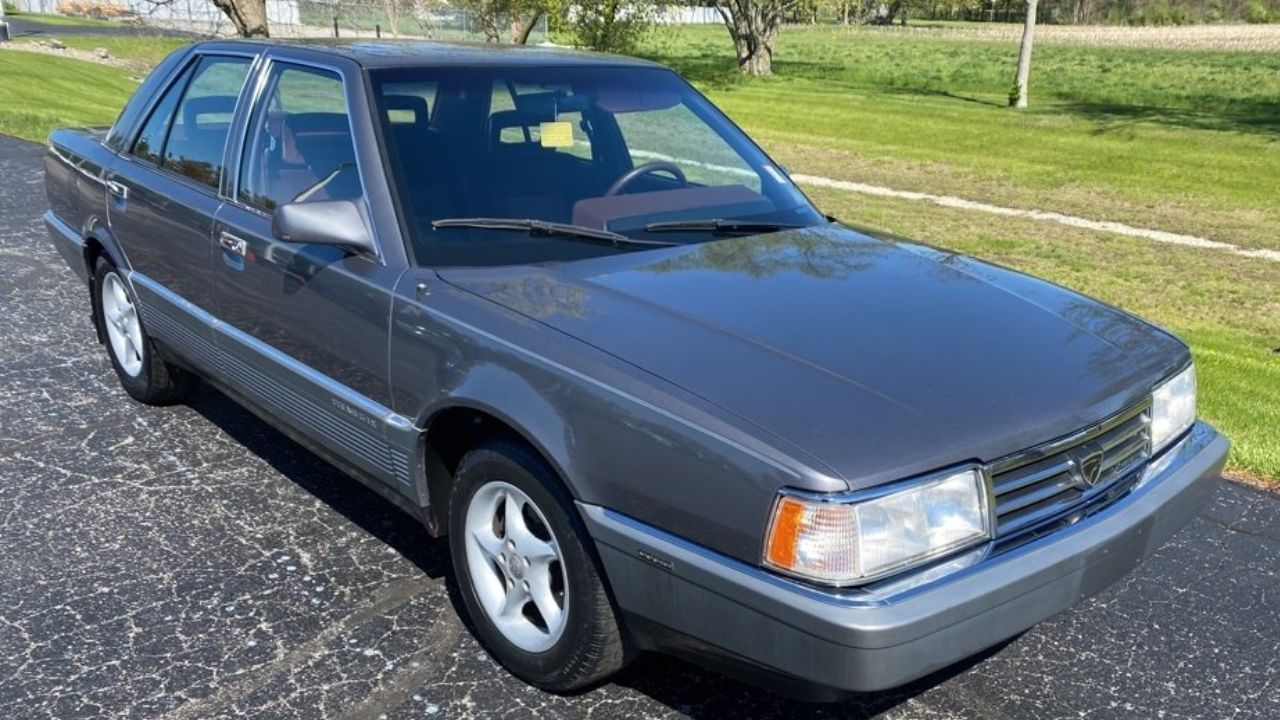
The 1988 Eagle Premier stands out in automotive history as a unique blend of American design and European influence. Launched during a transformative era for American sedans, the Premier introduced features and qualities that set it apart from its contemporaries. Its development represented a significant shift in thinking within the American automotive industry, reflecting an increasing openness to global design and engineering standards.
Design Philosophy: A Departure from Traditional American Aesthetics
The design of the 1988 Eagle Premier reflects a significant departure from the traditional American sedan aesthetic, heavily influenced by European styling cues. The vehicle’s exterior features a rounded, aerodynamic shape that was quite distinct from the boxy silhouettes typical of American cars at the time. This European influence was a deliberate choice, aimed at appealing to a more cosmopolitan audience. The Premier’s sleek lines and gently sloping roofline were not just for show; they also contributed to improved aerodynamics, which was increasingly becoming a priority in automotive design.
In a period when many American sedans prioritized bulk and presence, the Eagle Premier embraced a modern, understated elegance. The design team aimed to create a vehicle that exuded sophistication and style without resorting to ostentation. The result was a car that not only turned heads but also set a new benchmark for what an American sedan could look like. This shift in design philosophy showcased an eagerness to adapt and innovate, embracing global trends while retaining core American values.
Engineering and Performance: Beyond the Norm
The engineering of the Eagle Premier was ahead of its time, incorporating advanced techniques that set it apart from many of its contemporaries. One of the most notable aspects was its unibody construction, which contributed significantly to its handling, safety, and overall performance. This design choice allowed for a more rigid structure, which enhanced the car’s ability to absorb impact in the event of a collision, making it safer than many traditional body-on-frame sedans of the era. The unibody design also improved the vehicle’s dynamics, offering a more connected driving experience that many enthusiasts appreciated.
Under the hood, the Premier offered a range of engine options that were competitive for its class. The base model featured a 2.5-liter inline-four engine, while higher trims were equipped with a more powerful 3.0-liter V6. The performance metrics of the Premier, including acceleration and fuel efficiency, were on par with or better than many American models like the Ford Taurus or Chevrolet Lumina. This focus on performance was indicative of a broader trend within the automotive industry, where manufacturers began to understand that consumers were increasingly interested in a balance of power and efficiency.
Interior Quality and Comfort: A Class Above
Stepping inside the Eagle Premier was a revelation for many drivers accustomed to the interiors of traditional American sedans. The vehicle boasted upscale materials and finishes that elevated the overall driving experience. Soft-touch surfaces, high-quality upholstery, and well-thought-out design elements created an environment that felt more luxurious than utilitarian. In a time when many competitors relied on hard plastics and minimalistic designs, the Premier’s cabin offered a warm, inviting atmosphere.
Moreover, the Premier was equipped with a range of technology features that were quite advanced for its time. Digital displays for the instrument cluster, adjustable seating configurations, and an available premium audio system made the Premier stand out in its class. These features were not merely gimmicks; they significantly enhanced the driving experience, making long journeys more enjoyable and comfortable. As a result, the Premier attracted a demographic that valued both quality and technology, further distinguishing it from its American counterparts.
Market Positioning: A New Kind of Brand
The establishment of the Eagle brand by Chrysler was a strategic move aimed at capturing a different segment of the automotive market. The Eagle Premier was positioned as a vehicle that offered a blend of American practicality and European sophistication, targeting consumers who sought something different from the mainstream offerings. This positioning allowed Chrysler to tap into a market that was increasingly interested in vehicles that could combine performance, style, and comfort.
The target demographic for the Eagle Premier was notably different from those of traditional American sedans. Young professionals, families seeking a more refined driving experience, and individuals who appreciated technological advancements were drawn to the Premier. Chrysler aimed to redefine the image of American sedans, and the Eagle Premier was central to that vision. By establishing a brand that emphasized innovation and quality, Chrysler hoped to create a lasting impact in an increasingly competitive landscape.
Driving Experience: Feedback from Owners and Critics
The driving experience of the Eagle Premier garnered positive feedback from both automotive journalists and owners. Initial reviews highlighted the Premier’s unique driving dynamics, emphasizing its comfortable ride, responsive handling, and quiet cabin. Critics noted that the Premier felt more European in its driving characteristics, with a focus on precision and smoothness that many American sedans lacked at the time. These qualities contributed to its reputation as a car that was enjoyable to drive, even on long road trips.
Owner testimonials further supported these assessments, with many praising the Premier for its comfort and performance. Drivers appreciated the car’s agility and the sense of control it offered, particularly when compared to other sedans in its class. The blend of American practicality with European refinement resonated with many, leading to a loyal customer base that cherished their vehicles. However, some critics also pointed to its higher price point as a potential drawback, suggesting that while the Premier offered a premium experience, it might not appeal to budget-conscious consumers.
Comparative Analysis: Premier vs. Competitors
When comparing the Eagle Premier to contemporaries such as the Ford Taurus and Chevrolet Lumina, it becomes evident that the Premier offered distinct advantages. While the Taurus was known for its reliability and Lumina for its spaciousness, the Premier excelled in areas of design and technology. The Premier’s unique styling, combined with its upscale interior and advanced features, set it apart as a more premium option in a crowded market. Additionally, the Premier’s safety ratings were often higher, thanks to its innovative engineering.
Market performance is also an essential aspect of this comparative analysis. Although the Premier did not achieve the same sales figures as the Taurus or Lumina, it carved out a niche for itself. The vehicle attracted a dedicated following that appreciated its unique qualities, contributing to a respectable market share during its production run. However, the competition was fierce, and as consumer preferences shifted, the Premier faced challenges in maintaining its position.
Legacy and Influence: What the Premier Left Behind
The legacy of the Eagle Premier extends beyond its production years, influencing future Chrysler models in various ways. The engineering and design philosophies that shaped the Premier were echoed in subsequent vehicles, particularly in how they approached safety, performance, and comfort. The emphasis on unibody construction and upscale interiors can be seen in later models like the Chrysler 300 and Dodge Charger, illustrating how the Premier laid the groundwork for a new generation of American sedans.
Today, the Eagle Premier holds a special place among classic car enthusiasts and collectors. Its unique blend of American and European characteristics has fostered a sense of nostalgia, leading to a renewed interest in the model. While it may not have achieved mass-market success, the Premier is often celebrated for its innovation and ambition, serving as a reminder of a time when the American automotive industry was willing to embrace change. For those seeking a unique classic car, the Eagle Premier stands out as a symbol of a transformative era.
Challenges Faced: The Downside of Innovation
Despite its many strengths, the Eagle Premier faced notable challenges that hindered its success. Production issues arose during the manufacturing process, impacting both quality and delivery timelines. These challenges were not uncommon for a new model, especially one that sought to push the boundaries of conventional design and engineering. As a result, consumers occasionally encountered quality control issues, which could tarnish the vehicle’s reputation.
Additionally, the Premier struggled to gain a foothold in a competitive market. While it attracted a dedicated following, it faced stiff competition from established models that had already built strong brand loyalty. Economic conditions, including a recession in the early 1990s, further complicated matters, leading to decreased consumer spending on new vehicles. These factors contributed to the challenges the Premier faced, ultimately impacting its longevity in the market.
The End of the Road: Discontinuation and Reflection
Several factors contributed to the discontinuation of the Eagle Premier and the eventual dissolution of the Eagle brand. Economic conditions, along with Chrysler’s corporate decisions to streamline its offerings, led to the end of production for the Premier in 1992. As consumer preferences shifted, the company focused on more profitable models, ultimately leaving the Premier in the rearview mirror of automotive history.
Today, the Eagle Premier is remembered as a significant vehicle in the evolution of American sedans. Its unique blend of design, engineering, and comfort set it apart during a transformative period in the automotive industry. While it may not have achieved the commercial success it deserved, the Premier remains a symbol of an era marked by innovation and the willingness to challenge the status quo. As automotive enthusiasts continue to celebrate its contributions, the Eagle Premier stands as a testament to the possibilities of blending American ingenuity with European sophistication.
More from Fast Lane Only