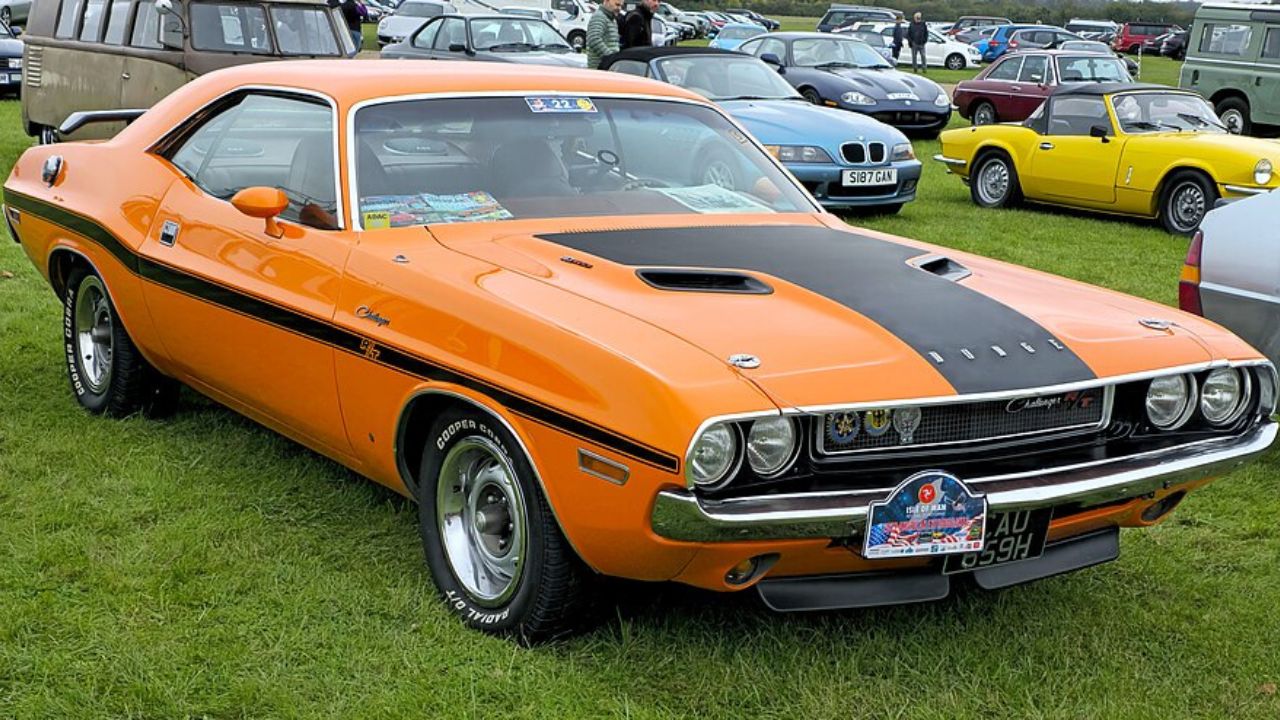
By the time Dodge rolled out the Challenger for 1970, the pony car race was already well underway. Ford had the Mustang, Chevy had the Camaro, and Pontiac’s Firebird had found its footing, while Dodge itself had been selling the smaller Barracuda under the Plymouth brand. That timing shaped everything about the Challenger’s mission: it wasn’t first to market, so it had to be memorable.
Being late didn’t mean Dodge was unprepared, though. The company leaned into the idea of a more upscale, more customizable coupe that could go toe-to-toe with the established names. The result was a car that felt like it arrived with something to prove, and in many ways, it did.
What “late” meant in the pony car market
When people say the Challenger showed up late, they’re really talking about how quickly the segment evolved in the mid-to-late 1960s. Early pony cars were simple, affordable, and aimed at younger buyers, but competition rapidly pushed them toward more power, more options, and more aggressive styling. By 1970, customer expectations had shifted, and Dodge had to meet them on day one.
That also meant the Challenger entered a crowded field with strong loyalties already formed. Mustang buyers knew what they liked, and Camaro and Firebird fans weren’t short on choices either. Dodge couldn’t just offer a copy; it needed its own personality and a clear reason to pick it over a familiar favorite.
Dodge’s strategy: style, size, and presence
One of the clearest ways Dodge differentiated the car was with its stance and proportions. The Challenger was positioned as larger and more substantial than some direct rivals, giving it a “big coupe” feel even though it still fit the pony car mold. That extra presence helped it stand out in showrooms where competitors already had years of recognition.
Design mattered, too, because by 1970 styling had become a weapon. Long hoods, short decks, and bold front ends were practically mandatory, and Dodge leaned into that drama. The Challenger looked expensive and confident, which fit its role as a car meant to win attention fast.
Wide-ranging trims and options helped it catch up
Arriving later can be an advantage if you’re willing to offer buyers more ways to get exactly what they want. The Challenger came to market with a broad lineup, letting shoppers choose between different personalities rather than a one-size-fits-all package. That flexibility was important in a segment where everything from cruising comfort to drag-strip credibility was being sold under the same general umbrella.
The options list became part of the car’s appeal, especially because the pony car market had trained customers to shop by equipment as much as by badge. Dodge’s approach gave buyers room to spec something mild or something wild, depending on budget and intent. It was a smart way to compensate for not having years of established Challenger “tradition.”
Performance was expected, not optional
By 1970, performance wasn’t a bonus feature in this class—it was table stakes. Buyers had seen horsepower wars escalate, and the Challenger had to be credible right away. Dodge leaned on its performance reputation and the broader muscle-car culture that Chrysler was already deeply tied to.
That meant the Challenger’s story couldn’t be separated from the era’s obsession with acceleration, sound, and street presence. It also meant the car had to compete not just with pony cars, but with the larger muscle cars that shared showroom space and bragging rights. In that environment, “new” didn’t earn patience; it had to deliver immediately.
It had to compete inside its own corporate family, too
The Challenger’s timing is also interesting because it arrived when Chrysler already had strong performance credentials under multiple nameplates. Plymouth’s Barracuda was an established player, and there was overlap in the buyers these cars could attract. Dodge needed the Challenger to feel distinct enough that it didn’t simply cannibalize interest from within the same corporate lineup.
That internal competition likely influenced how Dodge positioned the Challenger as a little more premium and a little more “grand touring” in vibe, depending on configuration. The idea wasn’t just to match the Mustang or Camaro, but to give Dodge a pony car that felt appropriately Dodge—bolder, broader, and more customizable.
The moment it arrived was close to a turning point
Another complication of showing up around 1970 is that the automotive world was nearing major changes. Emissions rules, insurance pressures, and shifting market realities were starting to reshape what performance cars could be. The Challenger debuted right near the peak of the classic high-performance era, which is exciting from an enthusiast standpoint but tricky from a long-term sales perspective.
In other words, Dodge introduced a new entry just as the conditions that made these cars easy to sell were beginning to tighten. That doesn’t diminish the Challenger’s appeal—it just explains why “late” isn’t only about rival cars already being established. It’s also about arriving near the end of a particularly freewheeling performance window.
Why the late arrival still worked for enthusiasts
For fans, the Challenger’s later entry can actually make it more compelling. It feels like a distillation of what the segment had become by 1970: aggressive styling, lots of configuration possibilities, and a strong performance image. Instead of watching the category evolve in real time, the Challenger shows up already speaking the language fluently.
That helps explain why the car continues to have such a strong identity decades later. It wasn’t the first pony car, and it didn’t need to be. It aimed to be the one you noticed, the one you remembered, and the one you could tailor to match your version of fun.
Legacy shaped by timing as much as design
Because it arrived after the early wave, the Challenger is often judged less by what it started and more by how well it executed a mature formula. It’s remembered for its look, its attitude, and the way it fit into the peak muscle-era culture, even though it wasn’t the original spark for the pony car movement. Timing put it in a unique spot: not a pioneer, but a strong statement.
That’s ultimately the most interesting part of its story. The Challenger didn’t have the advantage of being first, so it leaned into being bold, configurable, and instantly recognizable. And for many people, that’s exactly what a great pony car should be.
More from Fast Lane Only
- Unboxing the WWII Jeep in a Crate
- 15 rare Chevys collectors are quietly buying
- 10 underrated V8s still worth hunting down
- Police notice this before you even roll window down
*Research for this article included AI assistance, with all final content reviewed by human editors.