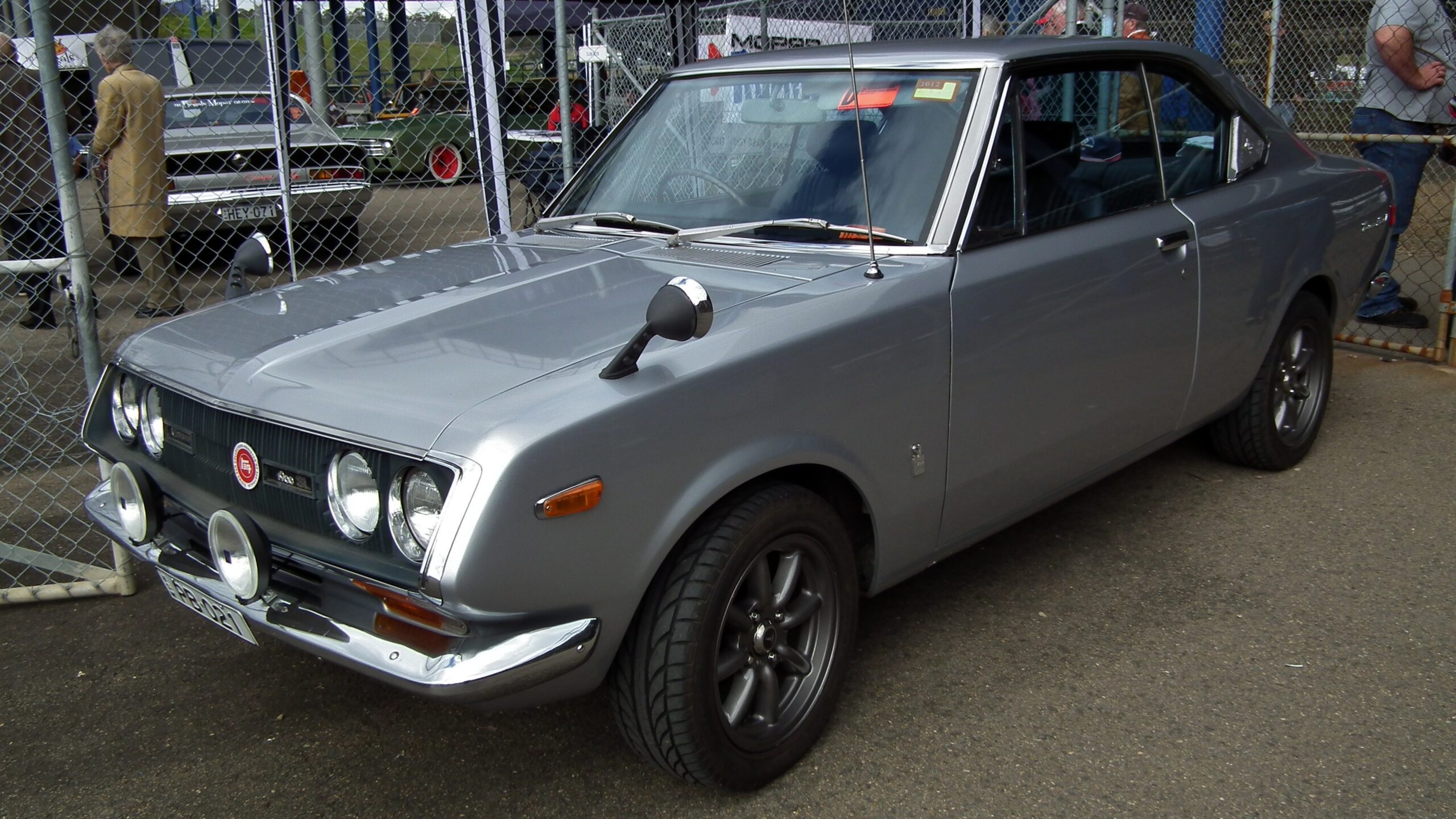
The 1970 Toyota Corona Mark II arrived as a sensible mid-sizer, aimed at families who valued reliability over excitement. Yet half a century later, it is clear that this unassuming sedan and wagon line carried far more character, craftsmanship, and quiet ambition than its spec sheet suggested. The Mark II helped shift global perceptions of Japanese cars, and today it stands as a time capsule from an era when practicality and personality still shared the same showroom.
What happened
When Toyota launched the Corona Mark II around 1970, it slotted between the smaller Corona and the larger Crown, creating a new middle ground for buyers who wanted more space and refinement without paying luxury money. The car sat on a slightly longer wheelbase than the standard Corona, with broader, more formal styling that hinted at American influence but retained a compact footprint suited to narrow city streets. In period brochures, Toyota leaned on themes of comfort, smoothness, and durability, positioning the Mark II as a step up for families moving beyond bare-bones transport.
Under the hood, the Corona Mark II typically carried a range of modest four-cylinder engines, tuned for dependability rather than speed. Power figures were not headline-grabbing, yet the combination of light weight, simple carburetion, and conservative compression made the car easy to maintain. In markets such as Australia, New Zealand, and parts of Europe, the Mark II quickly built a reputation as a car that would start every morning, shrug off long distances, and forgive owners who skipped the occasional service. That reputation only strengthened as these cars aged, with many quietly clocking up six-figure odometer readings without drama.
One Australian example illustrates how deeply the Mark II embedded itself in family life. A 1970 Corona Mark II wagon has remained with the same family for nearly half a century, passing from parents to children while continuing to serve as a usable classic. The long ownership story, documented through period photos and service records, shows how the car transitioned from daily driver to sentimental heirloom yet never fully retired from real-world duties. The wagon configuration, with its flat load bay and simple folding rear seat, made it a natural workhorse for holidays, house moves, and school runs, and that practicality helped justify keeping it on the road even as newer vehicles joined the driveway. The owner recounts how the car, finished in a period-correct pastel shade, still attracts attention at fuel stops and local events, a reminder that understated design can age with surprising grace. That particular wagon, featured in a detailed profile of a Corona that has been in the same family for almost 50 years, can be traced through its original purchase, multiple house moves, and a sympathetic refresh that retained its stock appearance while addressing age-related wear.
Inside, the 1970 Corona Mark II balanced cost-conscious materials with thoughtful design. Vinyl seats, plastic switchgear, and painted metal surfaces kept production expenses down, but the dashboard layout, clear instrumentation, and generous glass area gave the cabin a light, airy feel. In many markets the car included amenities such as a heater, radio, and reclining front seats as standard equipment, which at the time still counted as selling points in the mid-size segment. The driving position was upright and commanding, with thin pillars that provided excellent visibility compared with modern cars.
On the road, contemporary reviews often described the Mark II as unflashy but reassuring. Steering was typically light at low speeds and steady at highway pace, the suspension soft enough to soak up rough surfaces yet controlled enough to avoid excessive body roll. Drum brakes on lower trims and front discs on higher-spec versions reflected the transitional nature of the era. The car was never marketed as a sports sedan, but owners found that its predictable handling and modest weight made it easy to place on narrow roads, and the long-stroke engines delivered a flexible, tractable character that suited everyday driving.
Visually, the Mark II carried a distinct identity within Toyota’s range. A squared-off nose, simple grille, and clean side surfaces created a formal, almost mini-Crown presence, while details such as chrome window surrounds and neatly integrated tail lamps signaled a step above entry-level models. The wagon’s long roof and upright tailgate maximized cargo space without resorting to ungainly proportions, and period accessories such as roof racks and venetian blinds added to its suburban charm. In many export markets, the Mark II quickly became part of the streetscape, a familiar shape parked outside modest homes and small businesses.
Why it matters
The Corona Mark II matters today because it represents the moment when Japanese manufacturers moved from budget alternatives to credible rivals for established Western brands. In the late 1960s and early 1970s, buyers in markets such as Australia, the United States, and Europe were still wary of smaller, imported cars. The Mark II addressed those doubts by offering space, comfort, and perceived quality that matched or exceeded domestic competitors, while retaining the reliability and fuel efficiency that had already become Toyota hallmarks.
That shift had lasting consequences. As families chose cars like the Mark II, they began to view Japanese brands as long-term partners rather than temporary stopgaps. The car’s durability and low running costs translated into positive word of mouth, which in turn helped Toyota expand its dealer networks and product range. In effect, the Mark II served as a bridge between the humble Corona and the more aspirational models that followed, including later generations of the Cressida and Camry that would dominate mid-size sales in several countries.
The long-term ownership of individual cars, such as the Australian family wagon that has remained in continuous use for decades, highlights another dimension of the Mark II’s significance. When a vehicle stays with one household for that length of time, it becomes a repository of memories as much as a mode of transport. Family holidays, first driving lessons, and everyday errands accumulate into a shared story that binds people to a particular machine. In the case of that 1970 wagon, the decision to keep the car running rather than replace it reflects both emotional attachment and trust in the underlying engineering, a combination that speaks volumes about Toyota’s approach to design and manufacturing at the time.
From a design perspective, the Mark II also captures a transitional aesthetic. It sits between the rounded, chrome-heavy look of early postwar sedans and the sharper, more angular lines that would dominate the late 1970s. The car’s proportions, with a relatively long hood and short deck, hint at American influence, yet the overall scale remains modest. That blend of global styling cues helped the Mark II feel familiar to buyers used to domestic brands, while its restrained detailing avoided the excess that would date some contemporaries. Today, that balance gives surviving examples a timeless quality that appeals to collectors who prefer subtlety over flash.
In the collector car world, the Corona Mark II occupies a niche that is gaining attention as prices for more obvious classics climb. Enthusiasts who grew up riding in these cars now have the means and motivation to seek out the models that shaped their childhoods. At the same time, younger enthusiasts, priced out of more famous nameplates, are discovering the appeal of honest, well-engineered sedans and wagons from this era. The Mark II’s simple mechanical layout, with carbureted engines and rear-wheel drive, makes it accessible to home mechanics, and parts support from Toyota specialists remains reasonably strong in several regions.
The car’s practicality also makes it an attractive entry point into classic ownership. Unlike fragile sports cars or large luxury sedans, a well-maintained Mark II can still function as occasional family transport without undue stress. The wagon in particular offers genuine utility, with enough space for camping gear, swap meet finds, or bicycles, while still fitting into urban parking spaces. That usability aligns with a broader shift in the classic scene toward cars that can be driven and enjoyed regularly rather than preserved as static investments.
There is also a cultural dimension to the Mark II’s renewed relevance. As interest in Japanese popular culture, from anime to vintage electronics, has grown, so has curiosity about the everyday objects that surrounded that era. Cars like the Corona Mark II, which once blended into the background, now serve as moving artifacts of a specific time and place in industrial history. Their presence at shows and on social media broadens the conversation beyond the usual muscle cars and European sports models, giving a fuller picture of how ordinary people moved through the world in 1970.
Environmental and sustainability concerns add another layer to the car’s modern significance. Keeping an existing vehicle on the road, especially one that is already built and paid for, can in some cases be less resource-intensive than manufacturing a new car. While a 1970 Mark II cannot match the emissions performance of a modern hybrid, its continued use as a low-mileage hobby vehicle spreads its environmental footprint over a much longer lifespan. For owners who combine classic enthusiasm with a desire to minimize waste, preserving and maintaining an older car becomes a form of reuse that aligns with broader conversations about consumption.
Finally, the Corona Mark II illustrates how automotive history is not solely written by halo models and racing legends. Workhorse sedans and wagons, sold in large numbers and driven hard by ordinary families, often have a deeper impact on daily life than exotic sports cars. Recognizing the Mark II’s role in building trust in Japanese engineering, reshaping mid-size expectations, and anchoring family stories helps broaden the understanding of what makes a car historically significant.
What to watch next
Looking ahead, interest in cars like the 1970 Corona Mark II is likely to grow as several trends converge. The first is generational turnover among enthusiasts. People who were children in the 1970s and early 1980s are now in a position to buy and restore the cars that filled their parents’ garages. As they search for authentic connections to that period, the Mark II’s mix of familiarity and scarcity makes it an appealing target. Surviving cars that retain original paint, interior trim, and documentation, such as the long-owned Australian wagon, will be especially sought after.
Another factor is the gradual tightening of regulations around emissions and safety, which could affect how and where older cars can be driven. Some cities are already exploring low-emission zones that restrict access for vehicles built before specific cutoffs. Owners of classics like the Mark II will need to monitor how these policies evolve, and may gravitate toward events, clubs, and regions that remain friendly to vintage machinery. At the same time, there is growing recognition of the cultural value of historic vehicles, which could lead to exemptions or special provisions for well-maintained classics used sparingly.
More from Fast Lane Only