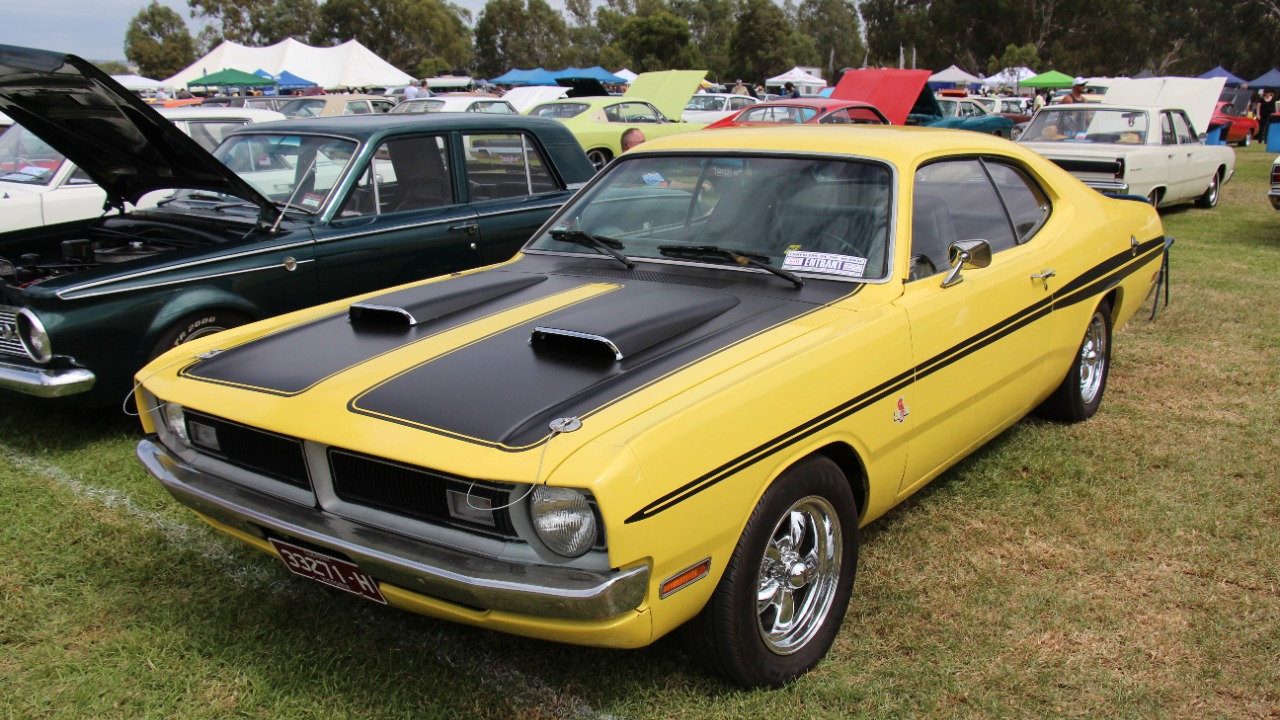
The 1971 Dodge Demon arrived just as Detroit’s muscle car party was winding down. Insurance surcharges, looming emissions rules, and a sharp cultural pivot away from gas-guzzling performance all converged just as Dodge tried to sell a compact, budget bruiser with a devil on its grille. The result was a short-lived model that slipped between the cracks at the time yet looks sharply in tune with enthusiast tastes today.
How the Demon tried to keep performance alive in a tightening market
Dodge built the Demon out of the humble Dart, a compact platform that gave the car a smaller footprint and lower price than the brand’s big-block Chargers and Challengers. The formula was simple: take a light body, drop in a strong small-block V8, and dress it with just enough visual attitude to catch the eye of younger buyers who could not afford a full-size muscle car.
The headliner was the Demon 340, which paired Chrysler’s 340 cubic inch V8 with a four-barrel carburetor, dual exhaust, and a choice of manual or automatic transmission. The engine’s reputation for rev-happy power made the car feel quicker than many heavier intermediates, especially in street driving where weight mattered as much as raw output. Buyers could also order the Demon with modest six-cylinder power, but the marketing focused on the 340 and its quarter-mile credibility.
Styling walked a line between playful and provocative. The Demon wore a unique grille, special tail lamps, and optional side stripes that framed cartoon devil graphics. Interior trim followed the same budget-muscle logic: simple bench or bucket seats, a basic dash, and a short options list that let buyers add performance hardware without paying for luxury fluff. One carefully preserved 1971 Demon 340 shows how far a buyer could go, with a rare exterior color, power accessories, and factory air conditioning layered on top of the go-fast parts.
Timing, however, could hardly have been worse. Insurers had begun targeting high-compression V8s and performance packages with steep premiums, which hit young drivers hardest. Federal safety and emissions standards were tightening, forcing manufacturers to plan for lower compression ratios and more restrictive exhaust systems. By 1971, the muscle car boom that defined the late 1960s was already losing momentum, and the Demon entered a showroom environment that no longer rewarded raw performance in the same way.
Culture clash, controversy, and a short production window
Beyond market headwinds, the Demon ran into an unexpected cultural fight over its name and iconography. The devil-themed branding, which had seemed like cheeky fun on the drawing board, drew complaints from religious groups once the car reached dealerships. The cartoon mascot on the fenders and the “Demon” script on the trunk lid became flashpoints in letters to Dodge and to local dealers, who suddenly found themselves caught in a debate about taste and morality rather than horsepower and handling.
That controversy overlapped with a broader shift in priorities. Buyers were beginning to care more about fuel costs and practicality, a trend that would intensify with the oil shocks that followed. A compact performance car might have been well positioned to bridge the gap between fun and frugality, but the Demon’s marketing leaned heavily on its devilish persona instead of efficiency. The car’s relatively short production run reflected that tension, as Dodge moved quickly to rebrand the package under a less provocative name.
The brevity of that run is one reason the Demon often sits in the shadow of better-known Mopar legends. Enthusiasts tend to spotlight Chargers, Challengers, and ‘Cudas, while the compact Dart-based performance models receive less attention. One analysis of forgotten Mopars notes that the Demon, despite its strong mechanicals and distinctive look, is often treated as a footnote in the brand’s muscle era, a Dodge muscle car that many fans overlook when listing their dream garages.
That relative obscurity had a practical upside for decades. While headline cars from the golden age of muscle saw their values spike, the Demon remained attainable, especially in driver-quality form. Collectors who cared more about seat-of-the-pants feel than big-block bragging rights could buy into genuine period performance without paying top-tier money. The car’s compact size and straightforward engineering also made it a friendly platform for home mechanics and weekend racers.
Why the Demon’s story resonates with enthusiasts now
Looking back from a market dominated by crossovers and electrification plans, the Demon’s arrival at the edge of the muscle car cliff reads like an early warning. It showed how quickly regulations, insurance practices, and shifting social attitudes could push performance to the margins. The car’s mix of compact efficiency and serious power anticipated later “factory hot hatch” and sport compact formulas, even if the styling and marketing were very much of their time.
Modern interest in the Demon sits at the intersection of nostalgia and practicality. Collectors who already own larger Mopars now hunt for smaller, more manageable cars they can actually drive on crowded roads. The Demon’s size makes it easier to park and maneuver than a B-body coupe, while the 340’s character keeps the experience authentic to the era. Survivors with original drivetrains, especially high-option examples in rare colors, increasingly attract attention at auctions and in online listings.
The car also benefits from the way enthusiasts now value stories as much as specifications. The controversy over its name, the brief production window, and its status as a bridge between 1960s excess and 1970s restraint give the Demon a narrative arc that stands out. Owners can tell a complete story at a cars-and-coffee meet: how the model arrived just as the party ended, how public pressure pushed Dodge to retreat from the devil imagery, and how the car quietly disappeared while the industry pivoted to fuel economy and personal luxury coupes.
In the broader history of American performance, the Demon helps explain why the muscle car era did not simply vanish overnight. Instead, power migrated into smaller, more focused packages while manufacturers experimented with ways to satisfy enthusiasts under new constraints. The Demon, with its compact bones and strong small-block, represented one of those experiments. It was not a full solution to the pressures of the early 1970s, but it showed that performance could adapt, at least for buyers willing to accept a little less flash and a little more subtlety.
What the Demon’s legacy suggests about the next chapter of performance
The story of the 1971 Demon offers a useful reference point as performance cars face another inflection point. Today, regulatory pressure comes from emissions and electrification targets rather than compression ratios and leaded fuel, yet the basic challenge looks familiar. Automakers must reconcile enthusiast demand for speed and character with rules that favor efficiency and lower environmental impact.
One lesson from the Demon era is that shrinking the package can extend the life of performance. Just as Dodge once turned a compact Dart into a street fighter, modern brands use smaller platforms and turbocharged engines to keep acceleration strong while cutting weight and fuel consumption. Electric performance cars follow a similar logic, using instant torque from relatively compact drivetrains to deliver thrills without traditional V8s.
Branding offers another takeaway. The Demon’s devil imagery, which seemed edgy at launch, quickly became a liability when public sentiment shifted. Today’s performance badges and marketing campaigns operate in a far more connected, scrutinized environment, where controversy can flare instantly. Manufacturers that want their enthusiast models to survive regulatory and cultural shifts will likely favor names and themes that can age gracefully rather than shock.
The renewed attention on early 1970s muscle also hints at how enthusiast culture might evolve. As values for the most famous nameplates climb out of reach, collectors and drivers look to underappreciated models that tell a slightly different story about the same era. The Demon fits that pattern perfectly: mechanically serious, visually distinctive, historically loaded, yet still accessible enough that a dedicated fan can imagine owning one.
More from Fast Lane Only
- Unboxing the WWII Jeep in a Crate
- 15 rare Chevys collectors are quietly buying
- 10 underrated V8s still worth hunting down
- Police notice this before you even roll window down
*Research for this article included AI assistance, with all final content reviewed by human editors