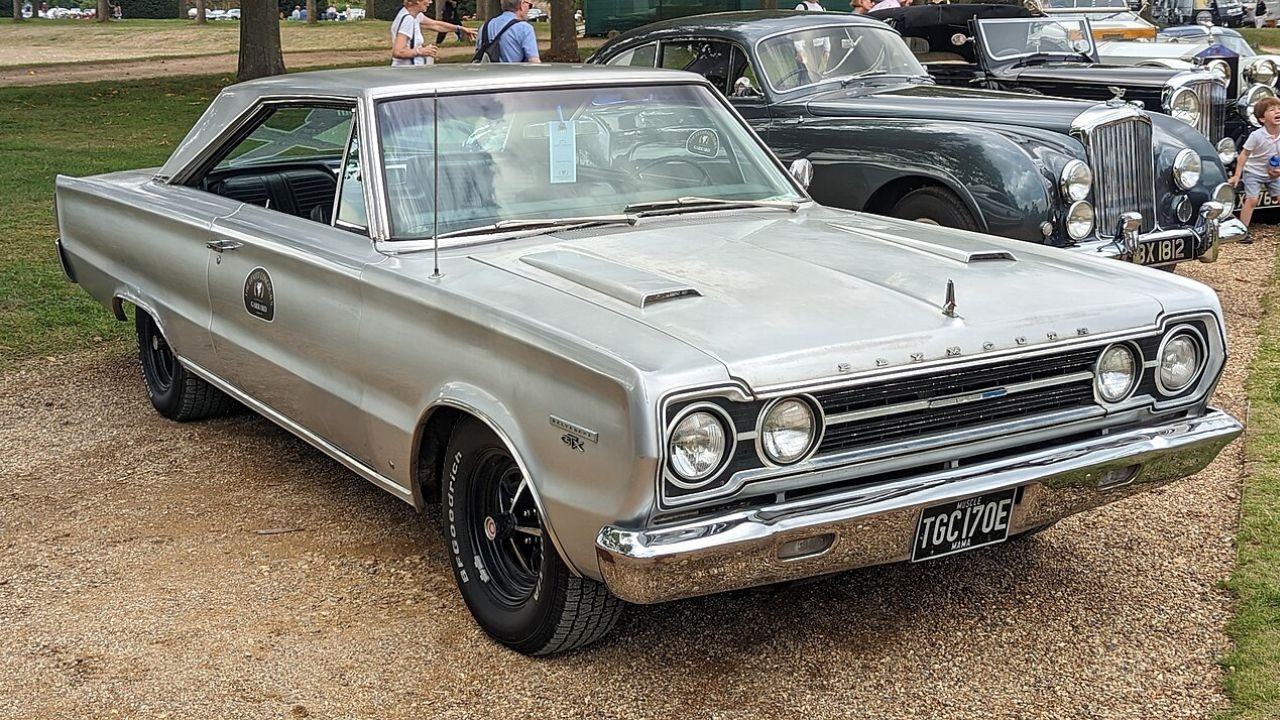
The 1967 Plymouth GTX arrived at the height of Detroit’s horsepower wars, yet it did not follow the usual street-brawler script. Instead of a stripped-out drag special, Plymouth wrapped serious big-block performance in a surprisingly refined package that dealers marketed to buyers who wanted muscle with manners. That balance of speed, comfort, and understated style is what later enthusiasts began calling the “gentleman’s muscle” formula.
Today, the first-year GTX stands out not only for its power and rarity but also for the way it previewed a more mature vision of American performance cars. It proved that a mid-size coupe could be brutally quick while still feeling composed enough for a night at the country club.
The birth of Plymouth’s upscale street bruiser
Plymouth positioned the 1967 GTX as the top performance version of the mid-size Belvedere line, a car that already had clean, squared-off styling. Rather than chasing the youth-market flash of some rivals, designers kept the look crisp and almost conservative, then added just enough aggression through a blacked-out grille, hood scoops, and discreet GTX badging. The message was clear: this was not a budget hot rod but a step-up choice for buyers who had outgrown boy-racer stripes.
Under the skin, the GTX came standard with a 440 cubic inch V8 that Plymouth branded the Super Commando. That engine delivered serious power in factory tune, yet the car still offered a full complement of comfort features such as bucket seats, available automatic transmission, and power accessories. The idea was to give drivers near drag-strip performance without forcing them to live with a bare-bones interior or a temperamental race cam.
For those who wanted more, Plymouth offered the legendary 426 cubic inch Hemi as an option. Cars ordered with the Hemi are among the rarest configurations in the Belvedere-based line, and surviving examples of the 1967 Plymouth Belvedere GTX Hemi now command very high prices in the collector market, as detailed in coverage of its rarity and value. The Hemi option cemented the GTX’s reputation among serious performance fans while the standard 440 kept the car accessible to a broader audience.
How the GTX blended performance with polish
The “gentleman” label attached to the GTX has as much to do with its driving experience as with its marketing. The car’s chassis tuning favored stability and straight-line confidence, which suited the immense torque of the 440 and Hemi engines. Rather than building a nervous, high-strung machine, Plymouth created a car that felt composed at highway speeds and capable of long-distance travel.
Inside, the GTX shared its basic layout with other Belvedere models but layered on more upscale trim. Vinyl bucket seats, a center console on many cars, and brightwork across the dash gave the cabin a more finished feel than the spartan interiors found in some competing muscle coupes. Buyers could add air conditioning, upgraded radios, and power options, making the GTX a realistic daily driver for families that wanted one car to do everything.
Performance magazines of the period highlighted how the 440-powered GTX could sprint through the quarter-mile while still delivering a quiet, almost sedate ride at normal speeds. That dual character differentiated it from lighter, more raucous models that sacrificed refinement in pursuit of the last tenth of a second. Plymouth essentially invited buyers to have their cake and eat it too: a car that could run with the quickest machines of its era yet still look appropriate in an executive parking lot.
The Hemi cars took that formula to an extreme. With the 426 cubic inch engine and its racing pedigree, the GTX became a serious threat at the drag strip. Reports on specific builds of the 1967 Plymouth GTX 426 Ramcharger, which used the Hemi as its centerpiece, show how tuners pushed the platform into dedicated performance territory while still starting from a car that had full factory amenities and trim, as seen in coverage of a 426 Ramcharger example. That versatility helped the GTX earn respect from both street cruisers and hardcore racers.
What changed in the muscle-car pecking order
Before the GTX, Plymouth’s performance image leaned heavily on stripped-down models that appealed to budget-conscious enthusiasts. With the 1967 car, the brand moved closer to what Dodge was doing with the Coronet R/T and what Pontiac had pioneered with the GTO: higher-spec muscle coupes that carried more equipment and a higher price tag. The GTX marked a deliberate shift toward a more affluent buyer who wanted performance without giving up comfort or image.
This repositioning also affected how Plymouth’s lineup was structured. The GTX sat above the more basic Belvedere models and effectively previewed the idea of a dedicated performance sub-brand inside a mainstream range. That concept would later influence how manufacturers separated their halo muscle cars from ordinary family sedans and wagons that shared the same platform.
The car’s specification choices reflected that strategy. Making the 440 V8 standard, rather than an extra-cost option, signaled that the GTX was not merely a trim package. It was a performance car first, with styling and comfort built around that core. The optional Hemi then served as a halo within a halo, a way for Plymouth to showcase its engineering prowess and compete directly with the most powerful offerings from rival brands.
In the broader muscle-car hierarchy, the GTX helped define a middle ground between raw drag machines and luxury coupes. It showed that Detroit could build a car that appealed to older, more established buyers who might have passed on louder, flashier models. That shift in audience expanded the muscle-car market and encouraged other manufacturers to refine their own high-performance offerings.
Why the GTX’s refined muscle matters now
More than half a century later, the 1967 GTX speaks directly to current debates about what performance cars should be. Modern buyers often expect sports sedans and coupes to deliver both speed and everyday usability, a balance that the GTX was already chasing in the late 1960s. Its combination of big power, comfortable interiors, and restrained styling feels surprisingly contemporary.
The car’s rarity, especially in Hemi form, has also made it a touchstone in the collector world. Detailed reporting on surviving Belvedere GTX Hemi models shows how limited production, combined with the car’s place in muscle-car history, has driven values to levels that would have seemed unimaginable when the cars were new. Collectors today see the GTX not just as another big-block Mopar but as a key chapter in the story of American performance.
For enthusiasts, the GTX offers a template for how to enjoy classic muscle without sacrificing usability. Many owners still drive their cars on the street, taking advantage of the comfortable ride and practical cabin while enjoying the soundtrack of a large-displacement V8. That usability, paired with its historical significance, keeps the car in demand at shows and auctions.
The “gentleman’s muscle” idea also resonates with modern tuning culture. Builders who restomod GTXs often keep the exterior subtle and the interiors well finished, even as they upgrade brakes, suspension, and powertrains. The goal is rarely to create a stripped race car. Instead, it is to honor the original mission of the GTX: serious performance wrapped in a car that feels at home in everyday life.
What comes next for the GTX legacy
As interest in classic Mopar performance continues, the 1967 GTX is likely to gain even more visibility. Its position as the first year of the model, combined with the availability of both 440 and 426 Hemi engines, gives it a special appeal among collectors who focus on milestone cars. Auction results for well-documented examples suggest that demand is strongest for original-spec cars, especially those with factory performance options and intact interiors that showcase the car’s upscale intent.
Restoration trends also point toward a future where authenticity and drivability share equal importance. Many shops now focus on mechanical upgrades that improve safety and reliability while preserving the car’s period-correct appearance. Disc brake conversions, modern radial tires, and carefully tuned suspensions help owners use their GTXs more often without erasing the character that makes the cars historically significant.
More from Fast Lane Only
- Unboxing the WWII Jeep in a Crate
- 15 rare Chevys collectors are quietly buying
- 10 underrated V8s still worth hunting down
- Police notice this before you even roll window down
*Research for this article included AI assistance, with all final content reviewed by human editors