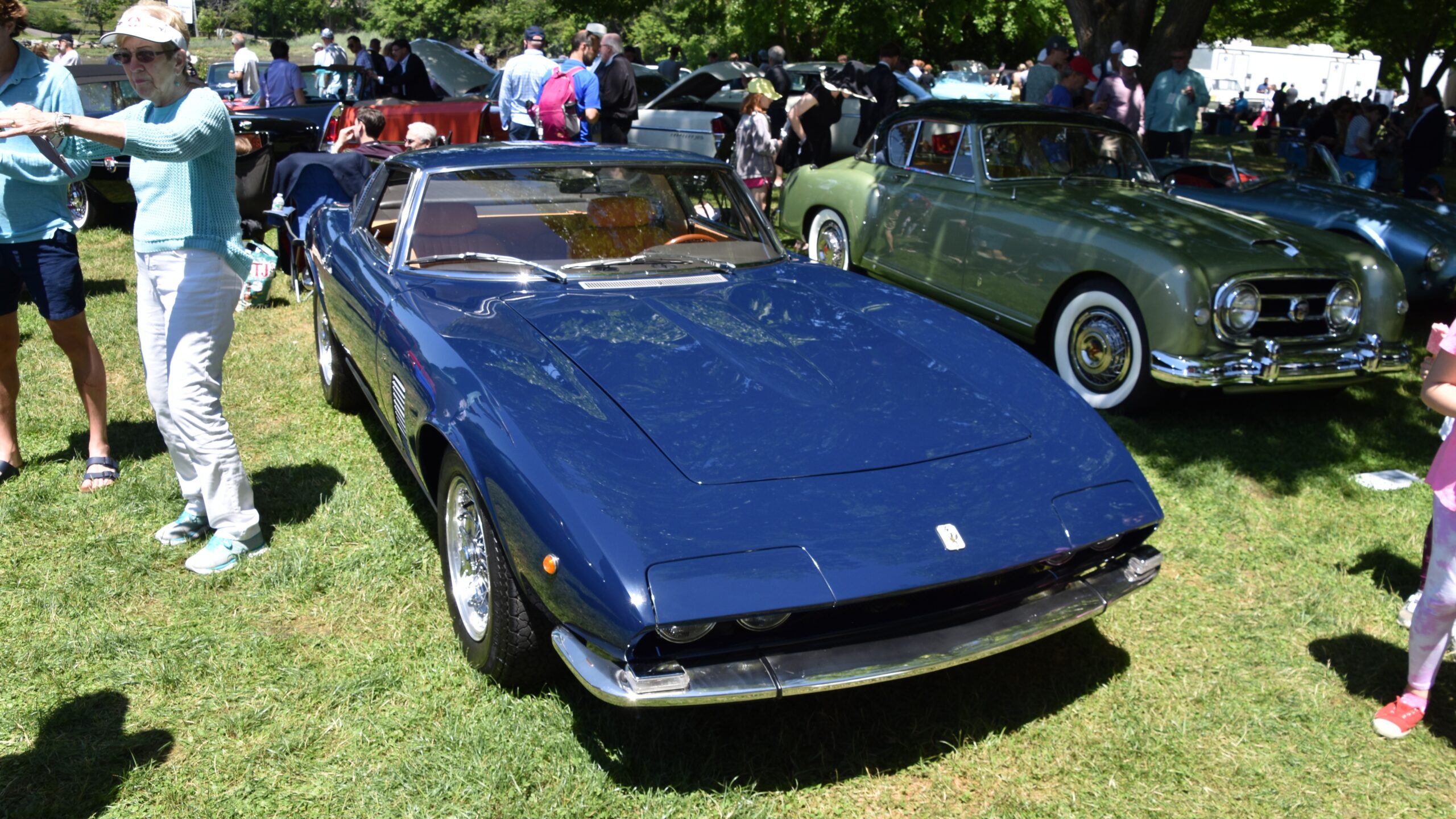
The 1971 Iso Grifo occupies a rare corner of automotive history, a low-slung Italian grand tourer that mixed American V8 muscle with coachbuilt elegance. In an era obsessed with top speed and cross‑continent pace, it was engineered to cover vast distances quickly and comfortably, with a level of composure that still surprises modern drivers.
More than fifty years later, the car’s blend of design, power and usability has turned it from an intriguing footnote into one of the most coveted GTs of its period. Its story shows how a small manufacturer briefly outpaced bigger rivals in the race to build the ultimate high‑speed road car.
What happened
Iso had started life building refrigerators and scooters before turning to cars, but by the late 1960s it was firmly focused on the grand touring market. At the top of that ambition sat the Grifo. Styled by Giorgetto Giugiaro during his time at Bertone and refined under the eye of Giotto Bizzarrini, the car combined sharp, almost aggressive lines with a long bonnet and compact cabin that signaled serious performance.
Rather than develop an in‑house engine, Iso sourced large‑capacity American V8s, a decision that defined the Grifo’s character. Early cars used Chevrolet small‑block power, but by 1971 the model range had expanded to include big‑block engines that pushed the car deep into supercar territory for its day. The choice of American hardware kept costs manageable and reliability high, while Italian chassis tuning gave the car a distinctly European feel on the road.
Contemporary figures put the Grifo’s top speed well beyond 150 miles per hour, with later big‑block variants reputed to edge toward 170 miles per hour on long straights. That performance came with a cabin trimmed in leather, clear instrumentation and surprisingly generous visibility. The car was intended to be driven hard for hours at a time rather than trailered to concours lawns, and owners quickly discovered that it excelled at exactly that brief.
Racing legend Mike Hailwood provided one of the clearest real‑world demonstrations of what the Grifo could do. The multi‑time motorcycle world champion, who also raced Formula 1 and sports cars, owned a Grifo finished in a distinctive color combination. Period accounts describe how Hailwood used the car for high‑speed road trips, exploiting its stability and torque on European motorways and mountain passes. His association with the model, documented through his personal Iso Grifo, reinforced the idea that this was a driver’s GT rather than a static collector piece.
Production numbers stayed low. Iso was a small operation compared with Ferrari or Maserati, and each Grifo was essentially hand‑built. The early 1970s brought economic headwinds, fuel concerns and growing pressure on low‑volume manufacturers. By the time Iso closed its doors, only a few hundred Grifos had been produced across all years, with 1971 sitting in the middle of that short production window. Survivors from that year now represent a narrow slice of an already limited run.
At the same time, the wider grand touring world was shifting. Ferrari continued to refine its front‑engined V12 GTs, culminating in rare models such as a limited‑production Ferrari grand tourer that pushed exclusivity and performance to new levels. Against this backdrop, the Iso Grifo of 1971 showed how a smaller company could reach similar performance territory with a very different formula.
Why it matters
The 1971 Grifo stands out because it solved the grand touring equation in a way that combined speed, comfort and reliability at a time when many exotics struggled to deliver all three. Its American V8 heart gave it abundant low‑down torque, which translated into effortless high‑speed cruising. Drivers did not need to chase redlines to make rapid progress; instead, the car surged forward from modest revs, reducing mechanical stress and making long journeys less tiring.
That character contrasted with many European contemporaries that relied on high‑revving multi‑cylinder engines. Those cars often delivered spectacular noise and top‑end power but could feel strained or temperamental in everyday use. The Grifo’s powertrain felt more relaxed, and parts availability was better thanks to its American origin. For an owner planning regular cross‑border trips, that combination carried real weight.
Chassis tuning played an equally important role. Bizzarrini’s influence meant the Grifo did not simply stuff a big engine into a pretty body. The car used a rigid structure, well‑sorted suspension and careful weight distribution that kept it stable at the kind of speeds that exposed flaws in lesser designs. Contemporary drivers praised its straight‑line composure and reassuring steering, especially on fast, undulating roads where some rivals felt nervous.
Inside, the Grifo delivered a level of comfort that matched its performance. The cabin layout was straightforward, with large dials, supportive seats and space for luggage behind the seats and in the boot. Sound insulation was not on modern luxury levels, but compared with many Italian exotics of the era, the Grifo felt civilized at a sustained cruise. That balance of refinement and performance is a key reason it is remembered as a true GT rather than a thinly disguised race car.
The car’s design also contributed to its lasting appeal. Giugiaro’s work on the Grifo combined crisp lines with subtle curves, avoiding the ornamentation that dated some contemporaries. The long bonnet and truncated tail gave the car a purposeful stance, while details such as the side vents and low roofline emphasized speed even at rest. Many collectors now regard the early 1970s Grifo as one of the cleanest expressions of front‑engined GT design from that period.
Rarity amplifies that impact. With only a few hundred Grifos built across the entire production run and far fewer surviving in original condition, each car carries significant historical weight. A 1971 example links directly to the model’s peak years, before economic turbulence and changing regulations began to squeeze small manufacturers. For collectors, that timing adds value beyond the car’s raw specifications.
The Hailwood connection deepens the narrative. When a driver who had mastered 500 cc Grand Prix motorcycles and raced at the highest levels of car competition chooses a Grifo as personal transport, it signals confidence in the machine’s capabilities. His use of the car for real‑world journeys, rather than as a static showpiece, aligns with Iso’s original intent. The Grifo was built to be driven hard and often, and Hailwood treated it that way.
In the broader context of grand touring history, the 1971 Grifo illustrates a different path from the one taken by more famous marques. Ferrari and Lamborghini pursued increasingly complex engines and bespoke components, which delivered extraordinary performance but often at the cost of day‑to‑day usability. Iso leaned into a hybrid approach: Italian design and chassis work wrapped around proven American mechanicals. That strategy anticipated later collaborations where European tuners and designers paired domestic styling with foreign powertrains to create high‑speed road cars with more approachable ownership experiences.
The car’s story also highlights how quickly the market can shift. When new, the Grifo competed directly with established GTs and offered comparable or better performance at a similar price. Iso’s limited scale, combined with economic shocks and rising fuel concerns, meant the company could not sustain development. Larger manufacturers survived and continued to evolve their GT lines, while Iso slipped into obscurity. Only decades later did collectors and historians begin to re‑evaluate what the Grifo had achieved in such a short window.
That re‑evaluation has pushed values steadily upward. Auction results for well‑preserved examples now place the Grifo alongside much better known Italian exotics, and some variants have surpassed them. Collectors appreciate the car’s mix of rarity, design pedigree and real‑world usability, while historians see it as a key example of the cross‑Atlantic engineering dialogue that shaped performance cars in the late 1960s and early 1970s.
For enthusiasts, the Grifo’s legacy lies in its proof that grand touring speed does not have to come with fragility or discomfort. The car demonstrated that a high‑performance GT could be both fast and forgiving, capable of crossing countries at pace without punishing its occupants. That idea has influenced modern GT design, where manufacturers now routinely pair strong engines with supple suspensions and refined cabins to create cars that echo the Grifo’s mission in a contemporary context.
What to watch next
Interest in the Iso Grifo has grown steadily among collectors, and that trend shows little sign of slowing. As more enthusiasts seek alternatives to the usual Ferrari and Lamborghini choices, the Grifo’s combination of rarity and usability stands out. Market watchers are paying close attention to how prices for 1971 cars move relative to earlier and later examples, since that year represents a sweet spot between the earliest production and the final, more heavily modified variants.
Restoration quality will be a key factor in how the model’s reputation evolves. Many Grifos have lived busy lives, including hard use and periods of neglect. As specialists gain experience with the car’s structure and mechanicals, the best restorations are beginning to respect original specifications more closely. That includes correct body details, period‑appropriate interiors and engines rebuilt to factory tolerances rather than heavily modified for modern performance. Buyers are increasingly discriminating about originality, and that scrutiny will likely intensify.
Another area to watch is how the car features in high‑profile collections and events. When prominent collectors add a Grifo to a stable that already includes benchmark GTs and supercars, it signals that the model has moved from curiosity to essential reference point. Appearances at major concours and touring rallies help reinforce that shift, especially when organizers highlight the car’s historical context alongside more famous names.
The Hailwood car and other documented celebrity‑owned Grifos may also influence perception. Well‑provenanced examples often serve as ambassadors for a model, generating media coverage and public interest that spills over to less famous chassis. If more detailed histories emerge for individual 1971 cars, including period photographs and ownership records, they could further cement the model’s standing in the market.
There is also growing attention on how the Grifo fits into conversations about sustainable classic car ownership. Enthusiasts are exploring ways to keep high‑performance vintage cars on the road responsibly, from careful maintenance and sympathetic upgrades to participation in events that encourage regular use rather than static display. The Grifo’s relatively robust mechanicals and comfortable road manners make it a strong candidate for such use, which in turn helps preserve the living heritage of grand touring rather than freezing it behind museum ropes.
Looking ahead, the Iso Grifo’s story offers a template for how overlooked models can be re‑assessed. As scholarship around small manufacturers deepens and more archival material surfaces, cars that once sat in the shadow of mainstream legends are gaining recognition. The 1971 Grifo, with its mix of Italian style, American power and real‑world speed, is likely to remain at the front of that movement.
More From Fast Lane Only: