The final year of the second-generation Pontiac Trans Am arrived with a mix of restraint and last-minute innovation. For 1981, Pontiac kept the familiar shape that had defined the Firebird through the 1970s but layered in new electronics, revised powertrains, and subtle cosmetic tweaks that quietly closed a chapter in American muscle.
Rather than a dramatic redesign, the 1981 Trans Am served as a bridge between the free-breathing seventies and the emissions-conscious eighties. Caught between eras, it carried updates that help explain why collectors and enthusiasts still treat this model year as more than just a footnote.
What happened
The second-generation Firebird had already been on sale for more than a decade by the time the 1981 Trans Am reached showrooms. Pontiac had refined the basic formula since 1970, evolving the bodywork from clean early lines into the more aggressive, flared look that many fans associate with the late seventies. A visual history of the Firebird through the shows how the familiar front end, shaker hood, and dramatic rear spoiler were firmly in place by the early 1980s, and the 1981 model largely preserved that design.
Under the skin, however, the final-year Trans Am was not a simple rerun. The most notable mechanical change was the adoption of a computer-controlled engine management system. Pontiac paired its carbureted V8s with an early form of onboard electronics that monitored inputs and adjusted spark and fuel to satisfy tightening emissions rules. This system, often called CCC (Computer Command Control), signaled a shift away from purely mechanical tuning and hinted at the more complex fuel-injection setups that would define the next decade.
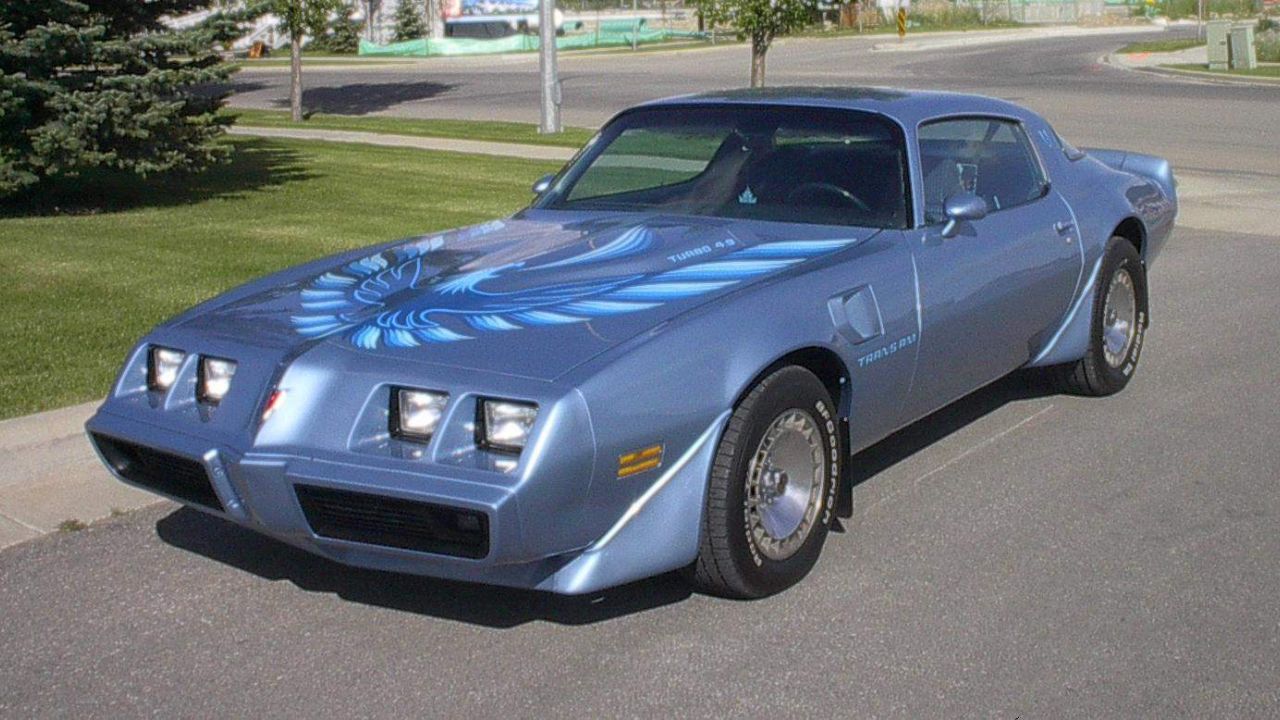
Engine choices reflected the pressure of regulations and fuel economy concerns. The days of the high-compression 400 and the Super Duty 455 were already over, as earlier performance versions like the W72 and SD packages had been phased out. The 1981 Trans Am relied on smaller-displacement V8s with lower output, including a turbocharged 4.9 liter that attempted to recapture some performance with boost rather than brute displacement. Contemporary coverage of the first turbocharged Trans describes how Pontiac tried to balance power and economy, using the turbo as a technological answer to emissions-era constraints.
Styling updates for 1981 were subtle but meaningful to enthusiasts. The Trans Am kept its signature “screaming chicken” hood graphic and aggressive front fascia, yet small trim and decal changes helped distinguish the final-year cars from earlier versions. Certain packages added color-keyed accents, revised wheel designs, and specific badging that signaled the presence of the turbocharged engine or special appearance equipment. These details became important identifiers in the collector market, since they mark the closing specification of a long-running generation.
Production realities also shaped the 1981 Trans Am. Pontiac knew a new, smaller third-generation Firebird was coming, built around lighter construction and a more aerodynamic profile. The outgoing car therefore received only targeted investment instead of a full rework. Even so, the combination of maturing styling, early digital controls, and turbocharged experimentation gave the last second-generation Trans Am a distinct character rather than leaving it as a simple carryover.
Why it matters
The 1981 Trans Am matters because it captures a turning point in American performance culture. Earlier in the decade, Pontiac had offered muscular options like the W72 400 and the rare SD-455, which enthusiasts still praise as some of the most capable Firebirds of the era. Coverage of the W72 Formula highlights how those engines delivered genuine speed in a period when emissions rules were already biting. By 1981, that kind of brute-force power was gone, replaced by smaller engines and electronic controls.
That transition gives the final second-generation Trans Am a dual identity. On one hand, it still looks every bit like the late seventies icon made famous in film and television, with a long hood, short deck, and dramatic graphics. On the other, its powertrains and electronics point directly toward the more restrained, efficiency-focused cars that followed. A detailed retrospective on the frames the model as a barometer for American performance expectations, and the 1981 version sits right at the inflection point.
Collector behavior reinforces that significance. Enthusiasts continue to seek out low-mileage, largely original examples of late second-generation Trans Ams, including 1981 cars. A recent listing of a first-owner Trans Am with only 9,875 miles, where the seller added just 4,000 miles in 43 years, illustrates how carefully some owners preserved these cars. The report on this 9,875-mile Trans Am shows an interior and exterior that remain close to showroom condition, a reminder that buyers at the time saw these as aspirational machines worth protecting.
Broader market trends also show how the late second-generation Trans Am has moved from used car to collectible. Auction coverage that tracks barn finds and large private hoards reveals clusters of Firebirds and Trans Ams from the 1970s and early 1980s surfacing in bulk. One example is a stockpile of more in Iowa that went up for sale, with multiple cars from the late second-generation era. Another report on a massive barn find of Firebirds and Trans Ams shows similar interest in rescuing and restoring these models.
Within that context, the 1981 Trans Am earns attention not just as a final-year curiosity but as a snapshot of Pontiac at a crossroads. A feature tracing the history and legacy emphasizes how each generation reflects its era, from early muscle to later turbocharged experiments. The last second-generation cars embody the tension between nostalgia for unrestrained V8 performance and the reality of new standards for fuel economy and emissions.
The car also resonates on a more personal level for owners who came of age during that transition. Profiles of individual 1981 Trans Ams, such as a father-and-son project that kept one of these cars on the road, describe how the model serves as both a family heirloom and a rolling reminder of the period when analog muscle began to meet digital control. One such story of father and son with a 1981 Trans Am highlights the emotional weight that attaches to this specific year.
What to watch next
Looking ahead, the 1981 Trans Am is likely to gain more visibility as collectors refine their focus on transitional performance cars. The most powerful early second-generation models and the ultra-rare Super Duty variants already command strong prices, documented in profiles of cars like the 1974 Trans Am. As those halo models move further out of reach, attention often shifts to later, more affordable years that still carry the same body style and much of the visual drama.
The final second-generation year also benefits from its clear narrative role. Enthusiasts who collect by milestone often target first and last years, and the 1981 Trans Am offers a tidy endpoint to the long-running second-generation story. A broad visual survey of Firebird and Trans shows how owners frequently cluster cars around such turning points, building lineups that trace the evolution from early to late examples.
Market watchers will also be tracking how originality and mileage affect values for 1981 cars. The low-mileage example preserved by its first owner demonstrates that buyers are willing to pay a premium for untouched interiors, factory paint, and intact emissions equipment. As more modified cars age out or succumb to rust, the surviving stock examples, especially those with the turbocharged 4.9 or rare option combinations, may see increased demand.
There is also growing interest in how these late second-generation Trans Ams fit into a broader narrative of analog performance giving way to digital oversight. The computer-controlled carburetion that seemed complex in 1981 now looks relatively simple compared with modern engine management. That simplicity, combined with period styling, could make the final-year cars attractive to enthusiasts who want a classic look with just enough technology to feel like a bridge to contemporary performance.
More From Fast Lane Only: